19 Basement Ceiling Ideas

You probably spent a lot of money on your home, yet you are currently ignoring the giant concrete cave beneath your feet. Transform that dark dungeon into a livable space with these 19 Basement Ceiling Ideas designed to save your head from low pipes and your eyes from ugly insulation.
Painted Exposed Joists
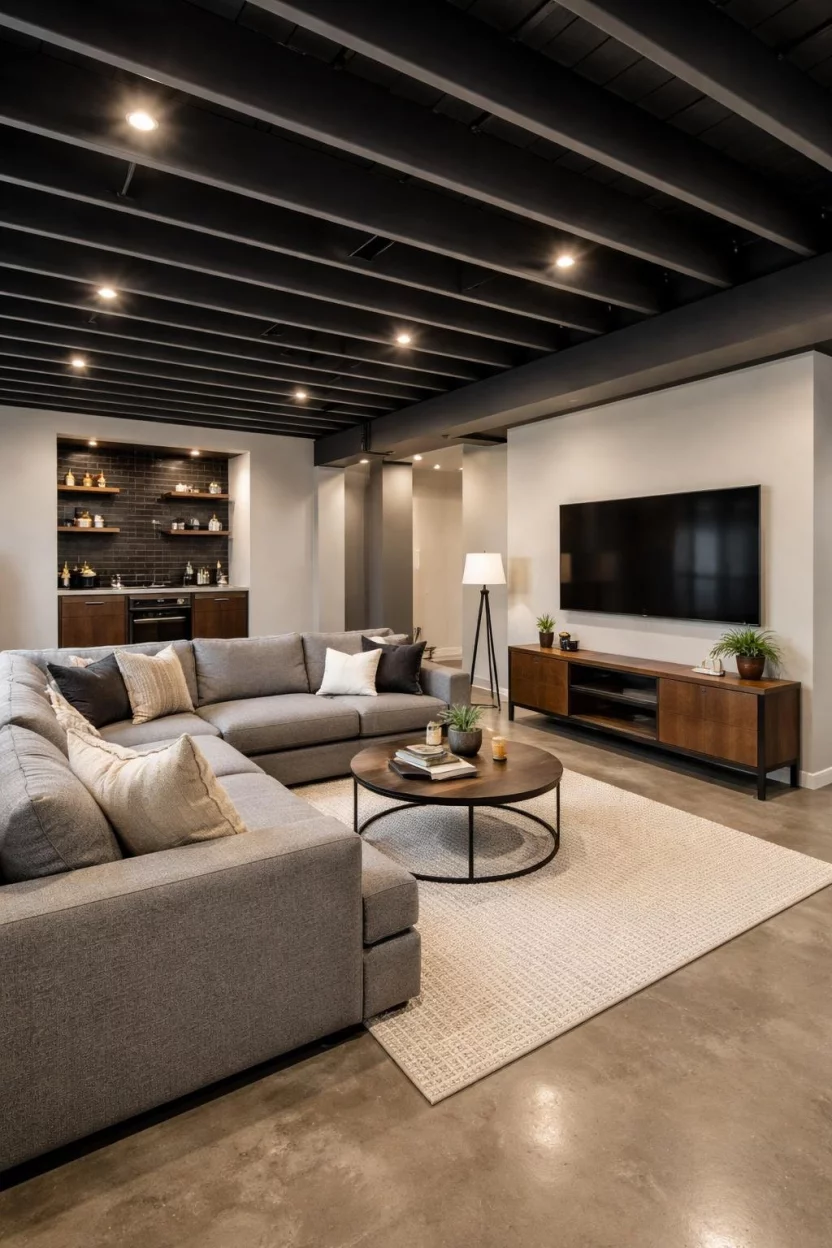
Stop pretending your basement is a luxury penthouse and embrace the industrial vibe.
Spraying your exposed joists black or white hides the chaotic mess of wires and pipes without stealing a single inch of headroom.
You must clean the wood thoroughly and apply a high quality primer before you start painting.
This approach allows you for easy access to your plumbing if a leak ever happens.
Use a flat finish to make the utilities disappear into the shadows while adding a moody, modern character.
Stained Wood Beams
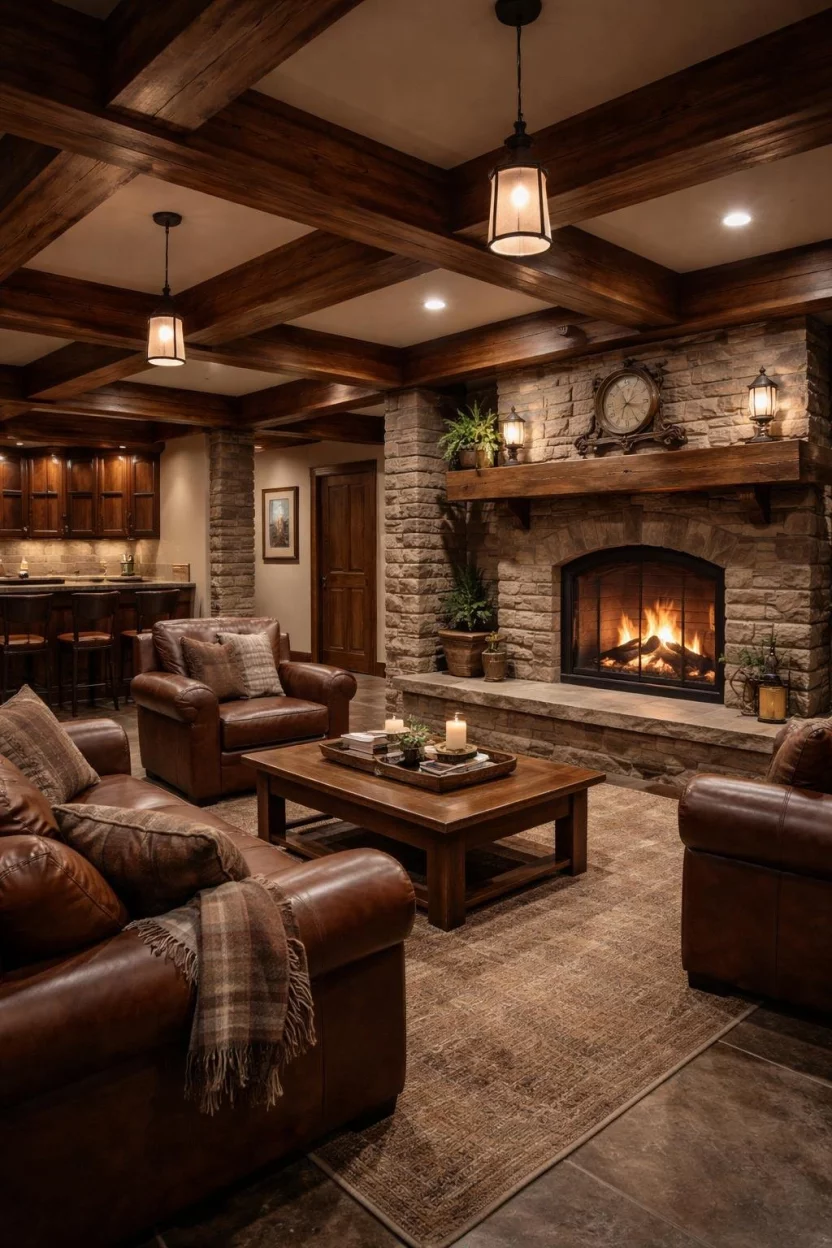
Natural wood brings an organic warmth that stops your basement from feeling like a cold bunker.
Sanding those rough beams represents the hardest part of this task, but the results look incredible when you apply a rich oak or cherry stain.
You should follow up with a clear sealer to protect the wood from the inevitable basement humidity.
These beams look even better when you hang black metal pendant lights between them.
This style keeps your ceiling high while adding a mountain cabin aesthetic.
Drop Ceiling Tiles
Forget those depressing office tiles from the nineties.
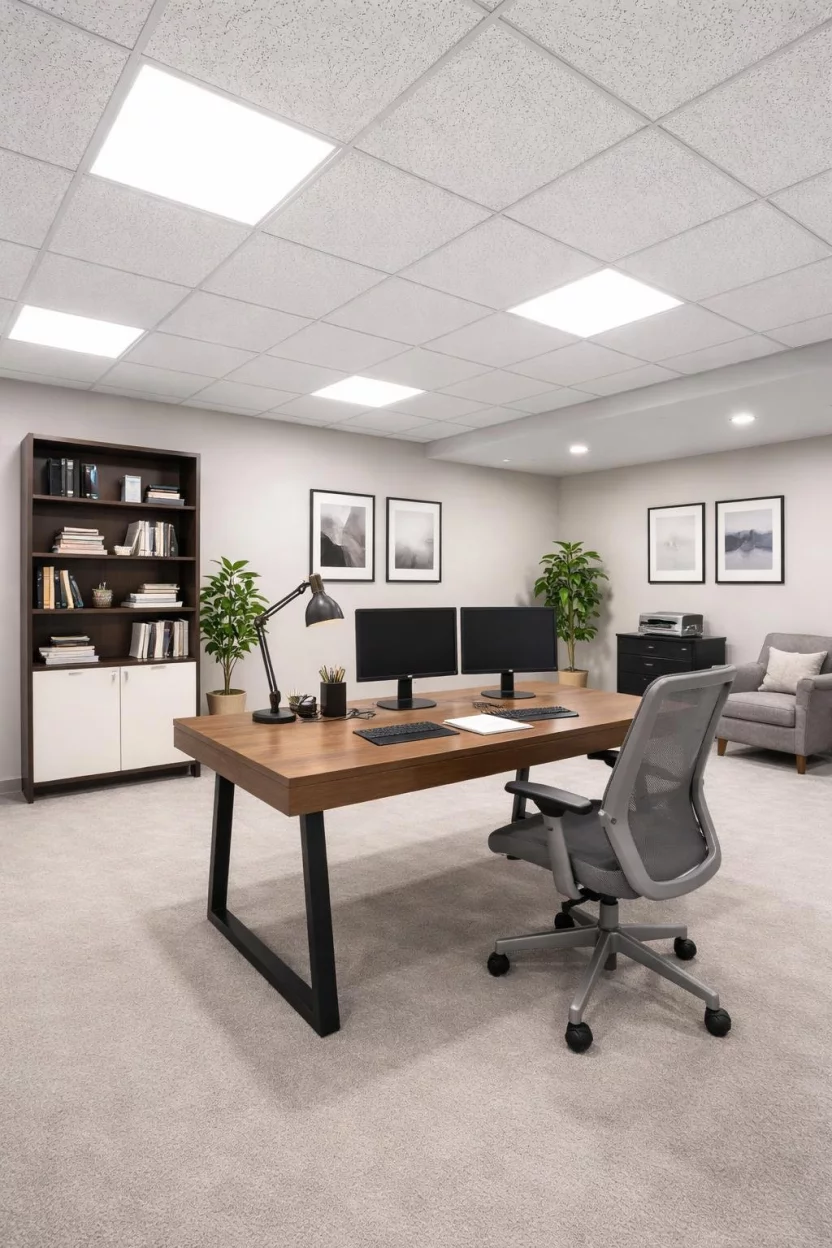
Modern drop ceilings offer stylish patterns and colors like deep charcoal or coffee.
You simply install a metal grid and pop the tiles into place.
This system works wonders if you need to muffle the sound of children sprinting across the floor above you.
Choose moisture resistant tiles to prevent sagging over time.
Since you can move the tiles whenever you want, you will never have to cut through drywall to fix a wire.
Coffered Ceiling Design
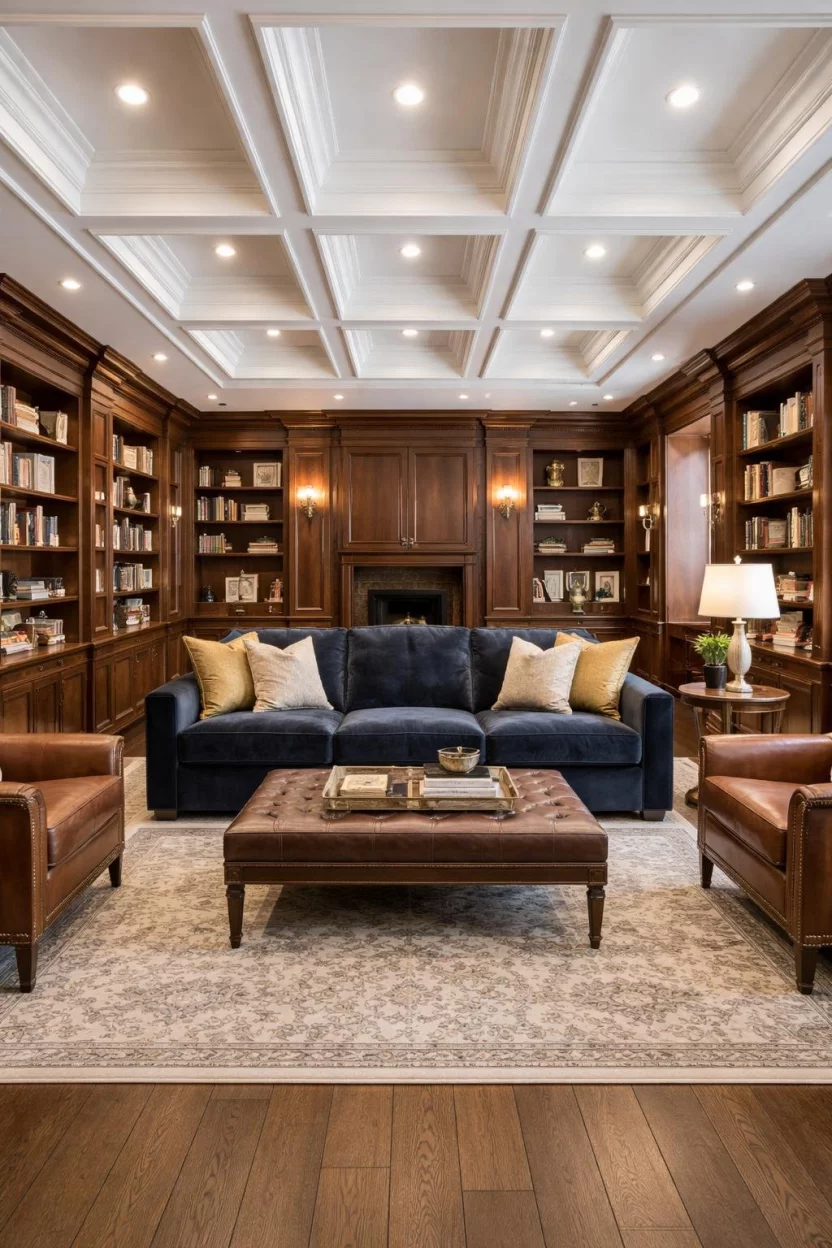
If you want your basement to look like a high end cigar lounge, go with a coffered design.
You create a grid of beams and fill the centers with decorative molding or contrasting paint.
This architectural trick adds massive depth and makes the room feel much more expensive than it actually is.
You will need a bit of math to ensure the squares are even, but adding small downlights inside each section creates a sophisticated glow.
Just ensure you have enough vertical clearance first.
Stretch Fabric Ceiling
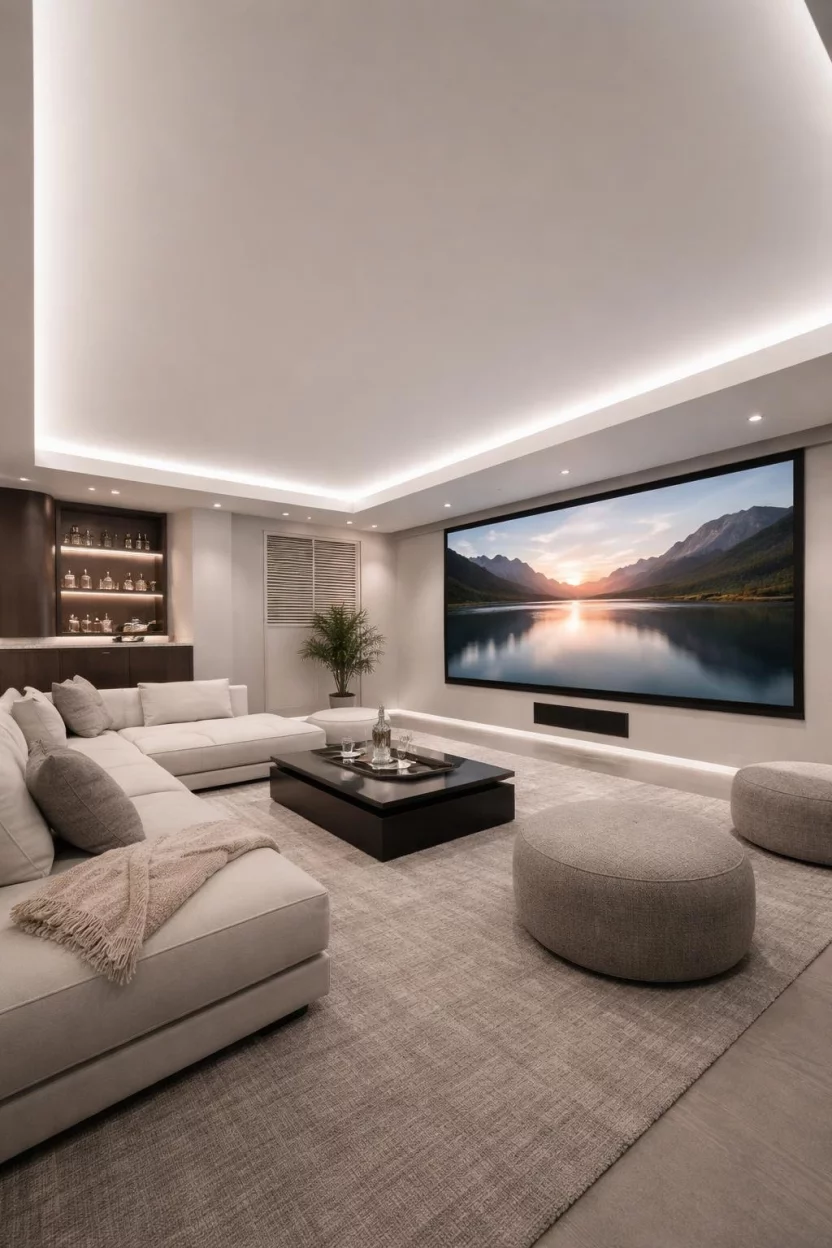
You can actually stretch a massive piece of specialized fabric across your entire ceiling for a perfectly flat finish.
This clever system uses a perimeter track to hold the material under tension.
You could even go wild and choose a printed fabric that looks like a blue sky or a starry night.
It hides Every single pipe and wire behind a flawless, seamless surface.
This option provides excellent acoustics for your home theater and resists fire, making it a very smart, modern choice.
Beadboard Ceiling Panels
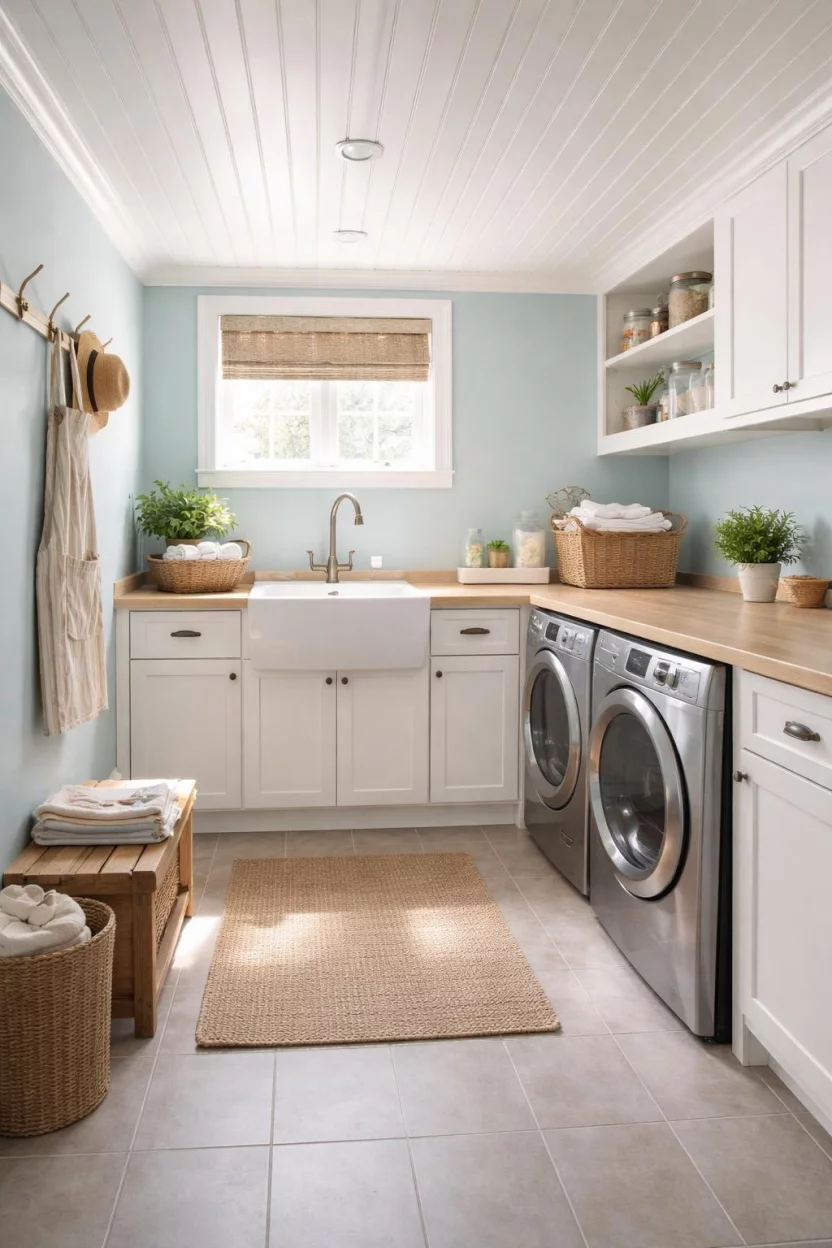
A beadboard ceiling offers a classic cottage look that feels light and airy.
If your basement tends to hold moisture, use PVC panels instead of real wood to avoid warping.
You can glue or nail these panels directly to the joists to save space.
A crisp coat of white paint makes the vertical grooves pop and gives the room a clean, traditional texture.
This style pairs perfectly with thick crown molding and coastal decor, turning a dark space into a bright retreat.
Wood Slat Ceiling

Scandinavian design lovers should consider a wood slat ceiling for a high end, linear aesthetic.
You mount thin strips of wood over a black background to create a sense of movement and length.
This setup hides the ugly subfloor while allowing air to circulate around your pipes.
The gaps between the slats also act as a natural sound diffuser, which helps if you play loud music.
Use reclaimed wood for a more rugged look or clean pine for a polished, modern feel.
Drywall Ceiling Finish
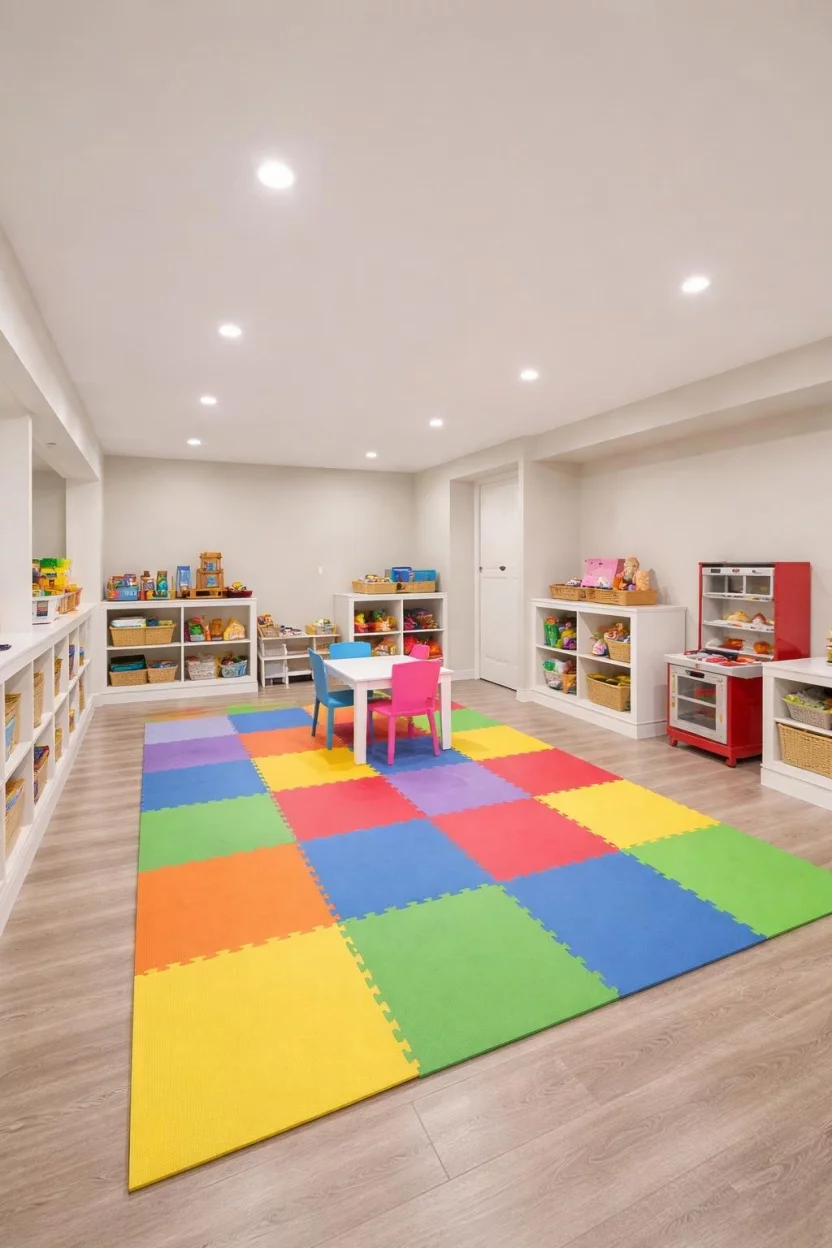
If you want the basement to feel exactly like the rest of your house, drywall is the standard choice.
You will need to hang the sheets, tape the seams, and sand everything until your arms feel like jell-o.
Use greenboard to resist any dampness that might linger in the air.
Drywall allows you to install many recessed lights for a bright, clean look.
While it makes accessing pipes difficult later, it offers the most professional and permanent finish for a finished living area.
Tin Ceiling Tiles

Tin tiles add a fantastic vintage charm that works perfectly for a basement bar or a home office.
You can find real metal tiles or lightweight faux versions that you simply glue to the ceiling.
The intricate patterns reflect light around the room, which helps brighten up a space with few windows.
Choose a copper finish for warmth or a silver patina for a classic industrial look.
These tiles are incredibly durable and require almost zero maintenance once they are in place.
Corrugated Metal Panels

For a truly tough, urban look, try using corrugated metal sheets.
You can find these at most farm supply stores for a very reasonable price.
Screwing these directly to the joists creates a reflective surface that bounces light into every corner.
It looks especially cool in a workshop or a man cave.
To prevent the room from sounding like a tin can, you should tuck some insulation behind the metal.
This material is basically indestructible and handles basement moisture without any complaints.
Herringbone Wood Pattern
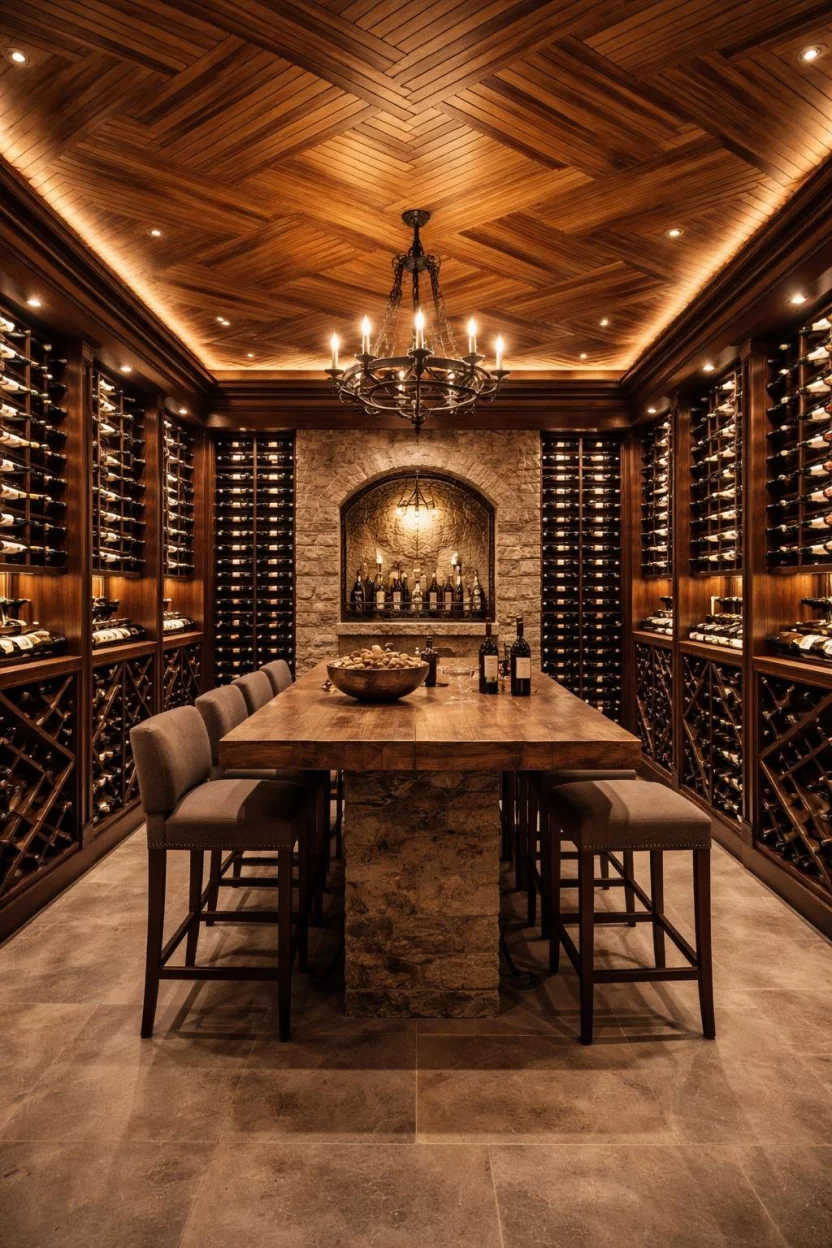
A herringbone pattern turns your ceiling into a giant piece of art.
You can use thin strips of plywood or flooring planks to create this classic geometric design.
It takes a significant amount of time to measure and cut every piece at a forty five degree angle, so grab a friend for this one.
The resulting texture looks incredible under soft lighting and gives the room a high end, custom feel.
This design works exceptionally well in smaller rooms like wine cellars.
Plywood Panel Ceiling
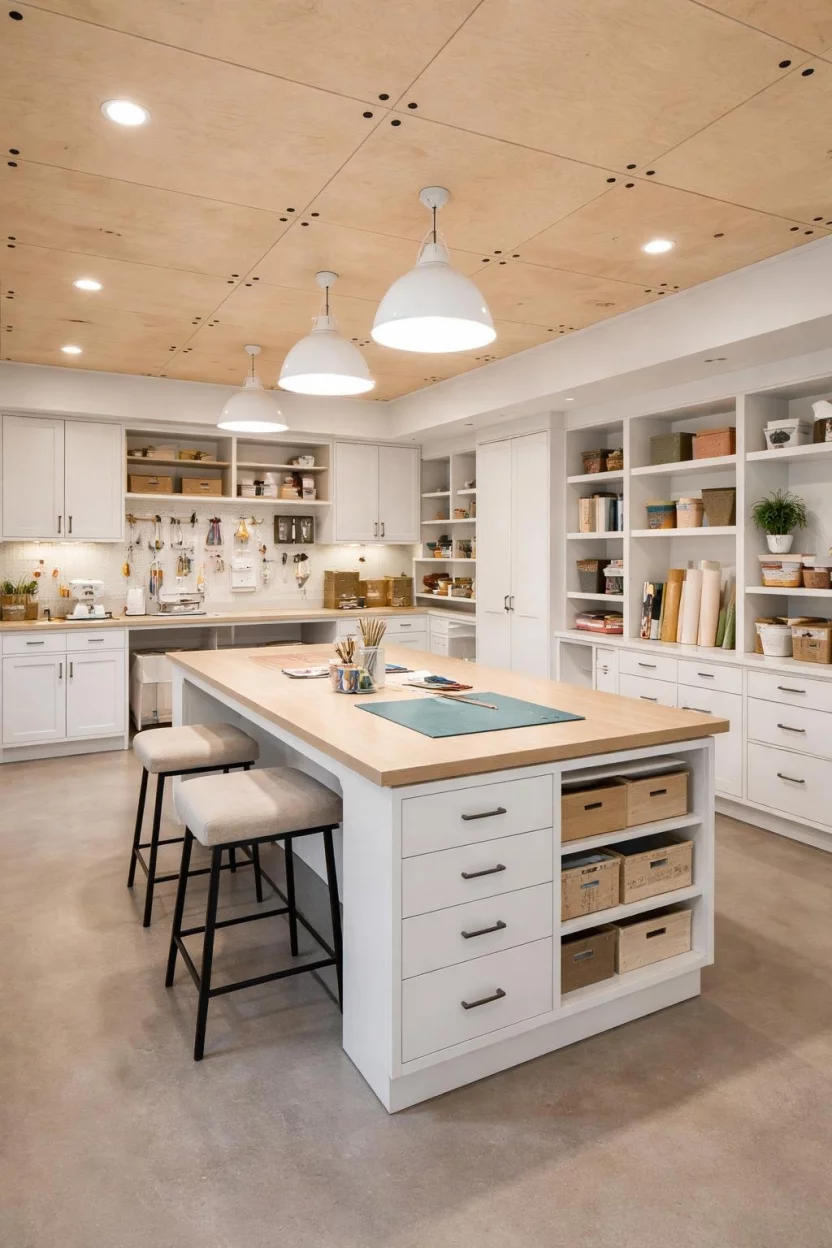
Plywood is not just for subfloors anymore.
Large, high grade birch panels can create a warm, modern ceiling that looks way more expensive than it is.
You can leave small gaps between the boards to create a shiplap effect or cover the seams with thin wood strips.
A light whitewash finish keeps the wood grain visible while brightening the entire basement.
This method is incredibly light and easy to install by yourself.
It offers a clean, architectural look on a tight budget.
Tongue and Groove Planks
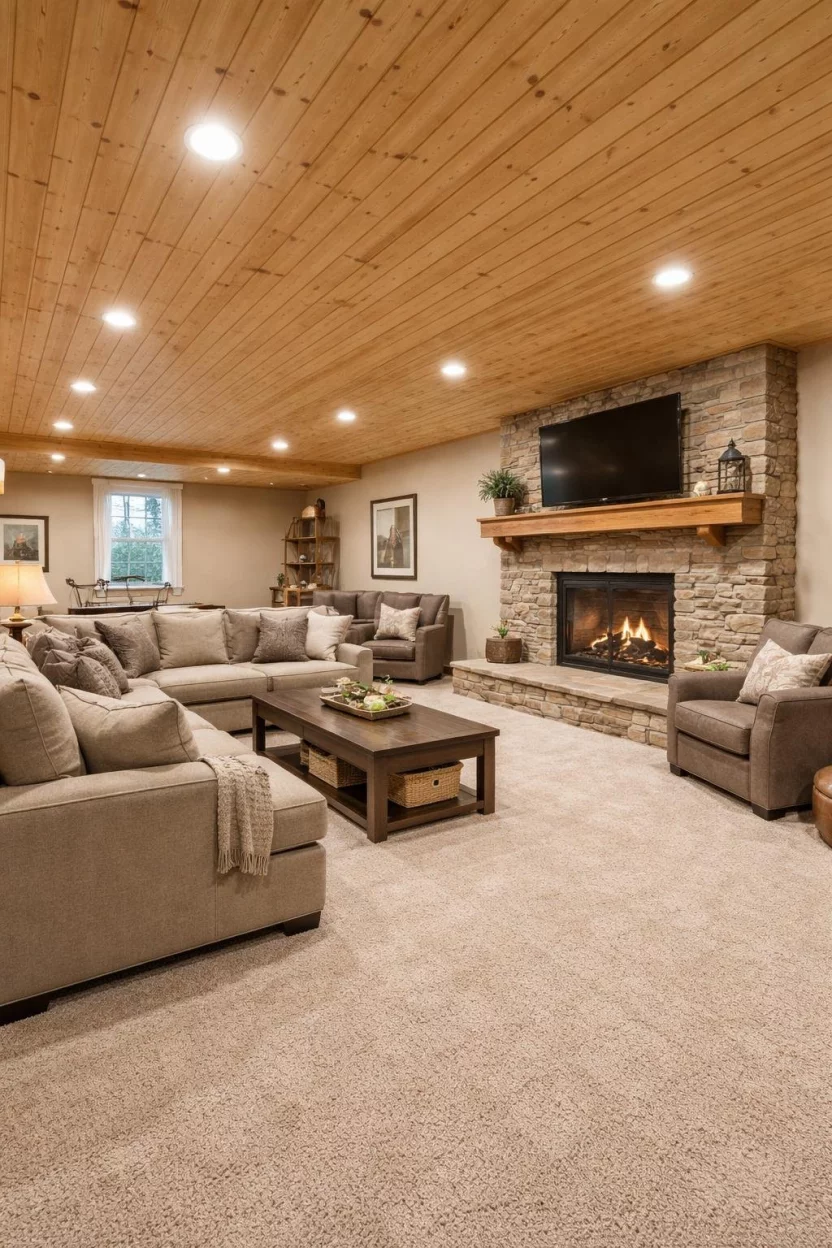
If you love the smell of cedar or the warmth of pine, tongue and groove planks are your best friend.
These boards interlock to create a solid, beautiful surface that hides all your ceiling sins.
You should blind nail them through the tongue so no silver nail heads show on the finished wood.
Leave a small gap at the edges to allow the wood to expand and contract with the seasons.
This style makes any basement feel like a cozy mountain retreat.
Black Painted Ducts and Pipes
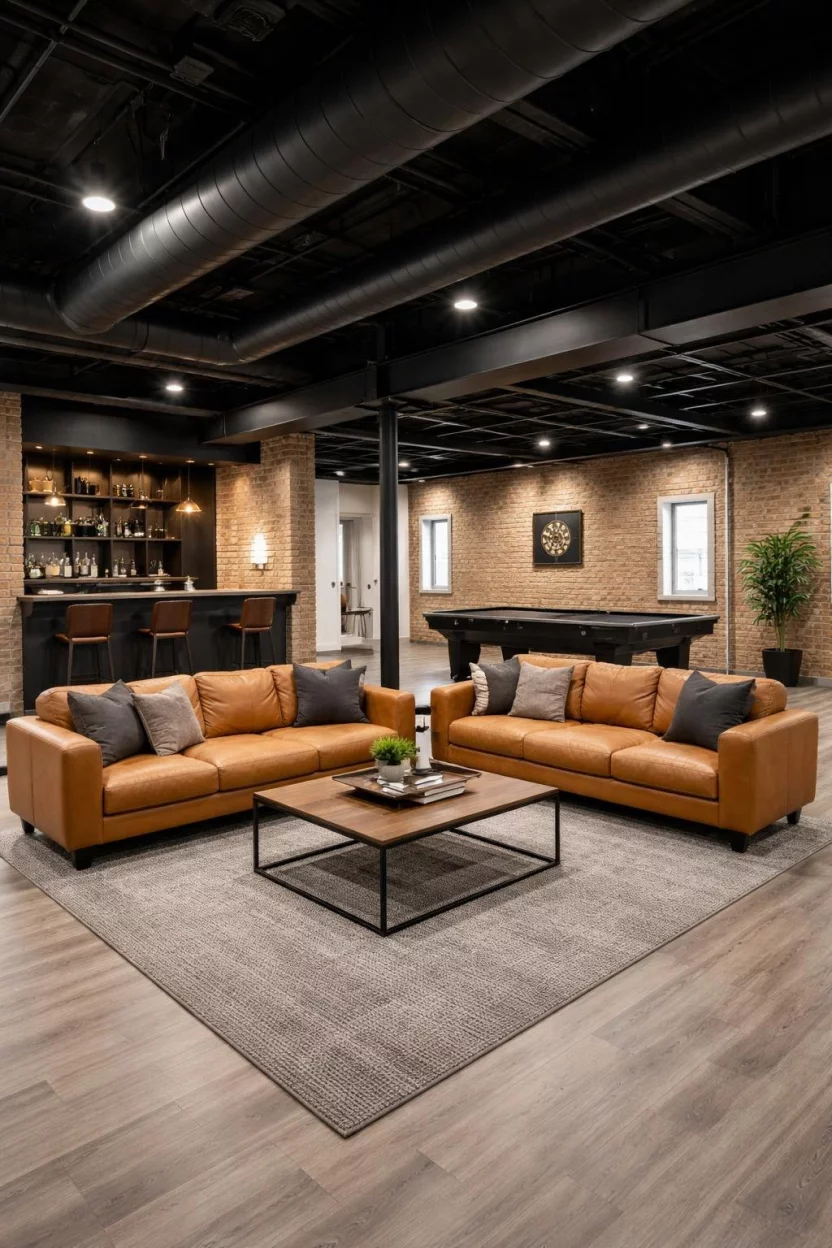
Instead of hiding your mechanical systems, make them the star of the show by painting them matte black.
This trick is a classic move for urban lofts because it creates a cohesive, intentional look.
You should use a high heat spray paint for any pipes that carry hot water or air.
When everything matches, your eyes stop focusing on the individual wires and see the ceiling as one unified shadow.
It preserves every inch of height and looks incredibly cool with brick walls.
Whitewashed Beams and Joists
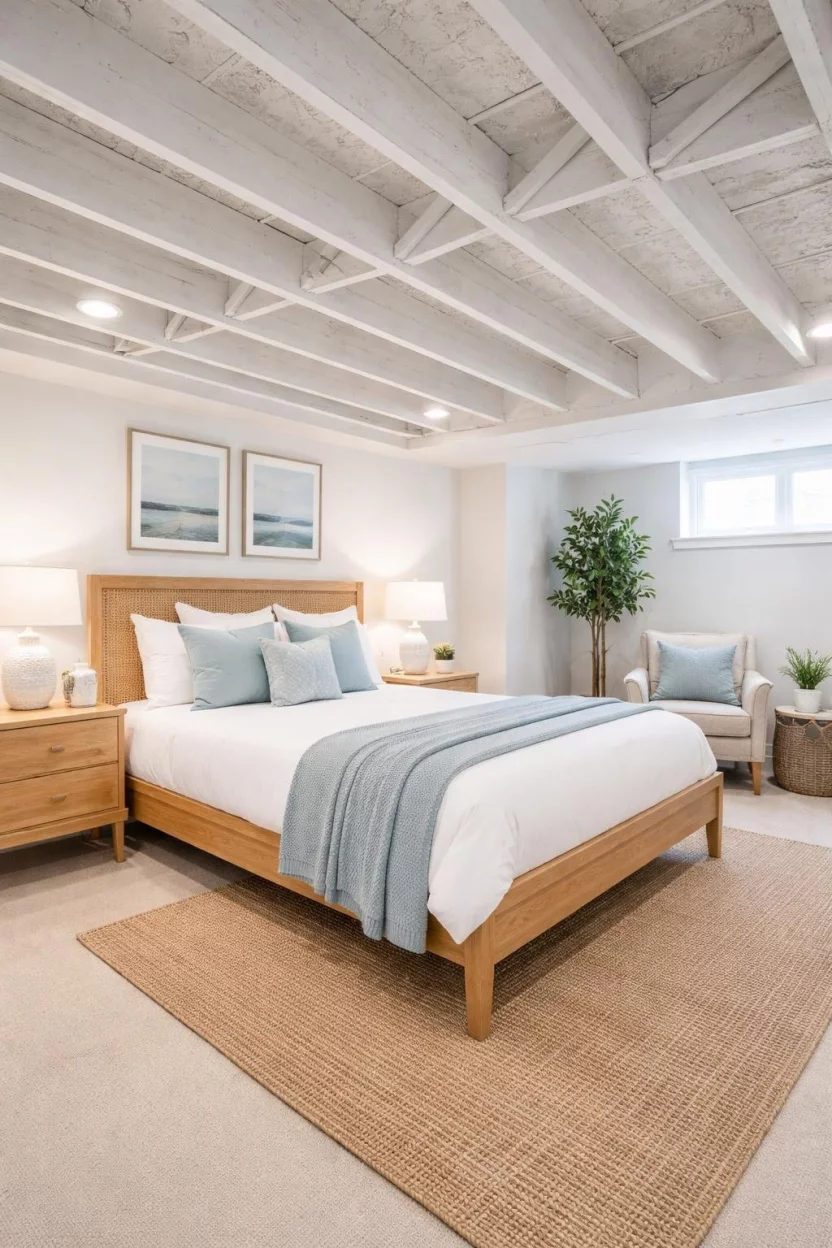
Whitewashing is the perfect middle ground between raw wood and solid paint.
You dilute white paint with water and brush it onto your joists, allowing the wood grain to peek through.
This brightens up the basement significantly without making it feel like a sterile hospital room.
It has a soft, beachy vibe that looks great in bedrooms or playrooms.
The process is very forgiving, as you do not need a perfect coat to achieve a beautiful, textured result that reflects natural light.
LED Recessed Lighting Integration
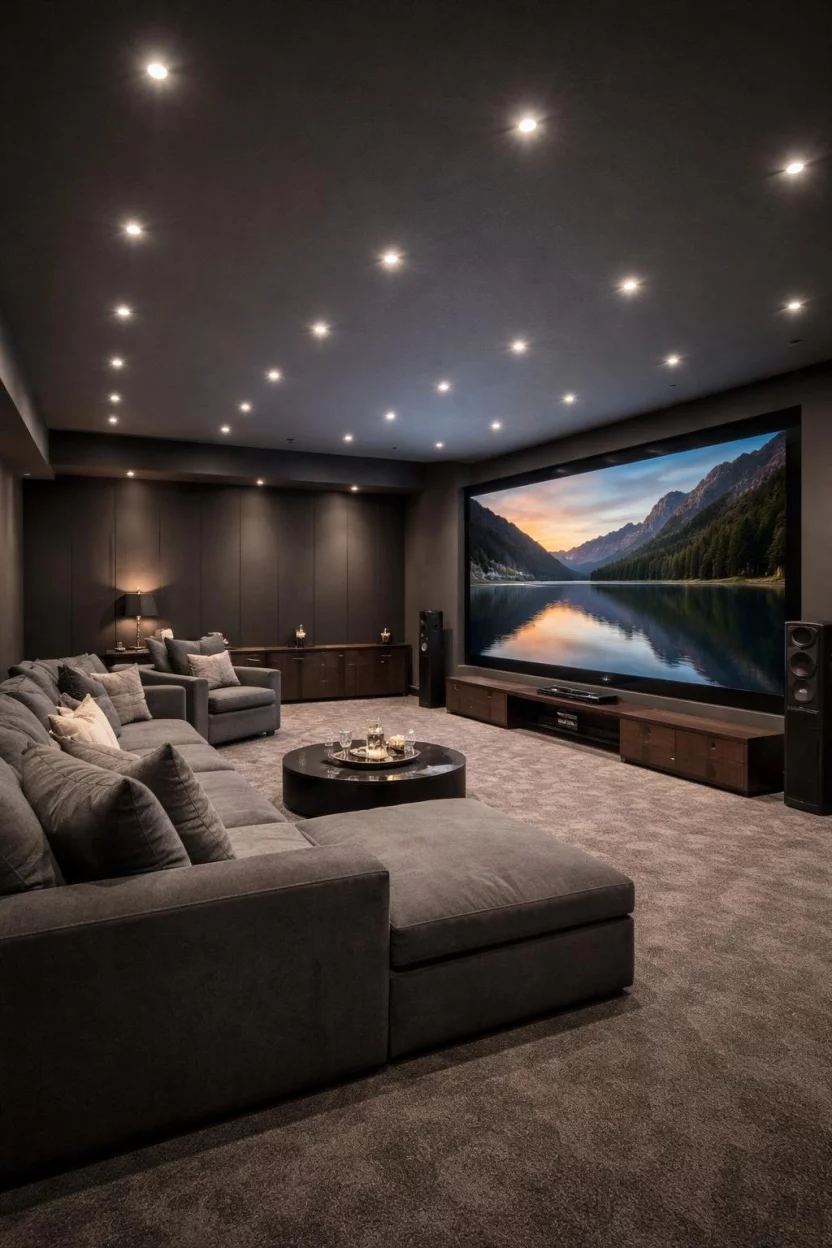
You can improve any ceiling type by adding slim LED recessed lights.
These modern puck lights are so thin they can fit almost anywhere, even if a joist is in the way.
You can choose different color temperatures to change the mood from productive to cozy.
Integrating these lights into your ceiling design eliminates the need for bulky lamps that take up floor space.
Using smart dimmers allows you to control the basement vibe directly from your phone, making the space feel truly high tech.
Suspended Acoustic Panels

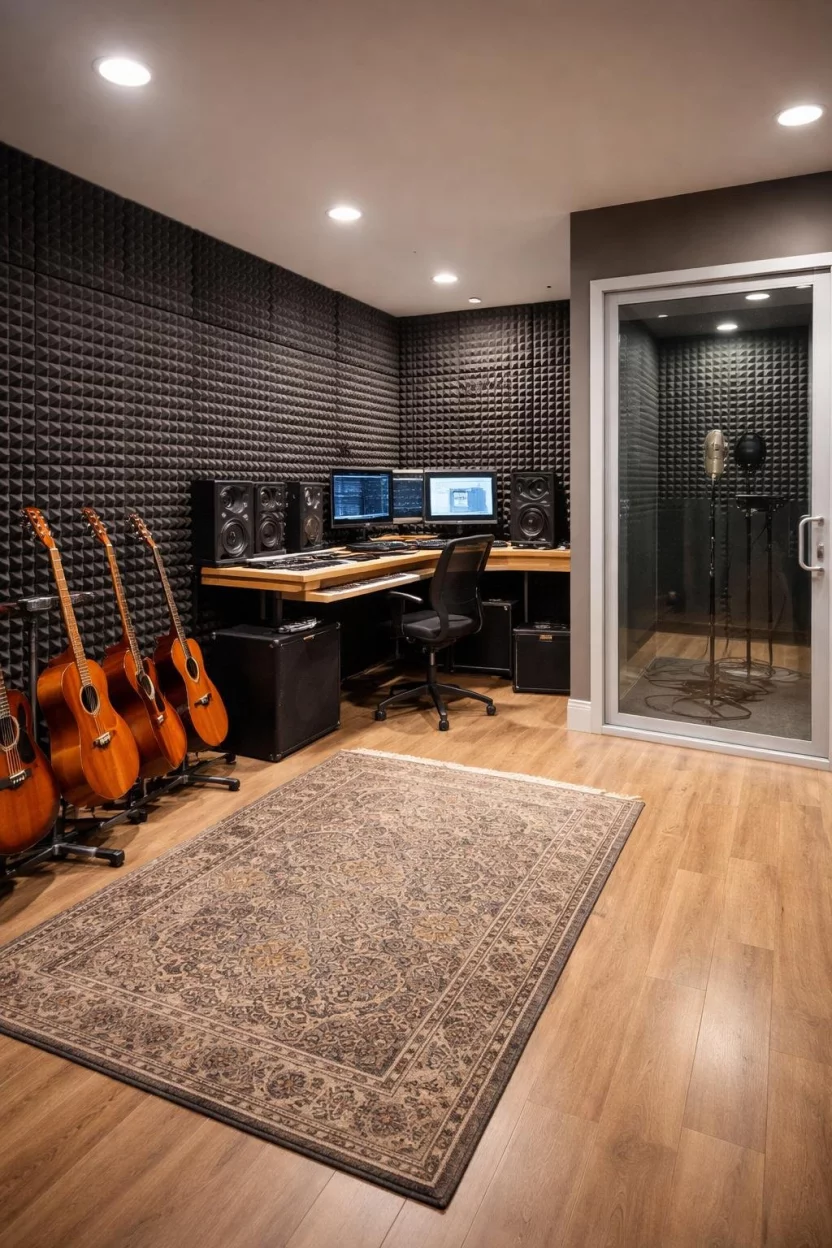
If your basement sounds like an echo chamber, suspended acoustic panels are the solution.
These fabric wrapped boards absorb sound waves and stop noise from traveling upstairs to bother everyone else.
You can hang them in a cloud formation or as vertical baffles for a professional studio look.
They come in every color imaginable, allowing you to create a functional design element.
This is a must have for any basement intended for gaming, movies, or the occasional garage band practice session.
Shiplap Ceiling Boards
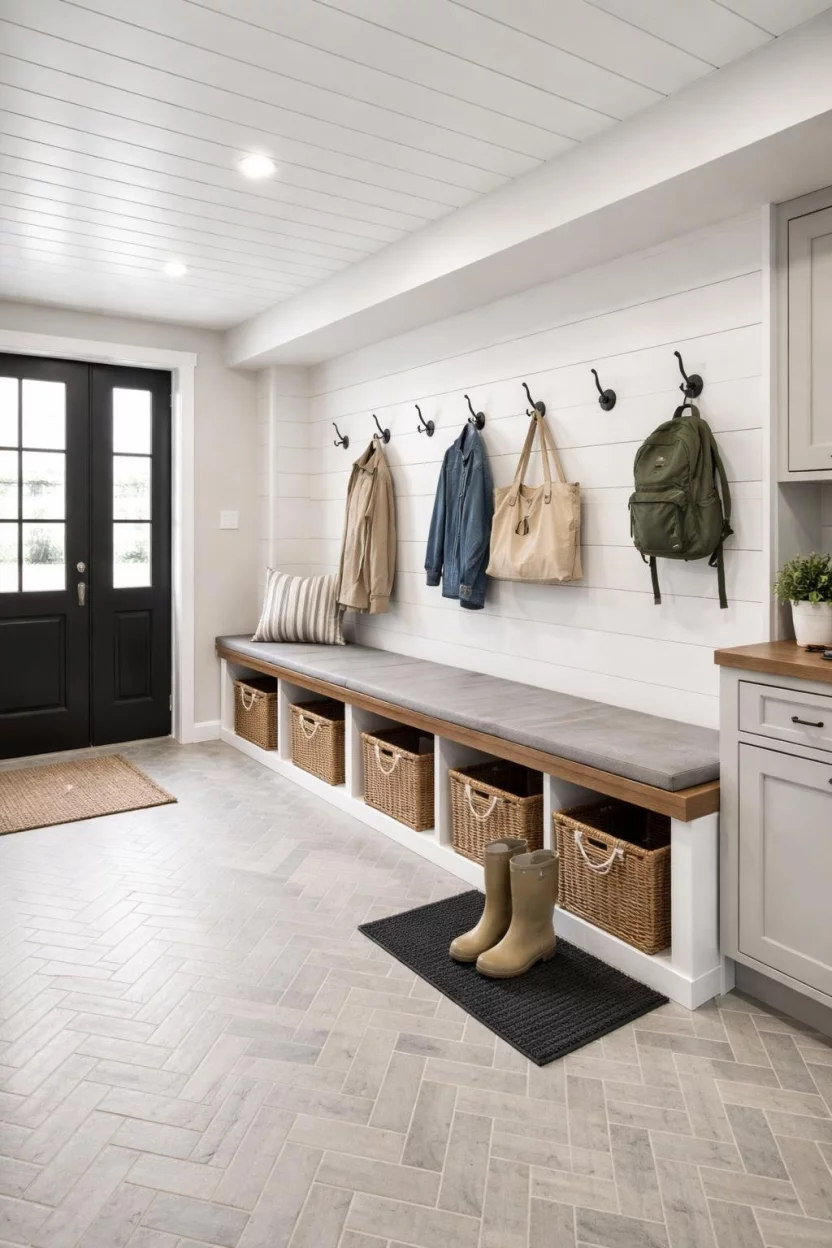
Shiplap is not just for walls.
Running these long, horizontal planks across your ceiling creates a sense of space and a trendy farmhouse feel.
You can use MDF planks for a perfectly smooth finish or real wood for more character.
Using a nickel gap tool ensures the spaces between the boards stay perfectly even throughout the entire room.
It provides a lot of texture without the complexity of a coffered ceiling.
A semi gloss paint makes the shiplap easy to wipe down.
Industrial Exposed Elements
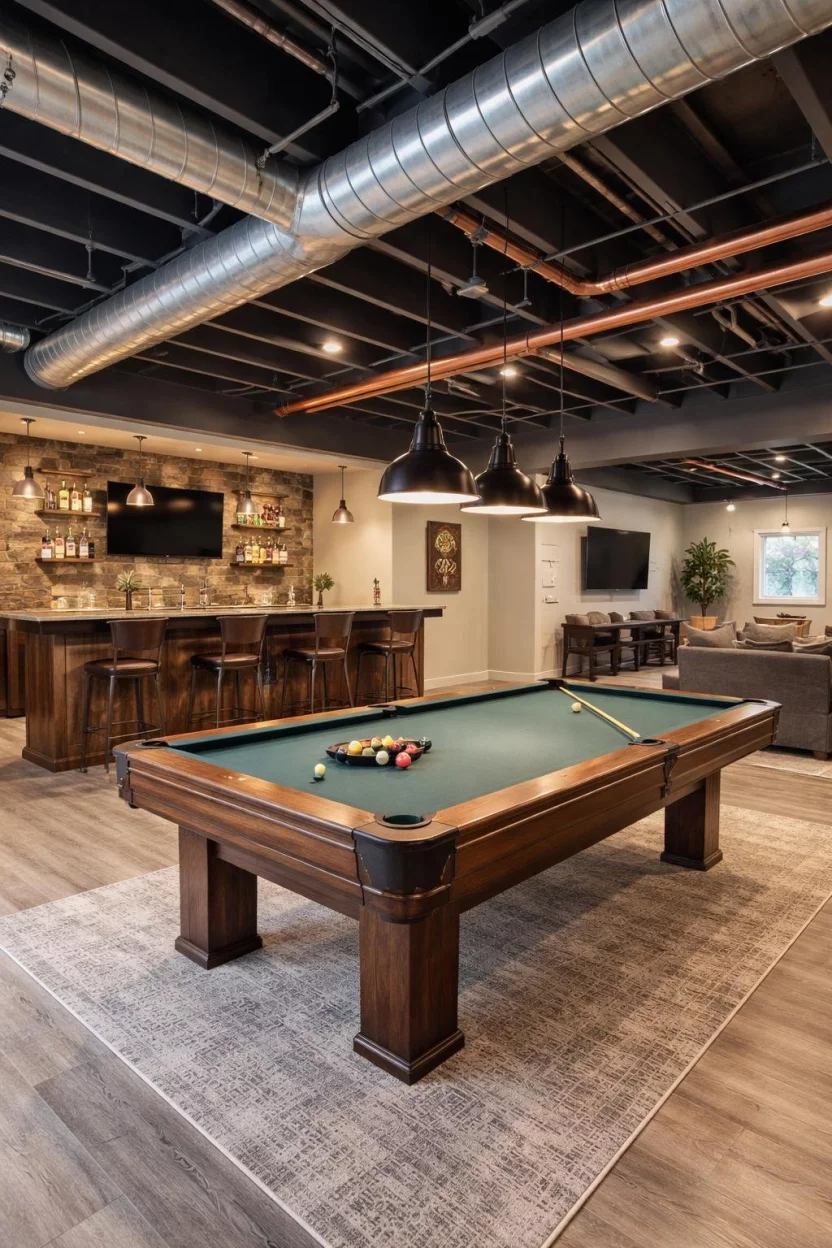
Sometimes you should just leave everything exactly where it is.
Celebrate the raw guts of your home by cleaning up the copper pipes and ductwork.
You can polish the copper until it shines or use galvanized metal paint to touch up the silver ducts.
This look works best when you organize the wires into neat bundles with zip ties.
Pair these raw elements with Edison bulbs and old fashioned switch plates to complete the factory vibe.
It saves you money while adding tons of personality.