
6 Best Balcony Privacy Screens for Apartments 2026

This post may contain affiliate links. As an Amazon Associate I earn from qualifying purchases. If you choose to make a purchase, I may earn a small commission at no extra cost to you.
An open apartment balcony can leave you exposed to neighbors, street views, and strong sun. A screen can add privacy without shutting off every breeze, but the right choice depends on how much shade you want, how you plan to fasten it, and how much rail you need to cover.
These picks cover common needs, from breathable HDPE mesh to a longer panel and a leafy decorative screen. Amazon Basics Privacy Screen Fence earns the top spot with a 3 x 10 ft size, subtle airflow, weather-resistant HDPE, and tool-free zip-tie setup. Below, you’ll find the best balcony privacy screens for apartments you can buy in 2026, plus a guide to choosing one for your balcony.
Our Top Balcony Privacy Screens Picks

Amazon Basics Privacy Screen Fence
- Size: 3 x 10 ft
- Privacy/shade: Reduces outside visibility
- Material: 175 GSM HDPE, no recycled content

LOVE STORY Balcony Privacy Screen
- Size: 3 x 10 ft
- Privacy/shade: 85%-90% shade
- Material: 100% new HDPE

- Size: 3 x 10 ft
- Privacy/shade: 85%-90% shade
- Material: 100% new HDPE

Cool Area Balcony Privacy Screen
- Size: 3 x 10 ft
- Privacy/shade: 85%-90% shade
- Material: 100% new HDPE

UPGRADE Balcony Privacy Screen Fence
- Size: 3 x 16 ft
- Privacy/shade: Up to 90% blackout
- Material: 170 GSM non-recycled HDPE

ODTORY Artificial Ivy Privacy Screen
- Size: 40 x 120 in
- Privacy/shade: Visual privacy
- Material: Artificial ivy leaves
More Details on Our Top Picks
Amazon Basics Privacy Screen Fence gives you a straightforward 3-by-10-foot black screen for an apartment railing or patio fence. Its 175 GSM HDPE fabric reduces outside visibility while letting subtle air and light pass, so you keep some airflow without turning the balcony into a solid wall.
Reinforced hems and aluminum grommets run along all four sides, and it includes 20 12-inch zip ties for tool-free installation. The weather-resistant screen also has an anti-oxidation treatment, a useful fit if you plan to leave it outdoors through changing weather.
Compared with the LOVE STORY screen, this one gives you a stated fabric weight and a counted set of ties, while LOVE STORY lists a specific shade range. This Amazon Basics Privacy Screen Fence suits you if you want standard 10-foot coverage and a little air and light flow; expect it to reduce views rather than create a fully opaque wall.
Bottom line: Choose it for a plain black screen with defined fabric weight, reinforced edges, and included ties. It suits you if you want a little airflow alongside reduced visibility.
LOVE STORY Balcony Privacy Screen suits you if you want breathable dark-gray coverage for a 3-by-10-foot railing. Its new HDPE weave lets air and light through, while the 85%-90% shade rate reduces views across the balcony without making it fully closed.
That balance keeps some daylight and airflow, and the fabric blocks up to 95% of UV rays. A 3 cm hem and aluminum grommets line all four sides, while included zip ties let you attach or remove the screen without tools.
Compared with the Amazon Basics screen, LOVE STORY gives you a stated shade range, while Amazon Basics lists fabric weight and includes 20 ties. This LOVE STORY Balcony Privacy Screen works through all seasons, but its fabric has a ±4-inch length tolerance, so avoid pulling it too tight and keep it away from open flames.
Some visibility can still pass through the breathable weave, so it suits you better than a solid panel if you want light and airflow.
Bottom line: Pick it if you want a breathable screen with a clear shade range and simple tie-on installation. It works well when you still want some light and air on your balcony.
SUNLAX Balcony Privacy Screen gives you a black 3-by-10-foot cover if you want regular attachment points along the railing. Its HDPE fabric provides 85%-90% shade and up to 95% UV protection, which can reduce sightlines while adding shade to your balcony.
Double stitching reinforces the screen, and grommets sit 19.68 inches apart to give you a consistent tie-down layout. Included zip ties make one-person, tool-free installation simple, though the stated ±5-inch tolerance means you should allow for a little variation in the finished length.
Compared with LOVE STORY, SUNLAX gives you precise grommet spacing, while LOVE STORY specifies its hem and aluminum grommets. This SUNLAX Balcony Privacy Screen suits you if you want black fabric with regular attachment points, but its 85%-90% shading still leaves some light rather than creating full blackout.
Choose it if you want an uncomplicated black screen with clearly spaced tie points.
Bottom line: Choose SUNLAX if you want grommets spaced at regular intervals for a tidy tie-down layout. It fits you if you prefer a plain black screen with a stated shade range.
Cool Area Balcony Privacy Screen gives you a brown 3-by-10-foot cover when black mesh would feel too stark against your railing. New HDPE fabric lets breezes and soft light through, while its 85%-90% shade rate reduces outside views and its UV protection reaches 95%.
Double-stitched hems and grommets spaced 19.68 inches apart give the screen regular tie points, and included zip ties let one person install it without special tools. It resists sun, wind, rain, and snow, so you can leave it up through changing weather.
Compared with SUNLAX, this Cool Area Balcony Privacy Screen shares the listed grommet spacing and shade range but gives you a brown finish and clear airflow details. It can also help block debris and contain pets, though you should avoid overtightening it and keep it away from open flames.
Allow for a ±4-inch size tolerance when you plan how much of your railing the fabric will cover.
Bottom line: Pick this screen if you want brown fabric, airflow, and shade on a standard-length railing. It also suits you if you want a screen that can help block debris.
UPGRADE Balcony Privacy Screen Fence suits you if a 3-by-16-foot run covers more railing than a 10-foot screen can. Its 170 GSM non-recycled HDPE fabric offers up to 90% blackout and UV protection for a strongly screened balcony.
Reinforced edges, double support on each side, and anti-rust brass grommets add structure around the perimeter. The screen resists outdoor weather and can shield plants from wind and animals, so you can also use it beyond balcony screening.
Compared with the 3-by-10-foot covers, this model gives you six more feet of length, which suits a longer railing or fence. It supports customization of size, color, and design, and ties come with it for mounting.
This UPGRADE Balcony Privacy Screen Fence makes sense for a long run, but measure your railing first so the 16-foot length matches your space.
Bottom line: Choose it if your balcony needs more than 10 feet of coverage and you want up to 90% blackout. It suits you best when you can use its longer span or need a custom size.
ODTORY Artificial Ivy Privacy Screen suits you if green foliage fits your balcony better than a plain HDPE panel. Its 40-by-120-inch surface connects 12 small panels, and textured faux leaves create a leafy screen while the porous backing lets air circulate.
The panel attaches to wood frames, chain-link fences, and walls, and 50 cable ties come with it. You can cut or rearrange the sections to change the fit, while UV protection makes it suitable for indoor or outdoor spaces. The green surface also works as decoration for walls, roofs, guardrails, and garden spaces.
Compared with fabric screens, this one gives your railing a decorative finish without blocking airflow. Some leaves may come loose when you first unfold it, so lay the panels flat and give them time to settle back into shape.
This ODTORY Artificial Ivy Privacy Screen works well when you value a leafy look and flexible placement over a uniform fabric surface.
Bottom line: Pick it if you want greenery and a decorative screen that still lets air circulate. Its cuttable, connected panels suit you if you want to adjust the layout to fit your space.
Factors to Consider When Choosing Balcony Privacy Screens for Apartments
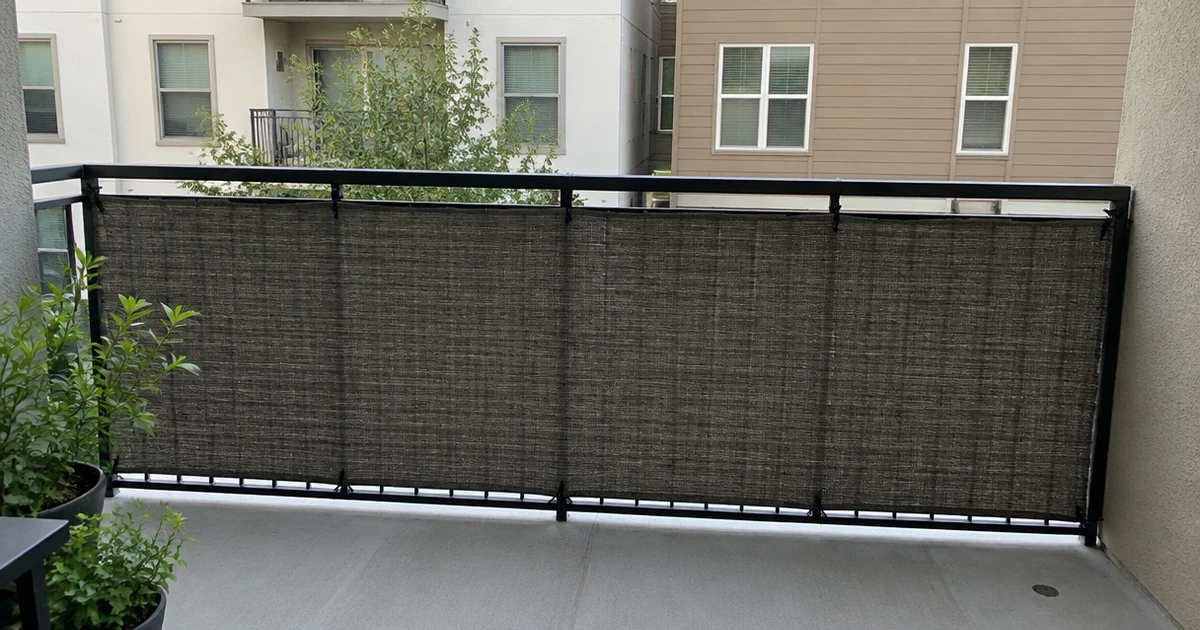
Start by measuring the rail and deciding how much privacy you want. Then compare screen size, shade, fabric, airflow, and attachment details against your balcony’s layout and building rules. A little planning can prevent gaps and awkward fastening.
Measure Your Balcony
Measure the railing span and the height you want to cover before choosing a panel. Check corners, posts, and door swing, since each can affect where the screen fits. Add only the overlap you need to close gaps; extra fabric can bunch at the end or cover a balcony feature you need to reach.
Compare panel length with usable rail length, not the full balcony perimeter. A 10-foot panel covers less railing than a 16-foot panel, so match the length to one continuous run. Measure twice and mark each point where a tie can attach, especially if your railing has wide posts or an uneven shape.
| Panel length | Useful for |
|---|---|
| 10 feet | A shorter railing run |
| 16 feet | A longer continuous run |
Choose Your Privacy and Shade Level
Decide whether you want softer sightline reduction or a darker, more screened-in feel. Shade percentages help compare how much sun a mesh panel cuts: options around 85% to 90% block substantial light, while blackout-style panels can feel more closed off. That number alone cannot tell you exactly what a neighbor sees from every angle.
Think about your balcony’s position, nearby windows, and when you use the space. A panel along one rail may hide a side view but leave the front open, so map the sightlines that matter before you pick a width. If you want daylight and a view of the sky, do not choose only by the highest shade number.
Compare Materials and Weather Protection
HDPE mesh gives you a screen that can admit some air and light. A GSM figure helps you compare material weight, but it cannot predict how a panel will handle conditions on your balcony. HDPE screens around 170 to 175 GSM offer a reference point as you compare fabric weights.
Check for UV protection if the panel will sit in direct sun, and choose weather-resistant material for regular outdoor use. Artificial foliage creates a different look, with coverage from leaves instead of woven mesh.
Match the material to the amount of daylight, visual cover, and style you want on the balcony. Consider whether you prefer a simple mesh surface or a decorative leafy finish.
Balance Airflow and Light
Mesh openness affects both airflow and light. A breathable panel lets some air and soft light through, while a denser weave or higher shade rating can make the balcony darker and cut more sightlines. These goals can pull against each other, so decide which benefit matters more for your space.
Check the shade level and how closely the mesh weaves together. If you sit outside on warm days, give airflow more weight; if direct sun or nearby windows bother you, stronger coverage may suit you better.
Think about the hours you use the balcony, since afternoon sun can make shade more useful than morning light. Let your preference guide the balance.
Check Fastening and Fit
Choose attachment points that work with your railing shape. Screens may use zip ties, grommets, or both, and reinforced or double-stitched edges can support frequent fastening.
Closer grommet spacing gives you more points to secure along an edge; wider spacing needs fewer ties but gives you fewer placement choices. Match the layout to the posts and gaps on your rail.
Before buying, check your lease and building rules for balcony coverings. Plan how you will attach each side, then pull the screen evenly so it sits flat and leaves doors, drainage paths, and railing access clear. Recheck ties after setup and adjust loose sections so the panel does not sag across the rail.
Choose the Screen That Fits Your Balcony
Choose the Amazon Basics Privacy Screen Fence if you want a 3 x 10 ft mesh panel with subtle airflow and tool-free zip-tie fastening. LOVE STORY suits you if airflow and 95% UV protection matter; SUNLAX gives you double-stitched edges and grommets spaced 19.68 inches apart. For a brown screen with shade and airflow, choose Cool Area.
Pick UPGRADE for its 3 x 16 ft reach, reinforced edges, and brass grommets. ODTORY adds leafy visual cover with a porous build that lets air circulate. Match your choice to the rail span, amount of shade, and fastening layout you need.
Frequently Asked Questions
Do balcony privacy screens block every view?
No screen can promise privacy from every angle. Mesh and foliage screens reduce direct sightlines, but nearby balconies, open sides, and viewing height all affect what others can see. Stand where neighbors might look from and check the screen’s coverage before you mount it.
Can a privacy screen still let air through?
Yes, many woven mesh screens leave small openings for air and light. An open weave lets breezes pass, though stronger coverage may reduce both airflow and daylight. Look for airflow or shade features that match your needs, then decide which benefit matters more on your balcony.
How do I attach a screen to an apartment railing?
Use ties or other fasteners that match both the screen’s grommets and the railing. Secure each edge without blocking a door or drainage path, then check the panel for loose spots. Ask your landlord or building manager about balcony rules before attaching a screen, especially if the railing faces a shared area.
Can I leave a screen up all year?
Some outdoor screens use UV protection and weather-resistant materials, but conditions vary by balcony. Check that the screen and fasteners suit your local weather, and inspect them from time to time. Remove or secure the panel during severe weather if its attachment cannot hold it firmly.
How do I choose the right shade percentage?
Start with how much sun and privacy you want to reduce. A higher shade percentage blocks more light, while a more open screen can keep the balcony brighter and airier. Think about nearby windows and the times you use the space, then choose a level that fits those needs.


