7 Best Boot Trays for Mudrooms 2026

This post may contain affiliate links. As an Amazon Associate I earn from qualifying purchases. If you choose to make a purchase, I may earn a small commission at no extra cost to you.
Boots track in mud, rain, and grit, leaving your entryway damp and messy. A boot tray gives wet footwear one place to drain, but a small footprint or low rim may let water escape onto the floor. Your space and daily cleanup habits should guide your choice.
Check the tray’s size, rim, material, and grip before you buy. The GORILLA GRIP Natural Rubber Boot Tray stands out as the best overall choice, with a 32 x 16-inch footprint and room for 20 cups. This guide to the best boot trays for mudrooms in 2026 also covers long, textured, recycled, and multi-tray options, so you can find a shape and setup that suits your entryway.
Our Top Boot Trays for Mudrooms Picks
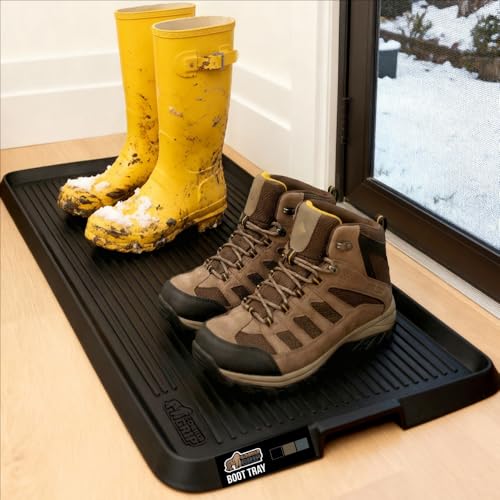
GORILLA GRIP Natural Rubber Boot Tray
- Size: 32 x 16 inches
- Material: Natural rubber
- Raised Edge: 0.8-inch; holds 20 cups

- Size: 16 x 27.5 inches
- Material: 100% rubber
- Raised Edge: Raised; 1-inch tray height

- Size: 40 x 16 inches
- Material: Recyclable rubber
- Raised Edge: 1.18 inches

Ottomanson Multi-Purpose Boot Tray
- Size: 15 x 30 inches
- Material: Heavy-duty polypropylene
- Raised Edge: 1.2 inches

Stalwart All-Weather Boot Tray
- Size: 23.75 x 15.5 inches
- Material: 100% recycled polypropylene
- Raised Edge: Raised; 1.25-inch tray height

PETABBY Polypropylene Boot Tray
- Size: 16.7 x 12.8 inches each
- Material: Polypropylene plastic
- Raised Edge: 1.2-inch tray height

- Size: 16 x 27.5 inches
- Material: Heavy-duty rubber
- Raised Edge: Raised edges
More Details on Our Top Picks
The GORILLA GRIP Natural Rubber Boot Tray suits you if wet footwear leaves water and dirt around your entry. Its 32-by-16-inch surface gives you a longer landing area than several compact options, while the 0.8-inch raised edge holds up to 20 cups of liquid.
Raised ribs create airflow channels under shoes, and the textured surface helps reduce moisture. A slip-resistant underside helps the tray stay put on tile, hardwood, or concrete.
You can lift it by its built-in handles to empty it, then rinse or wipe it clean. The flexible natural rubber also lets you roll it up for storage, though a slight rubber scent may greet you at first. Air it out before use.
Use it for pet bowls, plants, tools, or cleaning supplies as well as boots. The GORILLA GRIP tray takes more floor space than a small two-piece set, but it gives you a useful mix of size, grip, and easy handling.
Bottom line: Choose this if you want a roomy rubber tray with handles, airflow ribs, and a flexible shape you can roll away.
The SUPENUIN Rubber Boot Tray gives you a sturdy place for muddy shoes without taking up as much length as the longest options here. Its 16-by-27.5-inch size fits multiple pairs of boots, and the heavy-duty rubber weighs 3.3 pounds.
A textured surface helps keep footwear in place and out of dirty water. The raised pattern and edges also help contain drips and mud, while the nonslip bottom helps limit sliding on different floors.
When dirt builds up, rinse or brush the tray clean. Its waterproof, stain-resistant surface also suits pet food spills or scattered cat litter, so you can use it beyond the entryway.
Compared with the GORILLA GRIP tray, this one has a shorter footprint and no built-in handles. You still get a durable, easy-clean rubber mat, but its 27.5-inch length may feel limiting if you need a long row for several pairs.
Bottom line: Pick it if you want a heavy rubber tray with a textured surface and enough length for several pairs of shoes.
The Matace Long Rubber Boot Tray works well if you need a long, narrow landing spot for shoes or wet gear. At 40 by 16 inches, it stretches farther than the other single trays here, while its 1.18-inch raised edge helps contain rainwater, mud, or spilled pet food.
The recyclable rubber resists abrasion and deformation, and the nonslip material helps keep the tray steady. You can rinse it with water for cleanup, which keeps routine care simple.
Use it for boots, plants, pet food, umbrellas, or storage in a car trunk. Compared with the two smaller PETABBY trays, this gives you one continuous surface instead of separate spots around the home.
The long shape gives you room to line up footwear, but it also needs a clear stretch of floor. The Matace tray makes the most sense for a long entryway or mudroom, not a tight corner where a compact tray would fit more easily.
Bottom line: Choose this if you want one long rubber tray for a row of footwear or a wide area of wet gear.
The Ottomanson Multi-Purpose Boot Tray makes sense if your entryway shares space with pet supplies or household projects. Its 15-by-30-inch footprint and 1.2-inch raised edge help catch water, mud, food, litter, or paint before messes reach the floor.
The waterproof polypropylene tray weighs 1.36 pounds and works indoors or outdoors. Compared with the natural rubber GORILLA GRIP, this tray uses a different material and a slightly narrower footprint, but it still offers a long surface for wet shoes.
You can also set it under a litter box or pee pad, use it for pet bowls, or bring it into a gardening area. That range of uses makes it a handy choice if boots are only one source of floor mess in your home.
The trade-off is its 15-inch width, which gives you less side-to-side room than wider trays. The Ottomanson still provides a useful balance of shoe coverage and spill containment without taking up a full 16 inches of width.
Bottom line: Pick this if you want one tray to protect floors from boot drips, pet mess, or spills from home projects.
The Stalwart All-Weather Boot Tray is a practical fit for you if you want a basic tray for an entryway, porch, or patio. Its 23.75-by-15.5-inch surface holds shoes, while the raised edge helps contain water, sleet, snow, and dirt.
The tray uses 100% recycled polypropylene, which sets it apart from the rubber options here. You can rinse it with water, wipe it with a cloth, or use a soft-bristle brush to clear stuck-on dirt.
Its simple black design also works under pet food and water bowls. At 1.15 pounds, it is lighter than the 3.3-pound SUPENUIN rubber tray, but the Stalwart gives you a smaller footprint than longer mats such as the Matace.
This tray favors straightforward indoor and outdoor use over extra handling features. You get a simple way to keep drips and debris contained, plus a 30-day warranty.
Bottom line: Choose this if recycled polypropylene and all-weather use matter more to you than extra room or special handling features.
The PETABBY Polypropylene Boot Tray gives you two smaller trays instead of one long mat. Each measures 16.7 by 12.8 inches, so you can place them in separate spots for muddy shoes or pet bowls.
The raised 1.2-inch lip helps contain water, food, and snacks, while four anti-slip pads on each tray help limit movement. The polypropylene material resists wear, and you can rinse the trays with water to clean them.
You can also use them in a car, under indoor flower pots, or to hold painting supplies and drainage utensils. Compared with the single-surface SUPENUIN, the PETABBY set gives you more flexibility in placement, but each tray offers less room for a row of boots.
The two-piece setup suits homes with more than one mess-prone area. Its compact footprint also makes it easier to place one tray near the door and another by a pet feeding spot.
Bottom line: Choose this set if you want two compact trays for separate areas rather than one large boot mat.
The Tchdio Rubber Boot Tray gives you a straightforward rubber mat for an entryway, mudroom, or garage. Its 16-by-27.5-inch footprint fits multiple pairs of footwear, while the raised edges help keep rainwater, snow, and mud off your floor.
The heavy-duty rubber surface works indoors or outdoors, and its non-slip design helps the tray stay in place. You can wipe it down or rinse it when dirt builds up.
Use it for dirty boots in the garage or keep it by a door for shoes and sneakers. The size matches the longer single-tray format of the SUPENUIN, while the PETABBY set offers two smaller trays you can place apart.
The Tchdio keeps its purpose simple: contain footwear mess without taking over a very long stretch of floor. It suits you if a rubber tray and easy cleanup matter more than a flexible roll-up shape or built-in handles.
Bottom line: Pick this if you want a simple rubber tray for wet shoes in a mudroom, entryway, or garage.
Factors to Consider When Choosing Boot Trays for Mudrooms
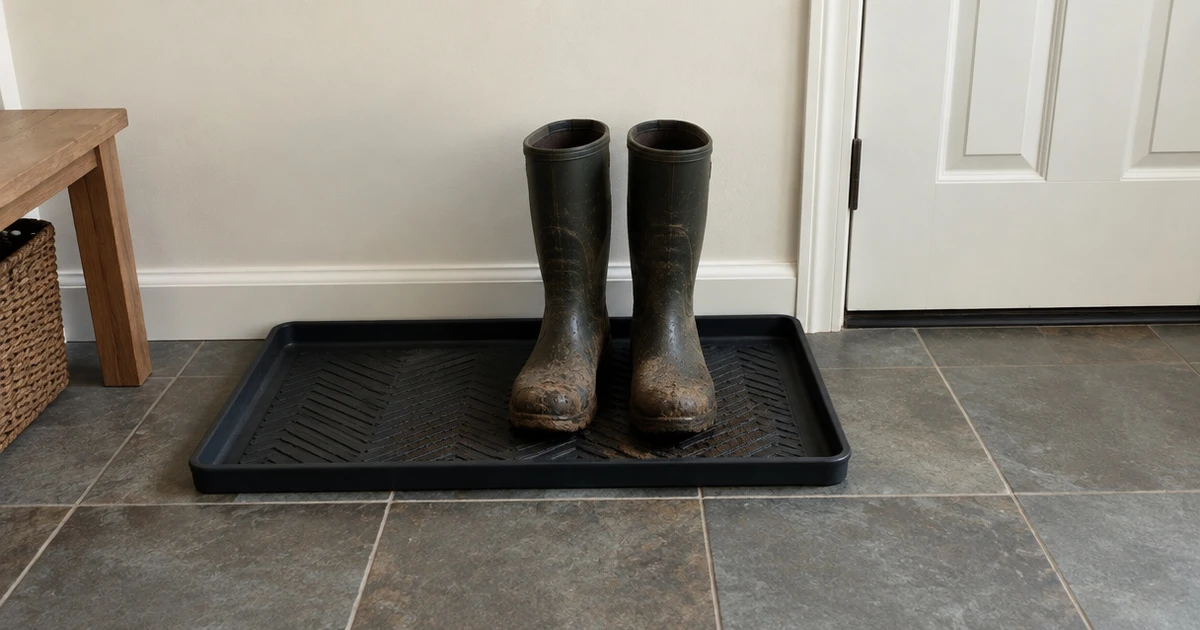
Start with the space you have and the mess you need to catch. A tray should fit your entryway, hold the footwear you use, and stay easy to clean.
Footprint and Placement
Measure the floor area where you plan to put the tray, including the space around doors and walkways. A compact tray can suit a tight entry, while a longer shape gives you room to line up more footwear. Check both length and width, since a tray can fit one direction but block a path in another.
Think about the shoes and boots you use most, too. Tall or wide footwear may need more room than a slim pair of shoes. Keep the tray close to the entry where wet footwear comes off, but leave enough space for people to walk past it.
| Footprint | May suit |
|---|---|
| About 16 x 13 inches | A compact entry area |
| About 16 x 28 inches | A longer, narrow space |
| About 40 x 16 inches | A long row of footwear |
Rim Height and Capacity
A raised rim helps hold rainwater and melting slush inside the tray. Compare the edge height with the kind of mess your household tracks in. A rim around 0.8 inch sits lower than one around 1.2 inches, so a taller edge may suit wetter boots or a busier entry.
Capacity matters, too. Some trays state how much liquid they hold, while others give you only the tray’s height and size. Before you buy, check:
- How many pairs you want to fit at once.
- Whether the rim leaves enough room for bulky soles.
- How much water the tray can hold before you empty it.
Material
Rubber and polypropylene are common choices, and each has practical differences. Rubber trays can have a flexible feel and textured surfaces. Polypropylene trays offer a plastic option, including versions made with recycled material.
Check the material against the spot you plan to use: some trays suit both indoor and outdoor areas, while others work indoors or outdoors as specified for that tray. If you want to reduce new material use, look for a recycled or recyclable option. Also think about how heavy footwear will sit on the tray and whether you prefer a firm or more flexible base.
Grip and Stability
A tray that shifts underfoot can spill water or make the entry harder to use. Look for a nonslip underside, anti-slip pads, or a textured base, and match the feature to your floor. Smooth tile may call for a tray with added grip underneath, while surface texture can help keep footwear from sliding around.
If you use the tray outside, think about whether it will sit on a level surface. For a shared entry, place it where people can step around it without catching a foot on the rim. The tray should stay put during normal use without blocking the doorway.
Cleaning and Everyday Use
Wet dirt collects in the tray, so pick a cleaning method you’ll use regularly. Many trays rinse with water or wipe clean; some also suit brushing with soft bristles. A textured surface can help keep footwear from slipping, but dirt may settle into its grooves, so check whether you can reach them with a brush.
Think about where you’ll rinse the tray and where it can dry. If you plan to move it often, a size you can lift and carry comfortably may make cleanup simpler. Check that the tray’s indoor or outdoor use matches the place you plan to keep it.
Picking a Tray That Fits Your Entryway
Choose the GORILLA GRIP Natural Rubber Boot Tray if you want a broad everyday tray that holds 20 cups and has a slip-resistant underside. The SUPENUIN adds a textured rubber surface, while the Matace gives you a 40-inch length for a longer row. For mixed messes, the Ottomanson has a 1.2-inch rim, and the recycled Stalwart has a 1.25-inch tray height.
Pick PETABBY if two separate trays suit your layout, or Tchdio for a simple rubber tray with raised edges. Match the footprint and rim to your footwear and the spot where you plan to set it.
Frequently Asked Questions
What size boot tray should you get?
Measure the spot where you want the tray to sit, then compare its length and width with your footwear. A compact tray can fit a small entry, while a longer one gives you more room to line up boots. Leave space for doors to open and people to pass without stepping over the tray.
Are rubber or plastic boot trays better?
Both materials can catch water and dirt. Rubber trays may offer a flexible feel or textured surface, while polypropylene gives you a plastic option. Check the tray’s grip, rim, and cleaning needs along with its material. The best fit depends on your floor, footwear, and where you plan to use it.
Can you use a boot tray outside?
Some boot trays suit indoor and outdoor use, while others fit only one setting. Check the intended use before placing a tray outside. Pick a level spot near the entrance, and choose a size that leaves the doorway clear. Rinse or wipe the tray as needed to clear away collected dirt and water.
How do you clean a boot tray?
Empty the tray, then rinse it with water or wipe it clean, depending on its surface. A soft-bristle brush can help remove dirt from textured areas. Let the tray dry before you put footwear back on it. Regular cleaning keeps mud and water from building up around the footwear.
Do boot trays keep water off the floor?
A raised edge helps contain water and slush, but the tray still needs enough capacity for the mess you expect. Check the tray’s dimensions, rim height, and liquid capacity before you buy. Empty it when water collects, and place it on a level surface so liquid stays inside.