3 Best Lazy Susans for Corner Cabinets 2026

This post may contain affiliate links. As an Amazon Associate I earn from qualifying purchases. If you choose to make a purchase, I may earn a small commission at no extra cost to you.
Corner cabinets can hide everyday cookware behind the door, forcing you to reach past other items. A lazy susan brings stored pieces into view with a turn, but a poor fit can waste space or block the opening.
Choose a shelf shape that matches your cabinet, then check interior height and clearance. Rotation and material also matter because they affect access and how the organizer suits your storage needs.
The list below covers different needs, including full-circle access and metal construction. The Rev-A-Shelf Kidney Dual-Tier Lazy Susan is the top pick, and these are the best lazy susans for corner cabinets you can buy in 2026.
Our Top Lazy Susans for Corner Cabinets Picks

Rev-A-Shelf Kidney Dual-Tier Lazy Susan
- Dimensions: 32 x 22.43 x 26 in.
- Shape: Kidney-shaped
- Shelf count: Two

Rev-A-Shelf 2-Tier Pie-Cut Lazy Susan
- Dimensions: 28 x 18.25 x 26 in.
- Shape: Pie-cut
- Shelf count: Two

JOWBOOW 28-Inch Kidney Lazy Susan
- Dimensions: 28-inch diameter; 26-31-inch height
- Shape: Kidney-shaped
- Shelf count: Two
More Details on Our Top Picks
Rev-A-Shelf Kidney Dual-Tier Lazy Susan gives you a wide storage area and strong shelf capacity for a corner base cabinet. Its 32-inch width and 84-pound capacity per shelf make it the highest-capacity option here.
You get two injection-molded polymer shelves, with bottom-mounted hardware that lets them rotate independently. The post adjusts to fit an interior cabinet height from 26 to 31 inches, and the door stays attached to the cabinet rather than the organizer.
This setup suits you if you want to keep your cabinet door in place and store heavier kitchen items. It needs more room than the 28-inch models, so check the 32-by-22.43-inch footprint and leave the recommended two inches of wall clearance.
Compared with the pie-cut Rev-A-Shelf, this one has a kidney shape and a limited lifetime warranty. Its rotating hardware does not specify a full 360-degree turn, so you may prefer the pie-cut model if that range matters most.
Bottom line: Choose this Rev-A-Shelf model if your corner cabinet fits its larger footprint and you want high shelf capacity with the door left in place.
Rev-A-Shelf 2-Tier Pie-Cut Lazy Susan suits you if your corner cabinet uses a pie-cut shelf layout and you want full-circle access. The two white polystyrene shelves rotate 360 degrees, while chrome posts and hardware add a metal finish.
Each shelf holds up to 68 pounds, and the adjustable post fits an interior height from 26 to 32 inches. The shelves measure 28 inches wide by 18.25 inches deep, and their smooth plastic surface is easy to clean.
This model needs a specific door setup: remove the door from the old lazy Susan and attach it to the new unit. You also need about two inches of clearance between the wall and the organizer.
Compared with the larger kidney-shaped Rev-A-Shelf, this one takes up less width and offers a stated full rotation range. Its pie-cut shape and door attachment make it a better match for that cabinet arrangement than for setups that keep the door fixed to the cabinet.
Bottom line: Pick this model if your cabinet takes a pie-cut organizer and you want two easy-clean shelves with full 360-degree rotation.
JOWBOOW 28-Inch Kidney Lazy Susan gives you a metal alternative to the two plastic Rev-A-Shelf models. Its powder-coated metal shelves have non-slip liners that help keep jars and bottles steady as you turn them.
The two shelves rotate 270 degrees, and you can adjust their height to suit what you store. The unit measures 28 inches across and adjusts from 26 to 31 inches tall, so check those dimensions against your cabinet before you buy.
This organizer cannot attach to the cabinet door, which limits where you can install it. It also turns through a smaller arc than the 360-degree pie-cut Rev-A-Shelf, though its dark gray finish may suit a kitchen with gray or stainless steel details.
JOWBOOW works well if you want a metal build and lined shelves for smaller items. The kidney shape gives you a different layout from the pie-cut model, while the 270-degree rotation leaves part of the full turn unavailable.
Bottom line: Choose this JOWBOOW organizer if you want metal shelves with non-slip liners and your cabinet can use a unit that does not mount to the door.
Factors to Consider When Choosing Lazy Susans for Corner Cabinets
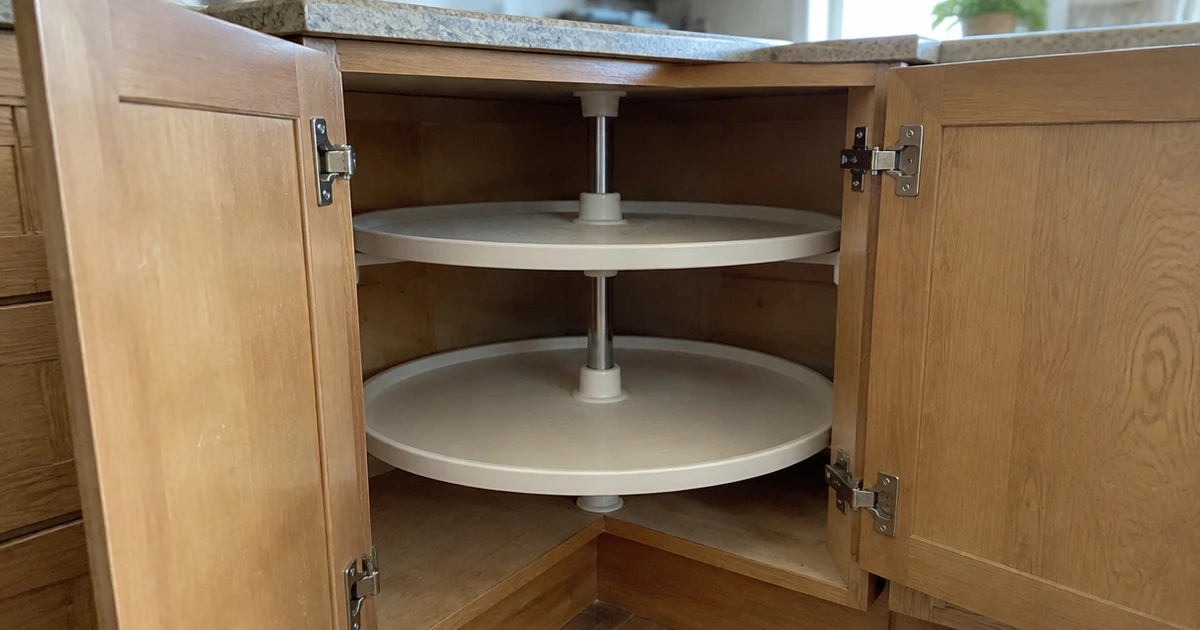
A corner lazy susan needs to fit the cabinet opening and turn without hitting the frame or door. Take measurements before you shop, then compare shelf shape, height, rotation, and material to your storage needs.
Cabinet Fit and Shape
Start with the cabinet opening and interior, not the shelf diameter alone. Measure clear width and depth at the shelf level, then note where the frame, hinges, and door sit as the door swings. The organizer needs room to turn without catching those parts, and its shelves must pass through the opening if you plan to move them in later.
Sketch the corner from above and compare its outline with the shelf shape. A kidney-shaped design can work with a central opening, while other shapes suit different layouts.
Check clearance at the upper and lower shelf positions, since cabinet walls can angle or narrow. Look at the opening from several angles, since the door can reduce usable space.
Shelf Shape and Access
Think about how you reach the items you use most. A kidney-shaped shelf has a cutout that can line up with the cabinet opening, while a pie-cut shelf follows a cutaway outline that can clear part of the opening. Full-circle access depends on the organizer’s turning range, so do not assume every round shelf spins all the way around.
Choose a shape that lets you reach the back of the shelf without moving everything in front. Use this quick comparison as a starting point, then check the outline against your cabinet opening. Your cabinet layout decides which feature helps most.
| Shelf shape | Access pattern | Fit check |
|---|---|---|
| Kidney-shaped | Access through a cutout | Opening and hinge clearance |
| Pie-cut | Cutaway near the cabinet opening | Room around the door area |
Dimensions and Height
Match the organizer’s overall width and depth to the usable shelf area, not the cabinet’s outside size. Also compare the listed height range with the cabinet’s interior height, including the space below any fixed shelf or top rail. Measure at more than one point if the cabinet floor or ceiling sits unevenly, and leave enough room for shelves to turn without rubbing.
Keep your notes beside product dimensions as you compare options. This small checklist helps you avoid mixing up cabinet size with organizer size:
- Clear width and depth at shelf level
- Interior height where the organizer will sit
- Space around hinges, the frame, and the open door
Rotation and Shelf Count
Rotation affects how much of the shelf you can bring toward the opening. A 360-degree model can spin through a full circle, while a design with a narrower turn may keep shelves from swinging into nearby cabinet parts. Match the turning range to your cabinet layout and check that open doors leave enough room for the shelves to move.
Two tiers can add separate levels for small containers or cookware, but extra shelves also divide the vertical space. Compare the gap between shelves with the height of the items you store, and look for independent movement if you want to turn one level without moving the other. A deep cabinet may benefit more from added reach than extra shelf space.
Material and Upkeep
Material changes the feel and upkeep of an organizer. Molded polymer, polystyrene, and coated metal each have a different surface and structure, so choose the one that suits the items you store and the cleaning routine you can keep. Smooth shelves can be easier to wipe than textured ones, but check the actual finish rather than judging by the material name alone.
Think about what you plan to place on each tier, especially heavier cookware or jars. Use the stated shelf capacity as a limit, and spread weight across the shelf instead of piling it in one spot. A finish that wipes clean may suit pantry spills, while a metal frame may appeal if you prefer a firm structure.
Which Lazy Susan Fits Your Corner Cabinet?
If you want a flexible everyday setup, the Rev-A-Shelf Kidney Dual-Tier Lazy Susan has two shelves that swivel independently and fits a 26 to 31-inch cabinet interior. Choose the Rev-A-Shelf 2-Tier Pie-Cut Lazy Susan if full-circle rotation matters most and your cabinet fits its 26 to 32-inch height range.
For a metal build, the JOWBOOW 28-Inch Kidney Lazy Susan has powder-coated metal construction and a 270-degree turn, with a 26 to 31-inch height range. Compare your cabinet’s interior dimensions and opening with the listed measurements, then choose the rotation and shelf layout that match how you store kitchen items.
Frequently Asked Questions
How do you measure a corner cabinet for a lazy susan?
Measure the clear width and depth inside the cabinet, then measure interior height from the floor to the lowest obstruction. Check the doorway and the space near the hinges as well, since those parts can limit how a shelf turns. Compare these measurements with the organizer dimensions, not the cabinet’s outside measurements.
What shape works best in a corner cabinet?
Choose a shelf shape that matches the cabinet opening and corner layout. Kidney-shaped shelves have a cutout that can provide access through an opening, while pie-cut styles suit cabinets with room for their cutaway shape. Compare the shelf outline with your cabinet before you decide.
Do all corner cabinet lazy susans rotate 360 degrees?
No. Some turn through a full circle, while others stop short to keep shelves within a set path. Check the stated rotation range and think about nearby doors, hinges, and walls. A limited turn can work well when the cabinet layout leaves little room for a full spin.
Can a lazy susan hold heavy pots?
That depends on the organizer’s stated shelf capacity and construction. Check the capacity for each shelf before loading heavy pots, and avoid stacking weight unevenly. A sturdy material alone does not tell you how much weight the organizer can support.
Are two-tier lazy susans useful?
Two tiers give you separate levels, which can help divide smaller items from taller cookware. Measure the vertical space between shelves and compare it with the height of what you plan to store. A single tier may suit bulky items better if extra shelf levels leave too little clearance.