7 Best Shoe Racks for Small Entryways 2026

This post may contain affiliate links. As an Amazon Associate I earn from qualifying purchases. If you choose to make a purchase, I may earn a small commission at no extra cost to you.
Shoes pile up fast near a small front door, where every inch matters. A rack can keep pairs off the floor, but a bulky frame or shallow shelves that cannot hold your everyday footwear may create another problem.
Start with the space you can spare, then match shelf count and shoe capacity to your routine. Check whether a bench, stackable frame, or narrow vertical unit fits how you enter and leave.
Our list of the best shoe racks for small entryways you can buy in 2026 includes options for tight floors, adjustable widths, extra tiers, and fabric shelves. The SONGMICS Bamboo Shoe Rack Bench earns the top spot for combining shoe storage with a seat.
Our Top Shoe Racks Picks

SONGMICS Bamboo Shoe Rack Bench
- Footprint: 27.6"W x 11.3"D x 17.8"H
- Tier count: 2 shelves
- Shoe capacity: At least 6 pairs

- Footprint: 17"W x 11"D x 12.6"H
- Tier count: 2 tiers
- Shoe capacity: 2 pairs per tier

HDDTTZ Expandable Metal Shoe Rack
- Footprint: 17-31"W x 10"D x 16"H
- Tier count: 3 tiers
- Frame material: Metal, rubber caps

ROMGUAR CRAFT Bamboo Shoe Rack
- Footprint: 27"W x 11"D x 20"H
- Tier count: 3 tiers
- Frame material: Bamboo

- Footprint: 27.2" x 11" x 13.2"
- Tier count: 2 tiers
- Frame material: Solid bamboo

Kitsure Fabric Shelf Shoe Rack
- Footprint: 27.5"W x 11.8"D x 13.7"H
- Tier count: 3 tiers
- Frame material: Metal tubes, plastic frames

- Footprint: 17.32"W x 10.24"D x 22.71"H
- Tier count: 4 tiers
- Shoe capacity: 8-10 pairs
More Details on Our Top Picks
The SONGMICS Bamboo Shoe Rack Bench gives you shoe storage and a place to sit while you get ready. Its 27.6-inch width suits a small entryway, and two shelves hold at least six pairs.
The top supports up to 286 pounds, so you can sit down to change shoes or set down your bag. Each shelf handles up to 22 pounds, which suits footwear and a few everyday items.
Natural bamboo gives the bench a warm look, while its ink-black color adds a darker accent. You can also use it as a side table, plant stand, or bathroom rack.
Assembly takes a few steps, and the straightforward shape keeps the focus on seating and storage. Compared with taller racks, this bench uses its top as a useful seat rather than adding more shoe levels.
The SONGMICS bench fits you best if you want a perch near the door along with room for several pairs. Its wider, seat-first design takes more entryway space than the narrowest options here.
Bottom line: Choose it if you want a sturdy spot to sit while changing shoes, with shelves for at least six pairs. It also suits you if you want a rack that can serve as a side table or plant stand.
The BMOSU Bamboo Shoe Rack keeps your entryway setup compact with a 17-inch width and two tiers. Each level holds two pairs, so it works best for a small daily rotation rather than a large shoe collection.
Its slatted shelves accommodate high heels, and the bamboo frame gives you a simple natural look. Anti-slip pads help keep the rack from sliding and protect the floor from scratches.
You can connect another unit with the included round bars to build a taller rack. That gives you a way to add storage without using more floor space.
The rack comes with tools and anti-rust screws, and assembly takes about 10 minutes. Its two-pair-per-tier capacity is lower than the wider options, but the narrow footprint suits a tight doorway.
The BMOSU rack is a good fit if you want a small bamboo shelf for a few pairs. Add a second unit if you need more levels and have enough vertical room.
Bottom line: Pick this rack if you need a narrow shoe shelf for a small entryway and only store a few pairs by the door. Its stackable design gives you room to add another unit later.
The HDDTTZ Expandable Metal Shoe Rack adjusts from 17 to 31 inches wide, so you can fit it into a tight doorway or a wider closet space. It has three tiers and a slim 10-inch depth.
Three reinforced middle tubes support the shelves, and the rack has a stated 150-pound weight capacity. The rounded bars help prevent shoes from catching, while rubber end caps grip the floor and protect it from scratches.
You can assemble the rack without tools, then stack or connect units to add storage. That flexibility sets it apart from fixed-width bamboo shelves.
The open metal bars keep shoes accessible, though they do not shield them from dust like the fabric shelves on the Kitsure rack. You can fit boots or sneakers, and change the rack width as your storage needs shift.
The HDDTTZ rack suits you if your entryway has an awkward width or you want a metal organizer you can adjust. Its expandable frame offers more sizing flexibility than the other picks.
Bottom line: Choose it if a fixed-width rack will not fit your entryway. The adjustable width, tool-free setup, and 150-pound capacity make it a practical pick for changing storage needs.
The ROMGUAR CRAFT Bamboo Shoe Rack gives you three tiers in a 27-inch-wide frame. Its natural bamboo finish works well if you want a wood look without a bulky shoe cabinet.
You can stack two two-tier units for four levels, or combine three units for six. That modular setup lets you add storage as your shoe collection grows, though a taller stack needs enough vertical room.
The heat-treated bamboo resists cracking and warping. Assembly takes about 10 minutes, and the rack can also hold items such as towels, books, plants, and toiletries.
Compared with the BMOSU rack, this model takes up more width but starts with an extra tier. It also offers more height options than a fixed three-tier shelf.
The ROMGUAR CRAFT rack suits you if you want bamboo storage that can grow upward over time. Its multi-room use also makes it handy for organizing items beyond shoes.
Bottom line: Pick this model if you want a bamboo rack with room to expand vertically. It also suits you if you plan to use the shelves for household items as well as shoes.
The Dranixly Bamboo Shoe Rack gives you two tiers and a stackable solid-bamboo frame. Its mocha color offers a darker look than the natural bamboo racks in this roundup.
Each tier holds up to 40 pounds, so you can use the shelves for shoes or other household items. The bamboo has a heat-carbonized treatment that helps it resist water, cracking, and warping.
Grooved joints let you stack another unit without tools, creating a four-tier setup with two racks. The rack also works for items such as books, towels, and toiletries.
The listed size is 27.2 by 11 by 13.2 inches, giving you a wider shelf than the BMOSU model. It starts with only two tiers, so you need another unit if you want more vertical storage.
The Dranixly rack suits you if you want bamboo shelves that can connect without tools. Its per-tier load rating also helps if you plan to store more than lightweight footwear.
Bottom line: Choose it if you want a bamboo rack you can stack without tools and use for items around the home. Its 40-pound-per-tier rating also suits you if you need sturdy shelves for more than shoes.
The Kitsure Fabric Shelf Shoe Rack gives you three tiers across a 27.5-inch width. Metal tubes and plastic frames support non-woven shelves that help protect shoes from scuffs.
The fabric levels also limit dust from falling through to the shoes below. That makes this a useful option if you prefer covered shelf surfaces over the open slats on bamboo racks.
You can assemble it without tools in four steps, then stack two or more racks to build upward. The shelves can also hold bags or suitcases when you need storage beyond footwear.
Its 13.7-inch height keeps the unit fairly low, while the 11.8-inch depth gives it a little more front-to-back space than some compact picks. The fabric shelves trade the solid surface of bamboo for a softer shoe-support surface.
The Kitsure rack fits you if you want dust-limiting shelves and easy tool-free assembly. Choose it over a bamboo model when fabric levels better suit your storage needs.
Bottom line: Pick this rack if you want fabric shelves that help limit dust and protect shoes from scuffs. Its tool-free assembly and stackable frame also suit you if you want to add storage later.
The Jucaifu 4-Tier Shoe Rack uses a 17.32-inch-wide frame to store shoes vertically. It holds eight to ten pairs, making it a useful fit if your entryway has little floor space.
The four levels fit boots, high heels, or slippers. Plastic connectors join galvanized pipes, and you assemble the frame by pushing the tubes into the connectors.
You can stack additional units to add more storage in the same footprint. The rack can also hold bags and other items in a doorway, dorm room, or bathroom.
Its narrow width helps it fit beside a door, but each level has less side-to-side room than the wider 27-inch racks. The Jucaifu rack gives you more tiers than the BMOSU model without taking up as much width.
Choose it if you need a narrow, taller organizer and want to store several pairs. Its mix of pipe and plastic parts keeps the design simple and suited to multiple rooms.
Bottom line: Choose this rack if you want several shoe levels in a narrow footprint. Its stated capacity of eight to ten pairs suits you if you need more storage than a small two-tier shelf provides.
Factors to Consider When Choosing Shoe Racks for Small Entryways
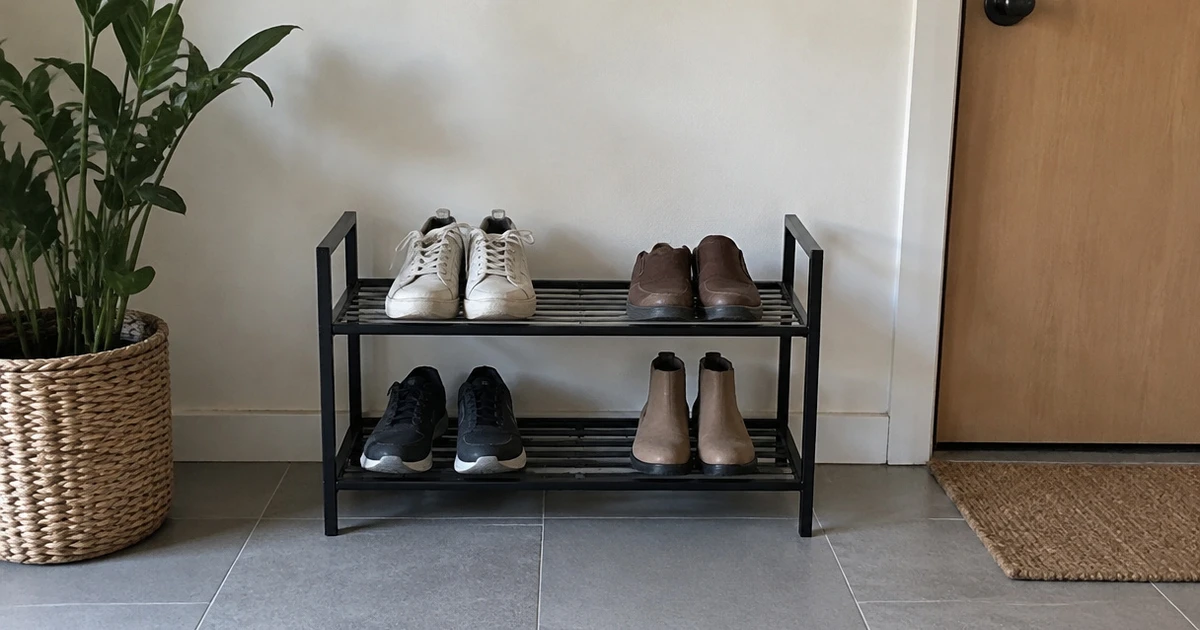
A good entryway rack gives your shoes a home without getting in the way. Start with your available floor space, then think about capacity, shelf design, and how you plan to use the rack each day.
Available Footprint
Measure the width and depth of the spot where you plan to place the rack, including room for the door to swing and for people to pass. Check the baseboard too, since it can keep a rack from sitting flush against the wall.
Compare the usable space with the rack’s full footprint, not just its shelf width. A shallow rack suits a tight hall, while a narrow, taller frame uses less floor space but asks you to reach higher shelves. If you can widen or stack a unit, check that the new shape still leaves a clear walking path.
| Rack shape | Useful when | Trade-off |
|---|---|---|
| Low and wide | You have wall space | Uses more floor width |
| Narrow and tall | Floor space is tight | Raises shoes to higher shelves |
| Expandable | Your available width varies | Needs room to extend |
Capacity and Tier Layout
Count the pairs you want to store by the door, then leave a little room for shoes you add during the week. Capacity can vary with shoe size and shape, so do not assume every pair will fit neatly side by side. Boots and wide footwear often need more shelf space than slim everyday shoes.
Choose the number of tiers around your habits. Two shelves keep frequently used pairs close to the floor; three or four tiers hold more footwear in a smaller footprint, though upper shelves may feel less handy. Map the shelf width to your widest pairs and decide which shoes belong near the door.
- Keep daily pairs at a height you can reach easily.
- Use upper or lower tiers for shoes you wear less often.
Shelf Surface and Material
Choose shelf surfaces based on what arrives on your shoes. Open slats let air pass around footwear and make pairs easy to spot. Solid or fabric-covered shelves catch more dirt before it reaches the floor, but you will need to move shoes when you clean the shelf.
Bamboo and wood suit an entry where you want the rack to remain visible. Metal frames with plastic parts or fabric shelves can create a lighter look.
Match the surface to your cleaning habits and the room’s dampness, and wipe wet shoes before you place them on the rack. Fabric panels can help shield stored pairs from dust, while open shelves make shoes easier to grab.
Stability and Load
Check how weight sits across the rack. A seat-style unit needs a stated top limit that covers the person who may sit there, while each shelf needs enough capacity for the shoes or other items you plan to store. A total load limit and a per-shelf limit answer different questions.
Look for a wide base and joints that lock securely, especially if the rack stands tall or you plan to stack units. Place heavier pairs on lower shelves to keep access simple and reduce strain on upper tiers. If children or pets use the entry, a low, stable frame may suit your household better than a narrow tower.
Assembly and Adjustability
Assembly can matter when you need storage quickly or have little room to work. A tube-and-connector frame or tool-free joints take less setup than a design with several assembly steps. Check the parts and instructions before you begin, and assemble the rack where you can reach every side.
Expandable and stackable designs let you adjust capacity, but they also add height or width. Confirm that connectors join the units firmly and that the assembled rack fits your measured spot. If you move often or plan to use the rack in another room, choose a frame you can take apart or reconfigure without much effort.
Which Shoe Rack Fits Your Entryway Best?
If you want a place to sit while you put on shoes, the SONGMICS Bamboo Shoe Rack Bench pairs a 27.6-inch width with two shelves and a 286-pound top limit. For a tight floor area, the 17-inch-wide BMOSU offers two tiers, while the Jucaifu gives you four levels in a narrow, taller frame.
Choose HDDTTZ if you need a width that adjusts from 17 to 31 inches. ROMGUAR and Dranixly suit shoppers who want stackable bamboo storage, with Dranixly using tool-free groove joints.
Kitsure adds fabric shelves that block dust. Match the rack to the space and shoe mix you measured.
Frequently Asked Questions
How do you measure for a shoe rack in a small entryway?
Measure the floor area where the rack will sit, then check the full width and depth of the frame you are considering. Leave room for the door to open and for people to walk past. Account for baseboards and nearby walls, which can affect how close the rack sits to the wall.
How many tiers should a small entryway shoe rack have?
Choose tiers based on how many pairs you want near the door and how much floor space you can give up. Two tiers suit a smaller everyday collection, while three or four tiers add storage in a narrow footprint. Check that you can reach the upper shelves comfortably.
Are open or fabric shelves better for an entryway?
Open shelves make shoes easy to see and reach, and their gaps allow air to pass around footwear. Fabric shelves can help block dust from stored pairs, but you may need to lift shoes to clean the surface. Pick the style that fits your cleaning routine and storage needs.
Is a shoe rack bench a good choice for a small entryway?
A bench can combine a place to sit with shoe storage, which may help you use the floor area for more than one task. Check its footprint and top weight limit before you choose one. Make sure the bench leaves enough room for the door and a clear path through the entry.
Can you stack shoe racks safely?
Stacking can add storage without taking up more floor width, but use racks designed to connect or stack together. Follow the assembly steps and check that the joints hold the units securely. Keep heavier shoes on lower shelves, and confirm that the taller setup does not block a doorway or walkway.