7 Best Table Runners for Farmhouse Tables 2026

This post may contain affiliate links. As an Amazon Associate I earn from qualifying purchases. If you choose to make a purchase, I may earn a small commission at no extra cost to you.
A farmhouse table can feel unfinished when its center looks bare, but the wrong runner can crowd place settings or clash with the room. You need a size and fabric that suit both your table and your routine.
Measure the tabletop, then weigh the look you want against care needs. Plaid, woven stripes, embroidery, and macrame bring different textures, while washable fabrics make regular use easier.
This guide to the best table runners for farmhouse tables you can buy in 2026 covers options for everyday dining, long tables, and relaxed boho rooms. ZeeMart Linen Checked Table Runner is the best overall choice, with raised plaid embroidery and a machine-washable linen-polyester blend.
Our Top Table Runners for Farmhouse Tables Picks

ZeeMart Linen Checked Table Runner
- Size: 13 x 72 in
- Material: Linen-polyester blend
- Style: Raised plaid embroidery

Artoid Mode Rust Plaid Table Runner
- Size: 13 x 72 in
- Material: 100% spun polyester
- Style: Rust farmhouse plaid
DII Braided Stripe Table Runner
- Size: 15 x 72 in
- Material: 100% cotton
- Style: Braided stripe

Wracra Rustic Linen Table Runner
- Size: 13 x 72 in; 80 in with tassels
- Material: Cotton-linen fabric
- Style: Woven embroidery

FEXIA Boho Tassel Table Runner
- Size: 12 x 108 in
- Style: Boho macrame
- Care: Gentle wash, lay flat to dry

Alynsehom Macrame Table Runner
- Size: 12 x 71 in
- Material: Cotton, linen, polyester
- Style: Boho macrame

Xiomot Boho Macrame Table Runner
- Size: 12 x 72 in
- Material: Cotton
- Style: Two-tone macrame
More Details on Our Top Picks
ZeeMart Linen Checked Table Runner suits you if you want a neutral farmhouse look with a defined plaid pattern and easy laundry care. Its 13-by-72-inch size gives you a simple, classic shape for dining or display.
The linen-polyester blend has a thick, textured feel, while the raised plaid embroidery adds detail without a busy print. Compared with the braided cotton or tassel styles here, this runner has a tidier grid and a more understated look.
You can machine wash and tumble dry it, a helpful feature for regular use. The trade-off is that sharp objects can snag the embroidery, and beige may look darker under warm indoor light. ZeeMart Linen Checked Table Runner fits a home where you want texture and pattern without fringe hanging from the ends.
Bottom line: Choose it if you want a neutral plaid runner with raised texture and a simple machine-wash routine.
Artoid Mode Rust Plaid Table Runner is a practical choice if you want warm color and a printed farmhouse pattern for a smaller dining table. Its 13-by-72-inch size suits tables that seat four to six people.
The rust plaid brings a stronger color than the beige and stone options in this group. Its 100% spun polyester fabric also sets it apart from the cotton and linen blends, and the runner protects your table from hot pans, scratches, and spills.
You can machine wash it and lay it flat to dry. That care routine is simple, though it does not offer the raised embroidery of the ZeeMart runner or the braided texture of the DII style. Artoid Mode Rust Plaid Table Runner makes sense for everyday meals or themed gatherings where you want color and a layer between dishes and the table.
Bottom line: Pick this runner if your table seats four to six and you want rust plaid with machine-wash care and surface protection.
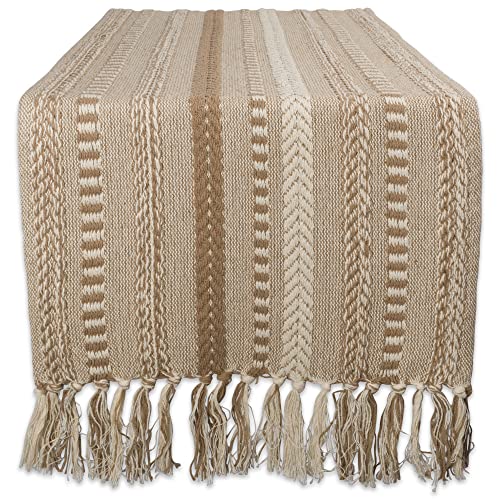
DII Braided Stripe Table Runner suits you if you like a thick, tactile surface and casual fringe. The 15-by-72-inch body fits tables for eight to ten people, and the fringe adds about five inches to the full length.
Its 100% cotton construction and braided texture give it a more substantial look than the smooth printed Artoid Mode runner. The stone color keeps the pattern quiet, while the macrame-style fringe adds a relaxed finish at both ends.
You can machine wash it and tumble dry on low, then lay it flat before it dries fully to limit shrinkage. That extra drying step takes more attention than the ZeeMart runner’s machine-wash and tumble-dry routine. DII Braided Stripe Table Runner works well if you want a larger table setting with visible texture and do not mind accounting for the fringe when you place it.
Bottom line: Choose it for a larger farmhouse table if you want cotton texture and fringe, and you can allow for the extra length at the ends.
Wracra Rustic Linen Table Runner is a good fit if you want a light coffee color, simple embroidery, and a soft fringe finish. Its main body measures 13 by 72 inches, with tassels bringing the total length to 80 inches.
The cotton-linen fabric has a heathered, woven texture that gives it a relaxed look beside the more defined plaid on the ZeeMart runner. Its simple embroidered pattern adds detail without taking over the table setting.
You can machine wash it in cold water with gentle detergent, then dry it flat and use a low iron if needed. The runner also has stain-resistant fabric, a useful feature for regular dining. Wracra Rustic Linen Table Runner fits tables about 46 to 54 inches long, but its extended tassel length calls for space at both ends.
Bottom line: Pick it if your table is about 46 to 54 inches long and you want an embroidered neutral runner with tassels and stain resistance.
FEXIA Boho Tassel Table Runner is made for a long dining table that needs a narrow, rustic accent. Its 12-by-108-inch size suits tables that seat eight to ten people, making it longer than the other runners in this group.
The brown macrame look brings a boho feel that also works on a buffet, coffee table, bookshelf, or dresser. Compared with the shorter Alynsehom and Xiomot runners, it gives you more length for a larger table or a long display surface.
You can hand wash it, or machine wash it on a gentle cycle inside a laundry bag. It needs to dry flat or hanging, and the natural material may shrink a little after washing. FEXIA Boho Tassel Table Runner is a useful choice for year-round decor, but its hand-care option is less simple than the machine-wash routines of the ZeeMart and Artoid Mode runners.
Bottom line: Choose it for a table that seats eight to ten, or for a long buffet or display surface where a 108-inch runner fits.
Alynsehom Macrame Table Runner suits you if you want a cream-beige woven accent with tassels and open stripes. It measures 12 by 71 inches and fits a dining table that seats four to eight people.
The cotton, linen, and polyester blend has a soft, thick feel, while the hollow striped weave adds a lighter look than the dense braided DII runner. Its tassels give the ends a relaxed finish, and the neutral color works with a range of table settings.
Care takes more attention than it does for the machine-washable ZeeMart and Artoid Mode runners. You should hand wash it gently in cold water, avoid rubbing, and lay it flat or hang it to dry. Alynsehom Macrame Table Runner also suits coffee tables, desks, and wedding displays, so you can use its boho style beyond the dining room.
Bottom line: Pick it if you want a cream-beige boho weave for a four-to-eight-seat table and are comfortable with hand washing.
Xiomot Boho Macrame Table Runner gives you a two-tone farmhouse look in a 12-by-72-inch size. It fits tables that seat four to six people and also works on desks, coffee tables, and dressers.
The cotton runner feels soft and drapes over the table, while its white-and-brown color combination stands apart from the single-color runners here. Its macrame style suits parties and events as well as everyday table decor.
You can hand wash it in cold water or use a gentle machine cycle with a laundry bag. It needs to dry flat or hanging, and the care routine includes no bleach. Xiomot Boho Macrame Table Runner calls for more care than the machine-washable DII cotton runner, but it gives you tassels and a two-color look for a smaller table.
Bottom line: Choose it if you want a white-and-brown macrame runner for a four-to-six-seat table and do not mind gentle washing.
Factors to Consider When Choosing Table Runners for Farmhouse Tables
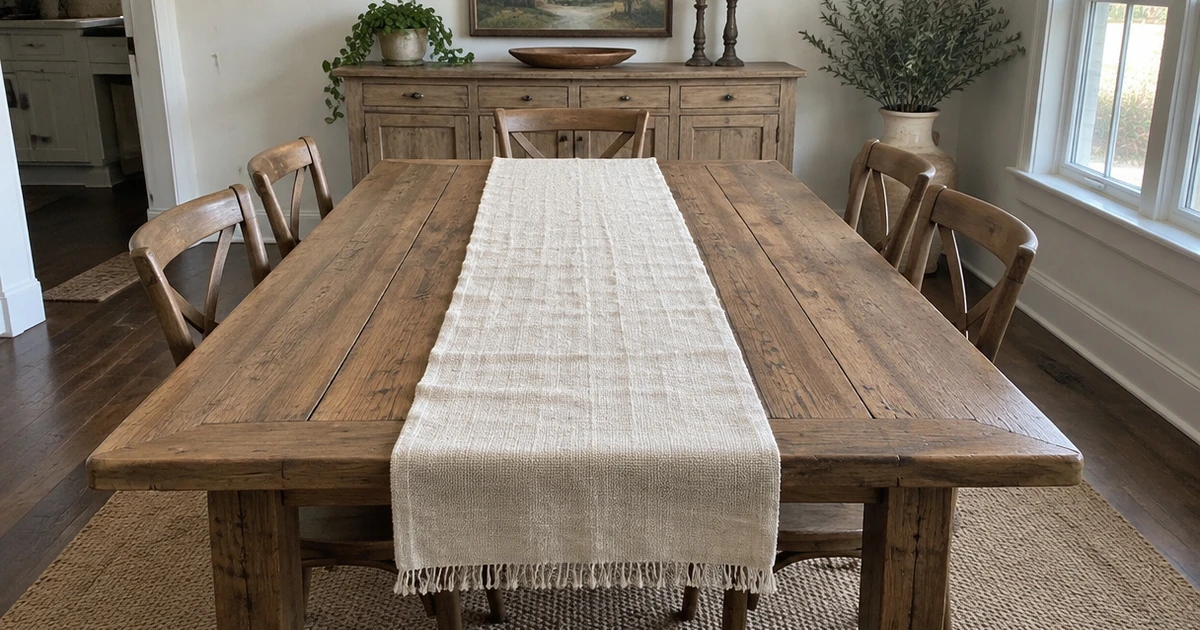
A runner needs to match your table’s length, daily use, and style. Measure first, then compare fabric, width, care needs, and details such as fringe or raised stitching before choosing a design.
Table Length and Drape
Measure the tabletop from end to end before you choose a runner. Decide how much fabric you want to hang over each end: a short drop suits everyday meals, while a longer drape creates a softer look but may brush laps or chair seats.
| Runner length | What to check |
|---|---|
| 72 inches | Measure the table and planned end drop |
| 108 inches | Check the extra length against chair clearance |
- Measure the table length.
- Choose your preferred end drop.
- Check the combined length before buying.
Seat count can help you narrow choices, but table length gives you a more direct fit check. A runner that sits too close to the table edges may look short, while extra fabric can get in the way during meals.
Runner Width
Runner width affects how much table surface stays open. Options around 12 to 15 inches create a centered strip, but your table’s width and the size of your place settings matter too. Measure the tabletop across, then leave room on both sides for plates and serving dishes.
A narrower runner can suit a small table or a simple setting. A wider one adds more visible fabric and texture, but may take up space you need for shared dishes. If you often serve food in the center, check the runner’s width against the dishes you use most.
Material and Feel
Look at the fabric as well as the color. Cotton, linen blends, polyester, and mixed-fiber fabrics can create different textures and levels of structure. A braided cotton weave gives the surface a more pronounced pattern, while a smooth fabric keeps the table’s center visually quieter.
Think about how the runner will feel in your room. A relaxed, textured weave can suit a casual dining area, while a finer woven surface may work better if you want a cleaner look. Check how the fabric lies on your table and whether it suits the rest of your dining space.
Cleaning and Care
Choose a care routine you can keep up with. Some runners can go through a machine wash and tumble dry, while others need a gentle cycle, hand washing, or flat drying. Check the care directions before buying, especially if you plan to use the runner for frequent family meals.
Food spills and everyday dust make cleaning a practical part of your choice. If you prefer quick laundry days, look for a fabric with a simple wash routine. If you are willing to wash by hand or lay a runner flat to dry, you can consider a wider range of woven styles.
Pattern and Color
Pick a pattern that works with your table and nearby decor. Plaid creates a clear farmhouse feel, while stripes, embroidery, and macrame bring different kinds of detail. If your table already has a strong wood grain, a smaller pattern or solid neutral can keep the surface from feeling crowded.
Rust, beige, cream, and brown tones can add warmth, while a lighter neutral keeps the table feeling calm. Compare the runner’s color with your table in daylight and evening light. If you change your table decor often, a neutral shade can pair with more settings.
Texture and Everyday Use
Details like tassels, braided bands, and raised stitching add texture, but they also change how a runner works at mealtime. Fringe can hang over the table edge, and raised details can catch crumbs or rub against dishes. Think about whether those features suit the way you use the table.
For daily dining, choose a design that lies flat and leaves space for plates and serving dishes. A more detailed runner can suit a table you use for special meals or display. If you have children or pets around the table, shorter fringe and an easy-care fabric may feel simpler to manage.
Which of These Table Runners for Farmhouse Tables Is Right for You?
Which Farmhouse Table Runner Fits Your Table?
If you want one versatile everyday style, ZeeMart Linen Checked Table Runner pairs raised beige plaid with a machine-washable linen-polyester blend. Artoid Mode gives you rust plaid in machine-washable polyester, while DII adds a braided cotton texture in a 15-by-72-inch size for tables that seat 8 to 10. Wracra suits a light coffee neutral with embroidery and tassels for tables 46 to 54 inches long.
For a long table, FEXIA’s 108-inch boho runner has brown tassels. Alynsehom offers a cream-beige macrame weave for tables seating 4 to 8, while Xiomot brings a white-and-brown two-tone pattern for tables seating 4 to 6. Choose the size and care routine that fit your table and your regular use.
Frequently Asked Questions
What length table runner should you choose?
Measure the tabletop from end to end, then add the amount of overhang you want on both sides. A shorter drop keeps fabric away from laps and chairs, while a longer drop gives the ends more presence. Check the total length against your table before you buy.
Should a table runner hang over the edges?
That depends on the look you want and how you use the table. A small overhang gives the runner a finished look without putting much fabric near laps or chairs. If you prefer a longer drape, check that it will not interfere with seating or serving.
Can you use a runner on a round farmhouse table?
Yes. You can place a runner across the center of a round table, but measure the tabletop and think about how much fabric will extend past the edges. A centered runner works best when it leaves enough open space for place settings and serving dishes.
Which fabric is easiest to care for?
Care needs depend on the fabric and its construction, so check the washing and drying directions before choosing. A machine-washable runner may suit frequent meals, while one that needs hand washing or flat drying takes more effort. Pick a routine that fits how often you plan to use it.
How do you keep a table runner centered?
Measure the table’s width and align the runner with the center before setting the table. Smooth it from one end to the other, then check that the overhang looks even on both sides. If people shift it during meals, reposition it before serving rather than pulling it while dishes sit on top.