10 Best Toy Storage Organizers for Small Bedrooms 2026

This post may contain affiliate links. As an Amazon Associate I earn from qualifying purchases. If you choose to make a purchase, I may earn a small commission at no extra cost to you.
Small bedrooms can lose usable floor space quickly when toys spill out of baskets, boxes, and play sets. A good organizer gives each kind of toy a clear place without taking over the room, and it should let your child reach what they use most.
Measure the spot you can spare, then match the storage style to the toys: open bins for quick cleanup, cubes for sorting, or lidded containers for pieces you want contained. The best toy storage organizers for small bedrooms you can buy in 2026 include compact shelves, rolling bins, clear bags, and a plush holder. Delta Children Deluxe Multi-Bin Toy Organizer earns the top spot for its mix of bin sizes and open access, while the other picks suit more specific needs.
Our Top Toy Storage Organizers Picks
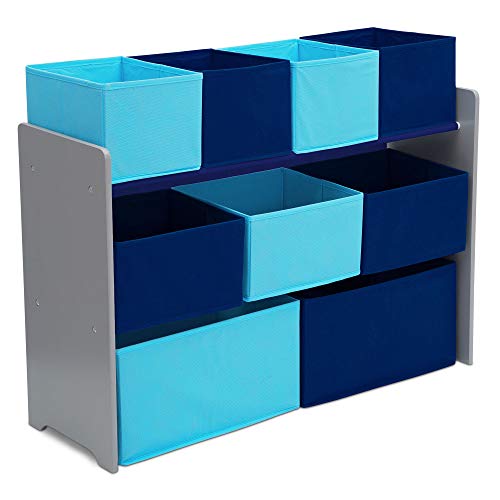
Delta Children Deluxe Multi-Bin Toy Organizer
- Type: Multi-bin toy organizer
- Dimensions: 36.2 x 11.8 x 27.2 in
- Storage layout: 4 small, 3 medium, 2 large

Furinno LUDER 7-Cube Book Shelf
- Type: Cube bookcase
- Dimensions: 19.5 x 9.4 x 41.7 in
- Storage layout: 7 cubes, two shelf heights
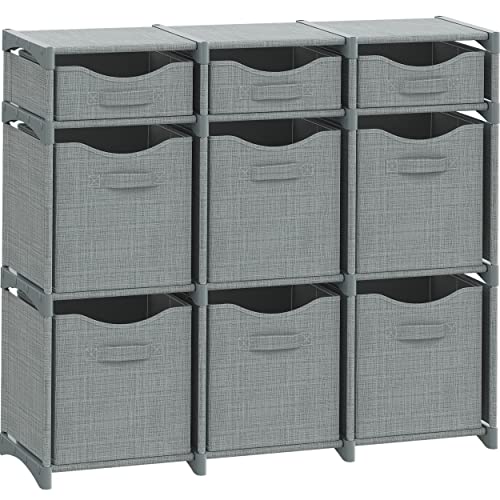
NEATERIZE 9-Cube Storage Organizer
- Type: Cube shelf with storage cubes
- Dimensions: 36 x 12 x 31 in
- Storage layout: 6 large, 3 small cubes

AWTATOS 6-Cube Storage Organizer
- Type: Customizable cube shelf
- Dimensions: 35.5 x 11.8 x 37.5 in
- Storage layout: 6 cubes
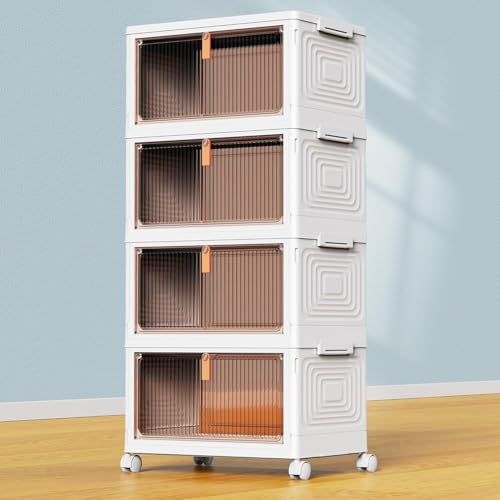
YFXCVSL 4-Tier Rolling Storage Bins
- Type: Stackable storage bins
- Dimensions: 32.87 x 15.35 x 11 in
- Storage layout: 4 tiers, 92 qt total

SpaceAid Toy Storage Organizer
- Type: Toy shelf with bins
- Dimensions: 52.3 x 13.6 x 31.5 in
- Storage layout: 4 large, 8 small bins

Delta Children Disney Princess 6-Bin Organizer
- Type: Themed toy organizer
- Dimensions: 24.61 x 11.81 x 26.57 in
- Storage layout: 3 medium, 2 large, 1 extra-large

- Type: Clear toy storage bags
- Dimensions: 11.02 x 7.87 x 5.51 in
- Storage layout: 8 individual bags

- Type: Clear toy storage bags
- Dimensions: 9.45 x 6.7 x 5.12 in
- Storage layout: 6 individual bags

Woodure Stuffed Animal Storage Zoo
- Type: Stuffed animal holder
- Dimensions: 15.7 x 15.7 x 53.5 in
- Storage layout: Over 40 stuffed animals
More Details on Our Top Picks
The Delta Children Deluxe Multi-Bin Toy Organizer gives you nine open fabric bins on a low shelf, so a young child can sort toys without dealing with lids. Its 36.2-inch length and 11.8-inch depth suit a wall spot where a deeper toy chest could crowd the room.
Four small, three medium, and two large bins give you places for toys of different sizes. The wood-and-fabric frame keeps the setup simple compared with cube units that let you change the layout, while the mix of bin sizes helps you group small pieces and larger toys.
Assembly is easy, and the organizer meets CPSC safety regulations. Delta Children also includes a 90-day parts warranty, though the open bins leave toys visible and exposed to dust. The 27.2-inch height and 11.8-inch depth make it a practical pick for a child’s room with limited floor space.
Bottom line: Buy it if you want a low, open organizer with several bin sizes for a young child’s toys. It suits small rooms better than a wide shelf, but it does not hide clutter.
The Furinno LUDER 7-Cube Book Shelf gives you seven open storage spaces in a frame just 19.5 inches wide. Its narrow footprint can work beside a bed or desk when your bedroom has little spare floor space.
The shelves range from 9.7 to 13.2 inches tall, so you can sort books, bins, and toys by height. Unlike a toy-bin rack, the Furinno LUDER 7-Cube Book Shelf uses a fixed cube layout, and its closed back frames the items rather than covering them.
FSC-certified particle board forms the unit, and each shelf supports up to 20 pounds, with a 140-pound limit for the whole bookcase. Keep heavier items on the lowest shelf. Assembly takes about 30 minutes, and the included safety nail holder adds a wall-safety option, though the 41.7-inch height may stand out in a small room.
Bottom line: Choose it if you need a narrow, tall shelf for books and small toys. It offers useful vertical storage, but its fixed shelves do not give you the flexible bins found on toy organizers.
The NEATERIZE 9-Cube Storage Organizer combines a 36-inch-wide shelf with nine storage cubes in two heights. You get six large cubes and three smaller ones, so you can separate toys by size or keep smaller pieces in the shorter bins.
Its 12-inch depth works for a narrow wall space, and the iron rods and plastic connectors form the frame. The NEATERIZE 9-Cube Storage Organizer stands out from simple open bookcases because its set includes the storage cubes as well as the shelf.
You can assemble it without tools, which makes setup less involved than a shelf that needs a longer build. The frame gives you an open way to sort toys, clothes, or other bedroom items, but the design does not include lids to hide the contents. Check the cube heights before assigning space for taller toys, since the large and small bins measure 11 and 5 inches high.
Bottom line: Pick it if you want a cube organizer with storage cubes included and a mix of bin heights. It offers more sorting options than a plain shelf, though the open design keeps toys in view.
The AWTATOS 6-Cube Storage Organizer gives you six open cubes for toys, books, or clothes. Each cube measures 11.8 inches on each side, making the compartments a consistent size for sorting everyday items.
Thick PP panels, a metal frame, and ABS resin connectors form the unit. Each cube holds up to 11 pounds, and the AWTATOS 6-Cube Storage Organizer lets you move panels or stack sections to create different layouts.
That flexibility sets it apart from fixed bookcases and bin racks, though you need to plan the setup around the space you have. Assembly uses connectors and the included instructions. The 35.5-inch width and 37.5-inch height create a fairly tall storage option, while the open cubes leave toys visible and uncovered.
Bottom line: Choose it if you want to change the cube arrangement to suit your room. Its open compartments offer flexible sorting, but each cube has an 11-pound weight limit.
The YFXCVSL 4-Tier Rolling Storage Bins give you four lidded compartments with both top and front access. The front doors have magnetic catches, so you can reach toys without lifting everything from the levels above.
The bins use PP plastic and fold flat when you take them apart. Four wheels help you move the stack, and two lock in place; this makes the YFXCVSL 4-Tier Rolling Storage Bins more mobile than fixed cube organizers.
The four tiers hold 92 quarts in total, with 23 quarts per tier. That sealed, stackable style can keep small toys out of sight, though the full unit measures 32.87 inches long and 15.35 inches wide, so check your available space. You can also use the bins separately when you want a lower arrangement.
Bottom line: Buy it if you want lidded storage that rolls and gives you front access to each tier. It suits toys you prefer to keep covered, but its long footprint needs a clear spot.
The SpaceAid Toy Storage Organizer pairs a bookshelf with 12 open bins, giving you a place for both toys and books. Its 52.3-inch width makes it a larger choice than the compact cube shelves in this roundup.
Four large bins and eight small bins let you sort toys by size, while the solid pine frame gives the shelf a wood construction. You can place the SpaceAid Toy Storage Organizer in a bedroom or playroom, but measure the wall first because it also reaches 13.6 inches deep.
The rounded edges and extended front base add child-friendly details, and assembly instructions come with the shelf. The bins sit open, so your child can see and reach their toys without opening drawers. Their 5-inch height suits smaller items, but you may need another spot for bulkier toys.
Bottom line: Choose it if you have a wide wall and want books and toys in one open unit. Its many bins help with sorting, but the broad frame may not suit a tight bedroom.
The Delta Children Disney Princess 6-Bin Organizer gives you six bins decorated with Disney Princess characters. It suits a child who enjoys choosing toys from a themed storage unit, and reusable vinyl stickers let them change the sides with new arrangements.
Three medium bins, two large bins, and one extra-large bin handle different toy sizes. The Delta Children Disney Princess 6-Bin Organizer uses engineered wood, solid wood, and fabric, with a footprint of 24.61 by 11.81 inches.
The organizer meets CPSC safety standards and targets children ages 3 and up. Its 26.57-inch height keeps the bins within reach for many children, while the open design leaves toys visible. The character graphics make it more specific than a plain shelf, so it may suit a themed room better than a shared bedroom with a simpler style.
Bottom line: Pick it if your child likes Disney Princess characters and wants bins in several sizes. The stickers add a play element, while the graphics make this less suited to a neutral room.
The Shcsdr Clear Toy Storage Bags come as a set of eight small, transparent cases for toys such as blocks, dolls, and puzzles. Their 11.02-by-7.87-inch footprint lets you group separate toy sets on a shelf or inside a wardrobe.
Thick PVC forms the bags, and a double zipper opens each one fully for loading. Clear sides help you spot the contents, while the Shcsdr Clear Toy Storage Bags also include top and side handles for carrying.
Each case has a name tag and a pocket for an instruction manual, handy for keeping a game guide with its pieces. You can wipe the material with a rag after use. These bags take less room than a standing organizer, but they do not provide a shared frame or shelf for displaying toys.
Bottom line: Choose these bags if you want to separate small toy sets and store them on shelves or in a wardrobe. Their clear sides make contents easy to spot, but they do not replace a furniture-style organizer.
The Tesuko Clear Toy Storage Bags give you six zippered PVC cases for blocks, puzzles, toy cars, or board games. Each bag measures 9.45 by 6.7 inches, so you can keep smaller sets together without adding a shelf or bin rack.
The clear material lets you see inside, and a name tag helps you label each case. A mesh pocket on top holds a manual, while handles make the Tesuko Clear Toy Storage Bags easier to carry or hang.
These bags suit families who want to take toys along or store them on a shelf like books. The PVC wipes clean, and a two-year manufacturer warranty adds a clear support period. The cases hold less than larger toy bags, so check their dimensions if you want to pack bulky toys.
Bottom line: Pick these if you need labeled cases for game pieces, manuals, or small toys you carry between rooms. Their compact size helps with sorting, but it limits what each bag can hold.
The Woodure Stuffed Animal Storage Zoo gives plush toys a tall, open cage-style holder. It stands 53.5 inches high and takes up a 15.7-inch square footprint, so it uses little floor space compared with a wide bin shelf.
Pine wood and steel screws form the frame, which holds over 40 stuffed animals. The open design lets your child take toys out and put them back without lifting a lid, and the Woodure Stuffed Animal Storage Zoo includes a wooden nameplate for personalization.
Assembly requires no tools, which keeps setup simple. The holder focuses on plush toys rather than books or small game pieces, so it works best if stuffed animals make up most of the clutter. Its tall profile may draw attention in a small room, and the toys remain visible through the open sides.
Bottom line: Choose it if stuffed animals take over your child’s bedroom and you want a dedicated place for them. Its narrow footprint saves floor space, but it does not organize other toy types.
Factors to Consider When Choosing Toy Storage Organizers for Small Bedrooms
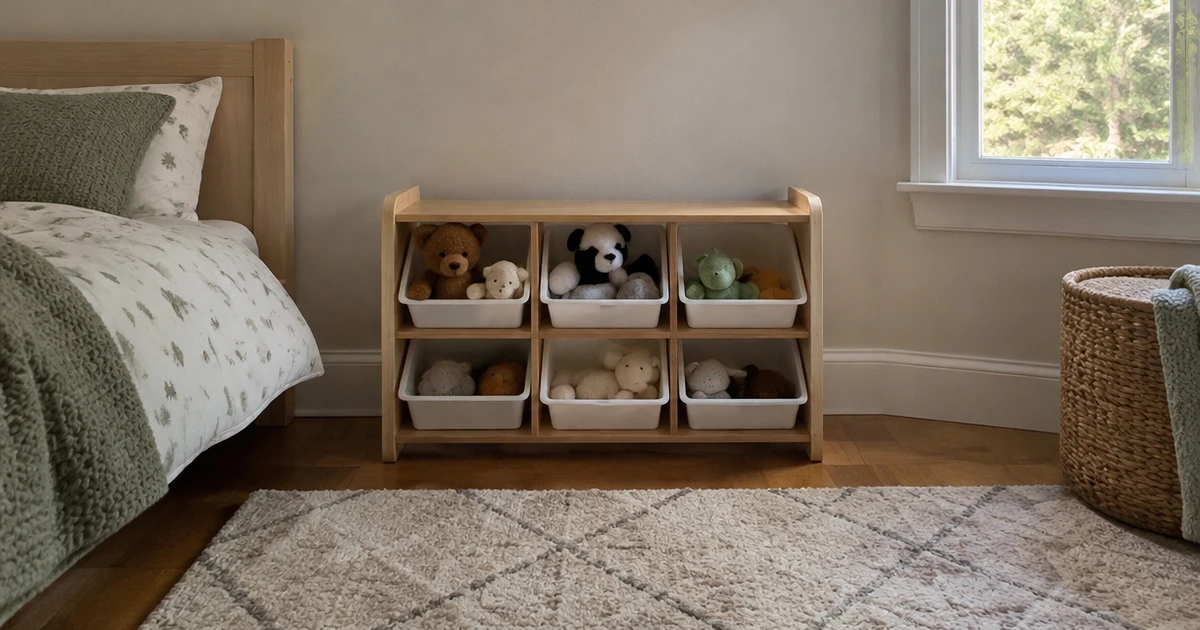
Start with the space you have and the toys that need a home. A useful organizer should fit the room and make it easy to put things away.
Footprint and Placement
Measure the open floor area, wall space, and path through the room before choosing a shape. Record the maximum width, depth, and height you can use, then leave room for doors, drawers, and a child to move around the organizer.
Compare the full footprint with that space rather than focusing on height alone. A narrow shelf may fit beside a bed, while a wide unit can use a low wall area. A rolling bin needs room to pull out, and a lidded stack needs clearance above it.
| Shape | Useful for | Measure first |
|---|---|---|
| Narrow shelf | Limited floor space | Width and depth |
| Wide bin organizer | Several toy groups | Wall width |
| Rolling bins | Moving toys around | Pull-out clearance |
Storage Layout
Sort toys into rough groups before you shop, such as plush toys, building sets, dolls, and games. Match each group to a compartment that holds it without forcing pieces in. Small compartments help separate little parts, while large bins suit bulky toys.
Use these layout cues as a starting point:
- Choose mixed bin sizes when toy shapes vary.
- Use even cubes for divided collections.
- Pick individual bags for sets you want to keep together.
Check the opening size as well as the compartment count. A deep container can hide small pieces at the bottom, while shallow, open storage makes it easier to see what needs to go back.
Access and Daily Use
Think about how your child will put toys away without help. Open shelves and bins make items quick to see and grab, but they leave toys in view. Lids help contain loose pieces, while front doors let you reach stacked storage without lifting a lid from the top.
Match access to what you store and how often you use it. Keep frequently used toys in low, easy-to-reach spaces, and reserve higher spots for items adults manage. For pieces that belong to a set, use a zippered pouch or bag to keep them together between play sessions.
Materials and Assembly
Materials affect weight, care, and how an organizer feels in a bedroom. Wood shelves create a firm frame, while fabric bins add flexible compartments. Plastic panels and connectors can form modular cubes, and clear PVC bags let you see what sits inside.
Check how each piece joins together and how much effort assembly requires. A tool-free setup may suit frequent room changes, while a shelf with several parts can take more assembly time. If your child moves bins often, choose ones they can lift without shifting the whole organizer.
Stability and Placement
Think about the organizer’s height and how a child will use it. A tall, narrow unit can save floor area, but check whether its design allows secure placement against a wall. Put heavier toys lower and lighter toys higher to make everyday use easier to manage.
Choose a structure you can handle during assembly and room changes. Rigid panels hold their shape, while a collapsible design can be easier to put away when empty. Follow the assembly steps closely, tighten connectors as directed, and stop using a unit if a part loosens or cracks.
Flexibility and Cleaning
Decide whether your storage needs to change as toys rotate. Modular cubes let you adjust a layout, stackable bins build upward, and separate bags make it easier to carry one set at a time. A fixed organizer suits a dedicated corner but may limit your options if the room layout changes.
Plan for cleanup, too. Think about whether the material suits the kinds of messes you expect, and check how you would clean it before buying.
Wipe-clean surfaces can help with dusty or sticky toys, while fabric may take more effort to clean. Give each toy group a clear, repeatable home.
Picking the Right Toy Storage Setup for Your Bedroom
Delta Children Deluxe Multi-Bin Toy Organizer suits a room that needs open bins in several sizes. Furinno LUDER 7-Cube Book Shelf offers seven open cubes in a narrow footprint, while NEATERIZE provides six large cubes and three small ones. Pick AWTATOS for six customizable cubes, YFXCVSL for four rolling tiers, or SpaceAid for a wide shelf with 12 bins.
Choose the Disney Princess organizer for character-themed open bins, Shcsdr or Tesuko bags to separate sets and game pieces, or Woodure to store stuffed animals vertically. Let the room’s available space and the toys you need to contain guide your choice.
Frequently Asked Questions
What size organizer works in a small bedroom?
Start with the floor area you can spare, then measure width, depth, and height. Leave room to open doors, pull out bins, or reach a lid. A taller unit can save floor space, but choose one you can place securely and use safely.
Are open bins or lids better for toys?
Open bins make toys quick to see and put away, which can help with everyday cleanup. Lids can keep small pieces together and make a stack look more contained, but you need room to open them. Choose based on how often your child uses the toys and whether they need independent access.
How can I organize toys by type?
Group toys by how children use them, then assign one bin, cube, or bag to each group. Keep tiny parts in smaller compartments and bulky toys in larger ones. Labels can help older children return items, while picture labels can help children who do not read yet.
Are rolling organizers practical for small rooms?
They can help you move toys between play areas, but check the full footprint and whether you have clear space to roll them. A stackable design uses vertical space, while doors or lids affect how you reach contents. Keep heavier items low and load the bins only as much as you can move safely.
How do I keep small toy pieces from getting lost?
Use small bins, zippered bags, or compartments that match each toy set. Store each set together rather than mixing loose pieces in a deep container. Keep small-part storage within reach if your child plays alone, or place it higher if an adult should manage it.