21 Front Yard Garden Design Ideas

Your lawn probably looks like a boring green carpet right now. You deserve a space that reflects your personality rather than the neighborhood HOA manual. These 21 Front Yard Garden Design Ideas will help you reclaim your curb appeal without losing your sanity or your entire savings account.
Modern Minimalist Front Yard

You likely value your weekends too much to spend them mowing.
A minimalist design serves you well by replacing thirsty grass with clean concrete pavers and cool grey gravel.
Focus on negative space to give your eyes a place to rest.
You can plant a few architectural agaves or fountain grasses to create structural interest.
This style creates a sophisticated look that requires almost zero effort once you finish the initial installation.
Your neighbors might even think you hired a fancy designer.
Charming Cottage Garden

If you enjoy a bit of controlled chaos, the cottage style is your best friend.
This look relies on overflowing flower beds filled with scented lavender, tall foxgloves, and climbing roses.
You want to blur the lines of your walkways with billowy plants that ignore traditional boundaries.
Layer your heights to ensure you have color from the ground up all year.
Butterflies will appreciate your hard work, and the informal vibe hides the occasional weed better than any other style.
Low Maintenance Xeriscape
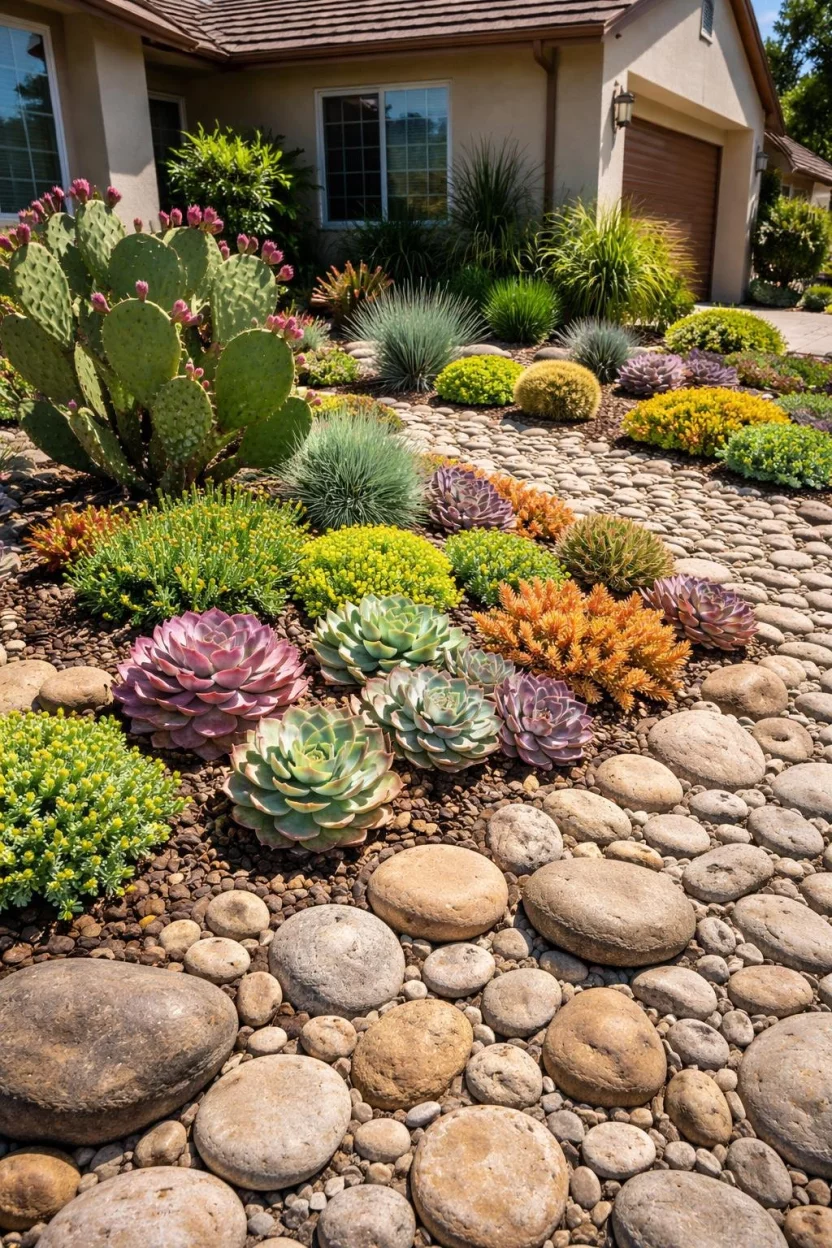
Stop fighting nature and start working with it.
Xeriscaping uses drought tolerant plants like succulents and cacti to eliminate your need for a sprinkler system.
You should use stone mulch to keep the soil beneath cool while providing a clean backdrop for your greenery.
Since these plants store their own water, they survive even when you forget they exist for a month.
This sustainable approach saves money on your utility bills and looks great in any arid or semi-arid climate.
Pollinator Friendly Paradise

Your yard can do more than just look pretty.
By planting nectar rich species like coneflowers and bee balm, you create a vital rest stop for local bees and butterflies.
Group similar colors together so flying friends can spot your garden from high above.
Add milkweed if you want to host monarch caterpillars specifically.
You get the satisfaction of supporting the ecosystem while enjoying a constant parade of colorful visitors right outside your front window every single afternoon.
Vertical Garden Walls

Tiny yards do not have to be boring.
You can grow your garden upward by installing modular wall systems or simple wooden trellises.
Fill these pockets with cascading ferns or trailing petunias to create a wall of living color.
This technique provides a natural cooling effect for your home during the summer months while maximizing every square inch of your property.
It serves as an excellent privacy screen if you live close to the sidewalk and want some seclusion.
Edible Landscape Integration

Why grow plants you cannot eat?
You can swap your standard hedges for rosemary bushes or blueberry shrubs.
Plant a dwarf citrus tree in a prominent sunny spot to provide both shade and snacks.
Using edible plants as foundation greenery means your yard works for you.
You get to harvest fresh herbs for dinner while maintaining a beautiful street view.
Just make sure you wash your harvest before eating it if your neighborhood has a lot of curious dogs.
Drought Tolerant Rock Garden

Sloped yards are notoriously difficult to mow.
You should replace that awkward grass hill with layered rocks and boulders to create a stable, beautiful garden.
Plant alpines and yuccas between the stones to add texture and height.
These plants thrive in the excellent drainage provided by the rocky terrain.
This design controls erosion during heavy rain and gives your house a rugged, outdoorsy look that stands out.
Boulders also serve as great focal points for your garden layout.
Formal Symmetrical Layout

If you love order and clean lines, a symmetrical garden is your safest bet.
Place identical boxwood topiaries on either side of your front door to create an immediate sense of balance.
Use straight brick paths and mirrored planting beds to guide the eye toward your entrance.
You will need to keep your pruning shears sharp to maintain those crisp shapes.
This timeless design matches traditional architecture perfectly and always looks like you have your life completely under control.
Naturalistic Meadow Garden

The untamed look is back in style for the coming years.
You can create a mini prairie by mixing tall grasses with self seeding wildflowers like lupines.
This design does away with the weekly mowing chore entirely.
Instead, you get a moving tapestry of plants that sways in the wind and changes with the seasons.
It provides a dense habitat for songbirds and beneficial insects.
You only need to mow it once a year in late winter to clear out the old growth.
Container Garden Clusters

Renters and busy people love containers because they offer total flexibility.
Group your pots in odd numbers like three or five to create a pleasing visual cluster.
Use different heights to give the arrangement some depth.
You can swap out the plants whenever you feel like a change or when the seasons shift.
If you move to a new house, your garden comes right along with you.
Just remember to check the water more often since pots dry out faster than the ground.
Raised Bed Foundations

Raised beds give your plants better soil and clearer boundaries.
You can build these out of cedar or stack stylish stones along the base of your home.
They get the greenery up closer to eye level and save your back from excessive bending.
The soil in raised beds warms up faster in the spring, which means your flowers will bloom earlier than everyone else on the block.
They also act as a physical barrier that keeps your grass from creeping into your flower beds.
Curved Pathway Designs

A straight line is the fastest way to the door, but a curve is much more interesting.
Meandering paths make a small yard feel much larger because you cannot see the whole route at once.
Line your walkway with soft plants like irises and daylilies to hide the edges of the stones.
This creates a sense of discovery as guests walk toward your home.
You can even tuck small solar lights into the foliage to make the path look magical after the sun goes down.
Welcoming Water Features

Sound is a powerful tool in garden design.
A small bubbling fountain or a simple stone birdbath adds a layer of peace to your front yard.
The white noise helps drown out street traffic and attracts thirsty birds at the same time.
You do not need a massive pond to get the effect.
A self contained urn fountain only requires a small pump and a nearby power outlet.
It serves as a sophisticated focal point that makes your entryway feel like a high end spa.
Vibrant Flower Bed Borders

Go big or go home with your color choices.
You can create a high impact border by massing one or two types of flowers together in large groups.
Think about using a mix of bulbs for the spring and annuals for the summer to keep the show going all year.
Deadhead your spent blooms regularly to encourage the plants to keep producing fresh flowers.
This classic approach provides the biggest boost to your curb appeal for the least amount of technical knowledge or equipment.
Evergreen Hedging Structures

Deciduous plants look great in summer but leave your yard looking empty in January.
You should use evergreens like yews or arborvitae to create a permanent skeleton for your garden.
These plants provide a solid green backdrop that makes your colorful flowers pop even more.
They also offer privacy and act as a windbreak for your house.
A well placed evergreen hedge ensures your front yard looks intentional and cared for even when the ground is covered in snow or frost.
Tropical Oasis Escape
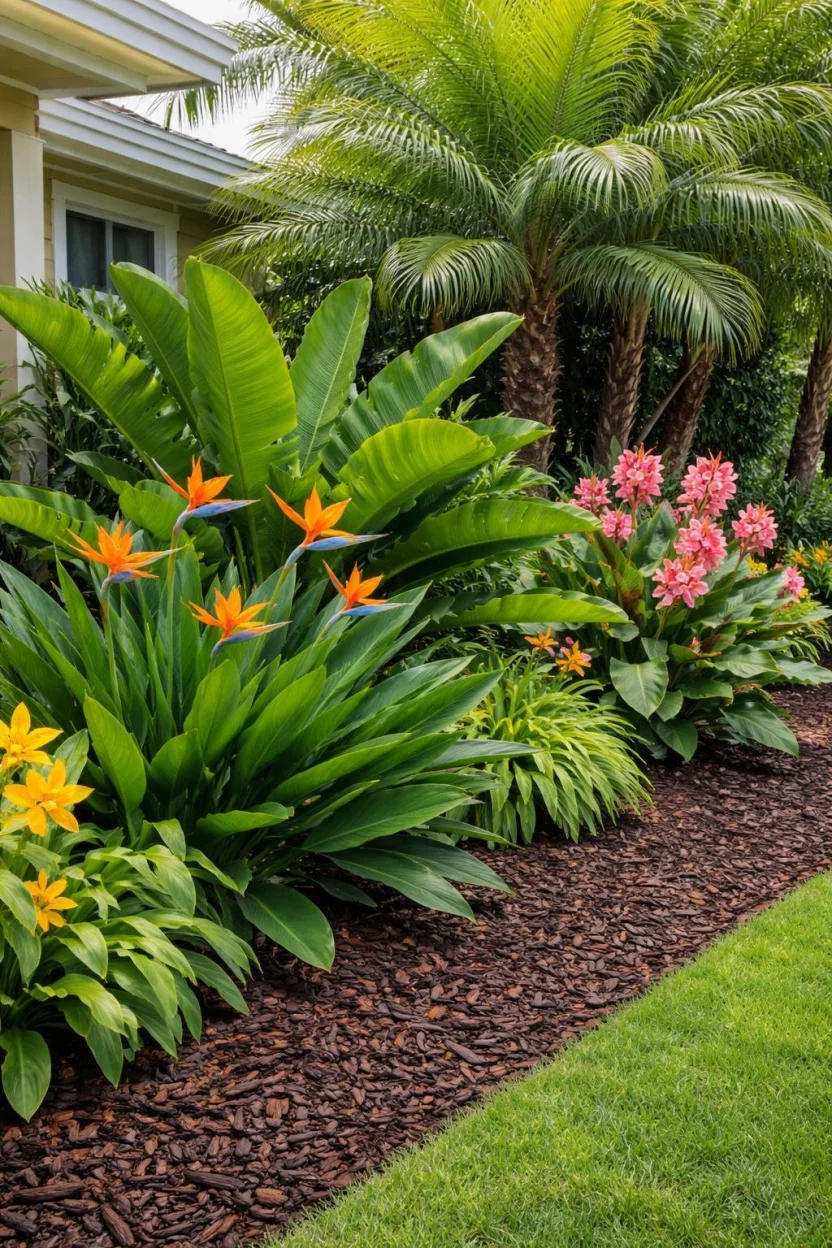
You can turn your front yard into a vacation spot by using plants with humongous leaves and neon colors.
Look for palms or canna lilies to add height and drama.
If you live in a colder area, you can still achieve this look with big hostas or by bringing your potted tropicals inside for the winter.
The key is density and texture.
You want a lush, layered look that feels like a jungle.
This style works particularly well with modern homes that have simple, dark exteriors.
Geometric Hardscape Patterns
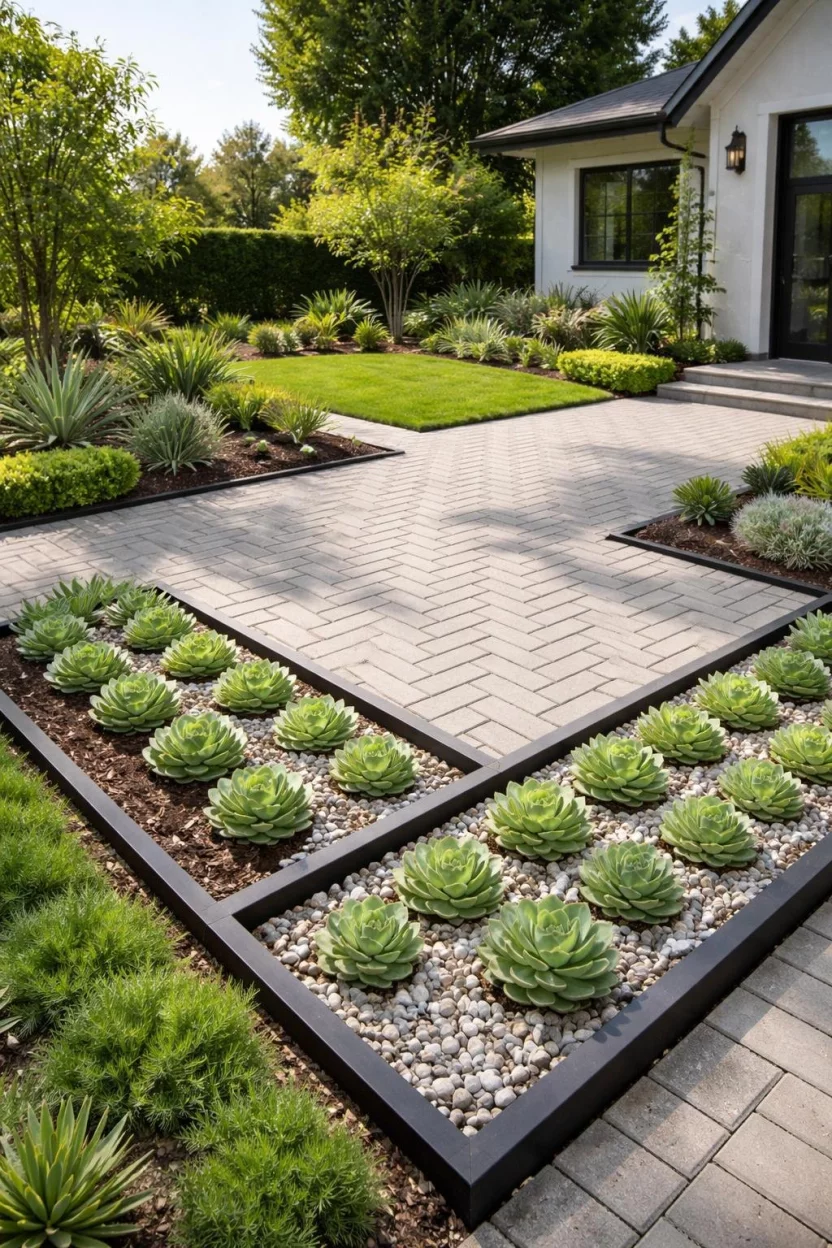
Precision can be a beautiful thing.
Use pavers in a herringbone or basketweave pattern to create a ground cover that looks like art.
Surround these areas with plants that have sharp, architectural shapes like aloes.
This approach emphasizes the hardscape as much as the greenery.
It creates a very clean, professional look that requires very little maintenance once the stones are set.
Using a dark joint filler between your pavers can make the pattern stand out even more against your plants.
Sustainable Rain Garden
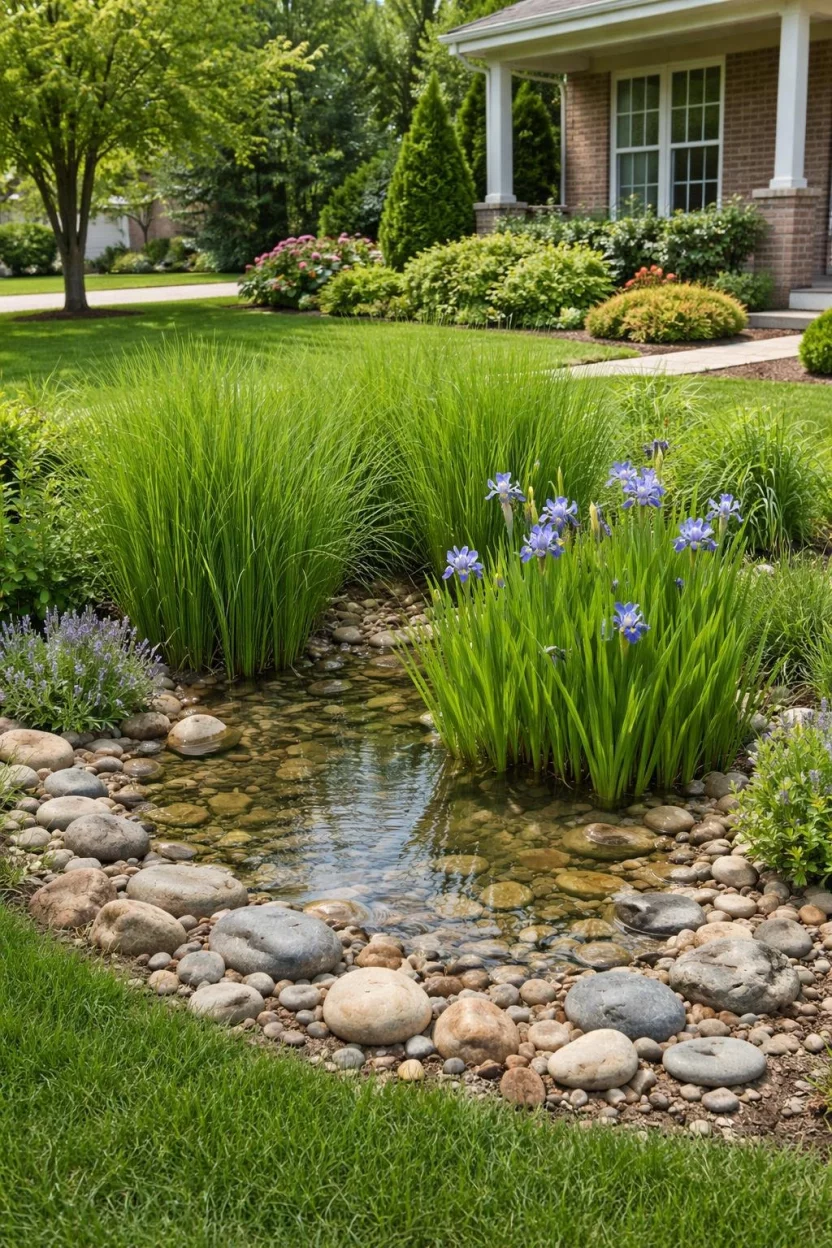
If you have a soggy spot in your yard, do not fight the puddle.
Build a rain garden instead.
This design uses a shallow depression to capture and filter stormwater from your roof or driveway.
Use plants with deep roots like switchgrass or certain types of iris that do not mind having wet feet for a day or two.
This eco friendly choice prevents runoff from entering the sewer system and helps recharge the local groundwater.
It turns a potential problem area into a lush focal point.
Bold Layered Color Plantings
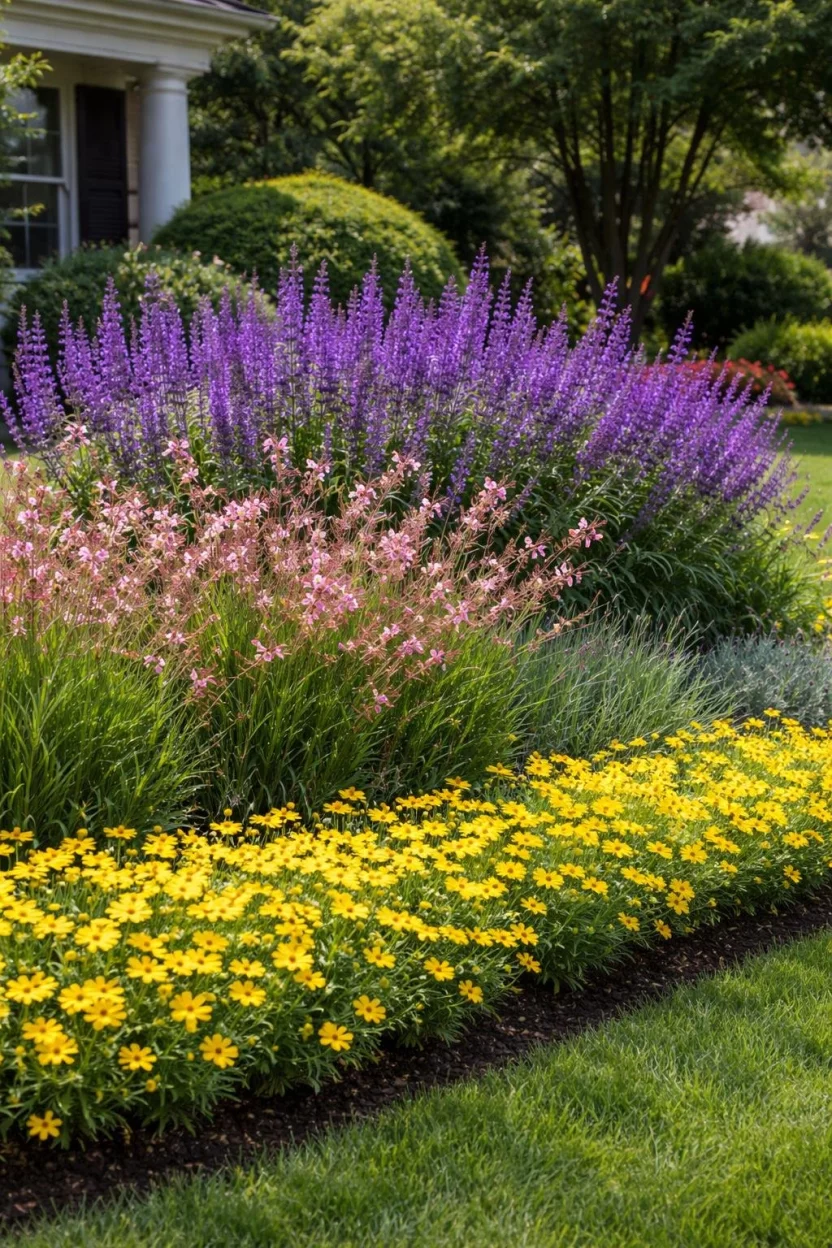
Think of your garden beds as a stadium seating arrangement.
You want the tallest plants in the back against the house and the shortest ones right along the sidewalk.
Combining contrasting colors like purple and yellow makes each flower look brighter than it would on its own.
This layering technique ensures that every plant gets its moment in the sun and stays visible to passersby.
It creates a dynamic, moving display that looks professional and well planned even if you just started gardening last week.
Shady Sanctuary Refuge
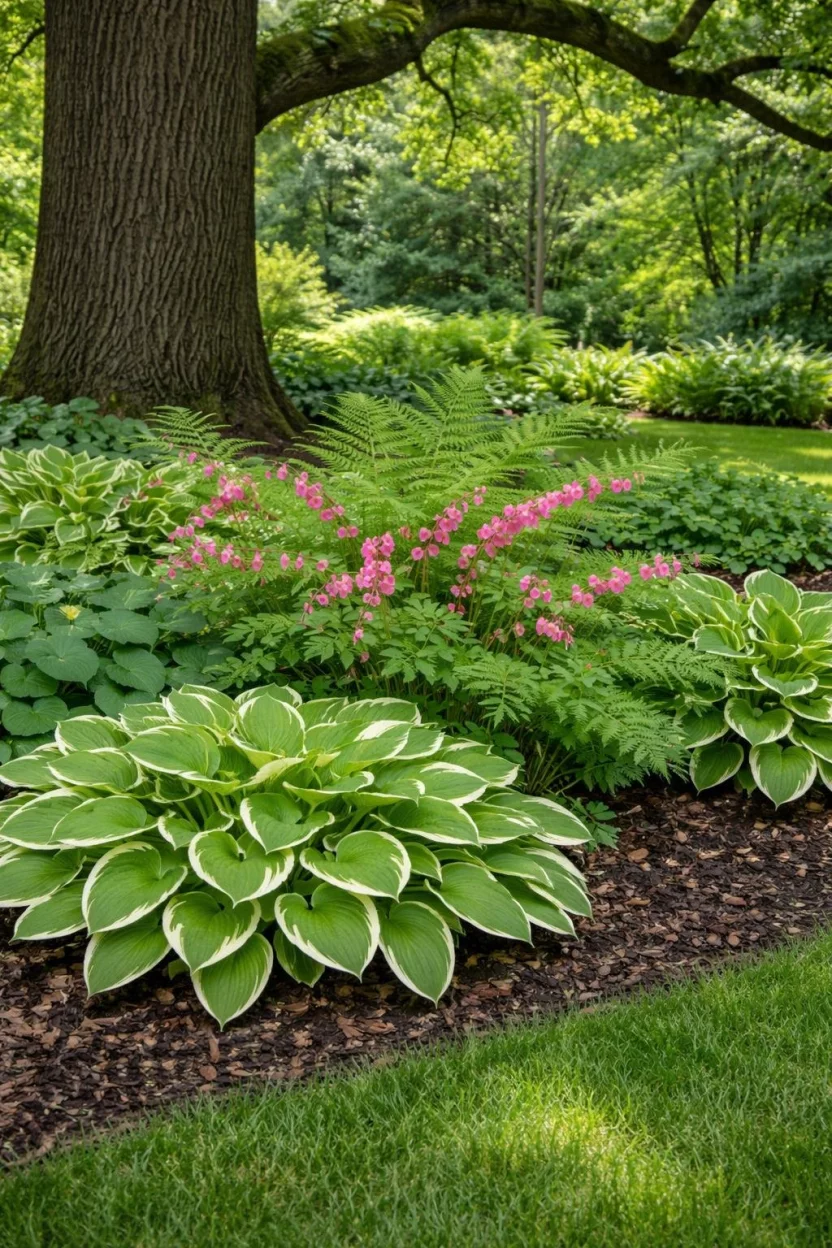
Do not let a lack of sun stop you from having a great garden.
Big trees are a gift, not a curse.
You can fill shady spots with hostas, ferns, and bleeding hearts.
These plants often have incredible leaf patterns and textures that pop in the shadows.
Use light colored mulch or white flowers to brighten up the darker corners of your yard.
A shade garden usually requires less water than a sun garden because the moisture stays in the soil much longer without the sun baking it.
Low Hedge Entryway Border
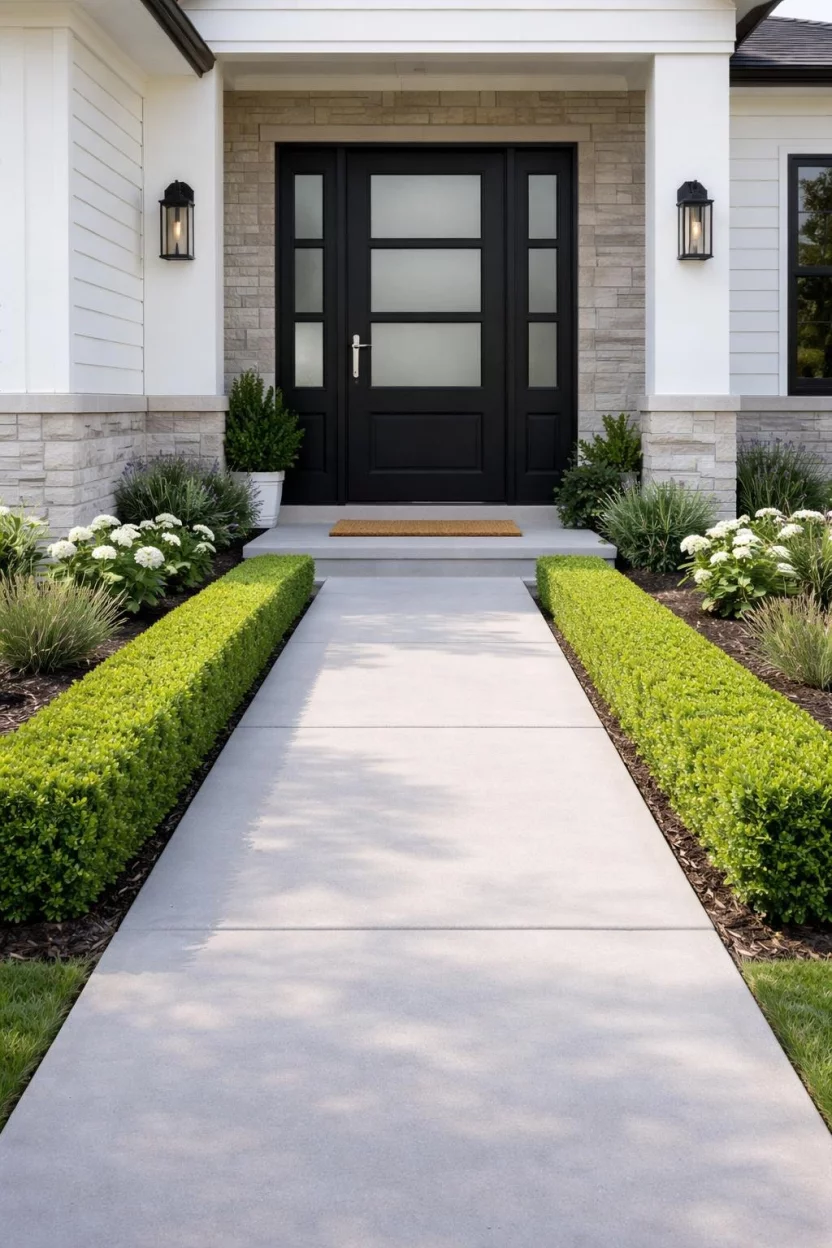
Sometimes you just need a little bit of structure to make your entryway feel special.
A very low hedge, about ten inches tall, can define your walkway without hiding your other plants.
This acts as a frame for your home and keeps guests on the path.
It provides a clean, finished look that works with any architectural style.
You can use boxwood or even dwarf lavender for this purpose.
It is a small detail that makes a massive difference in how organized your front yard appears to everyone else.