19 Mudroom Flooring Ideas

Your mudroom endures a relentless assault of wet boots, muddy paws, and discarded athletic gear every single day. Finding the perfect balance between indestructible durability and high-end style remains a challenge for most homeowners. These 19 Mudroom Flooring Ideas will help you transform your entryway into a functional masterpiece.
Sleek Hardwood And Modern Contrast
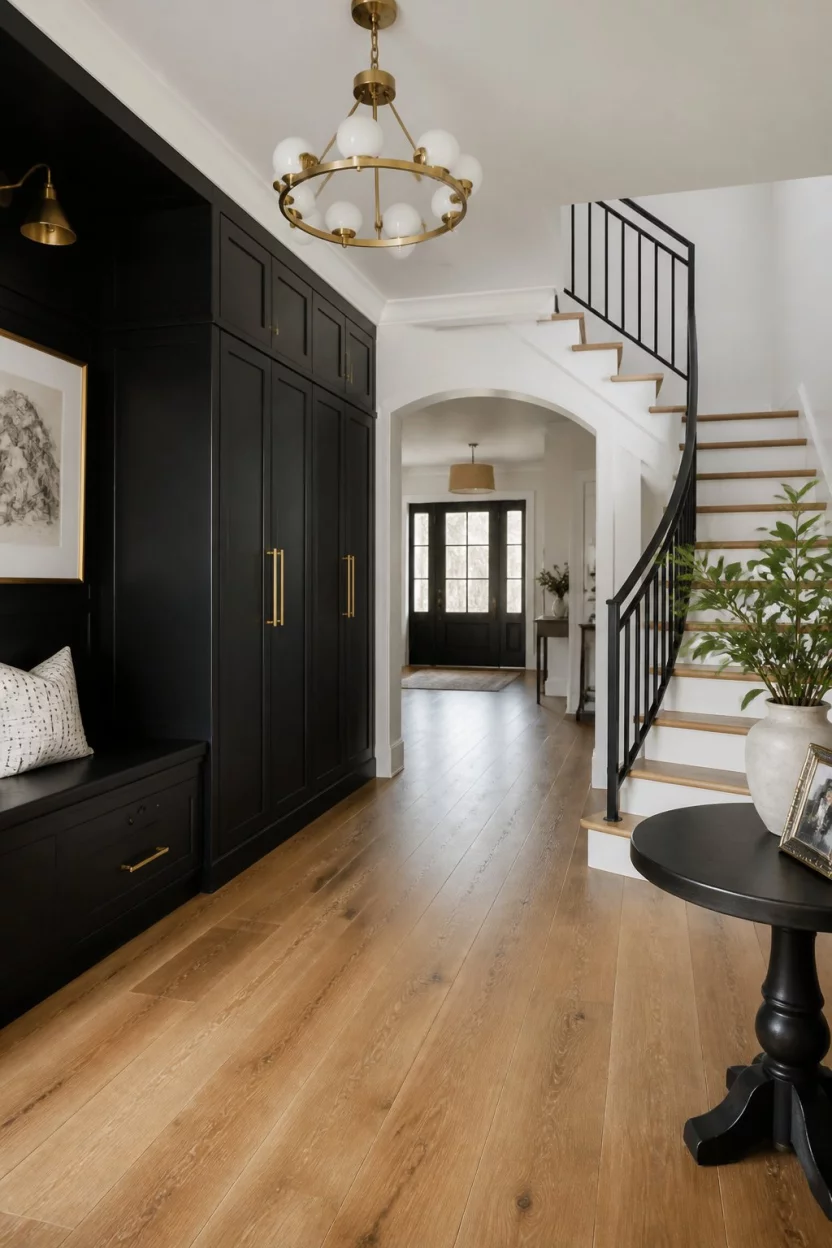
You might think hardwood is too delicate for a high traffic entrance, but modern finishes handle more than you expect.
This design pairs light hardwood planks with striking black cabinetry to create a sophisticated first impression.
Your guests will notice the brass chandelier before they spot a single stray grain of sand.
I recommend choosing a species with a busy grain pattern to hide the inevitable scuffs from your grocery store runs.
This floor keeps the space feeling warm and welcoming despite the bold dark accents.
Geometric Hexagonal Tile Patterns

Hexagonal tiles offer a refreshing break from the standard square options you see in every other house on the block.
The grey and white tones in this floor mask dried mud surprisingly well while maintaining a bright atmosphere.
You can lean into the playful geometry without making the room feel like a middle school math textbook.
I find that using a darker grout color with these tiles saves you from hours of scrubbing with a toothbrush.
This layout turns a utilitarian storage area into a genuine design feature.
Rustic Terracotta For Natural Charm
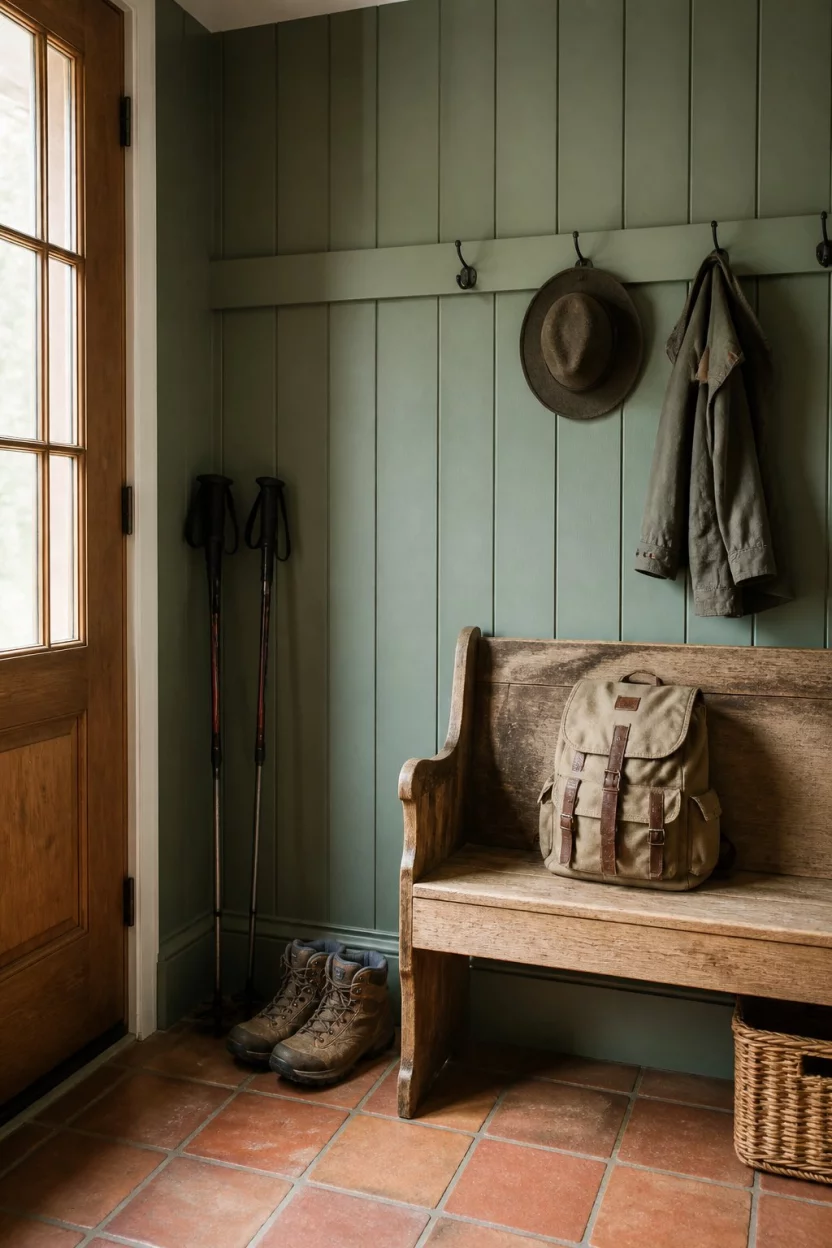
Terracotta brings an earthy, Mediterranean vibration that practically begs for a few clumps of dirt to complete the look.
The sage green paneling provides a soft backdrop for the fiery orange tones of the clay tiles.
This material works perfectly for families who actually spend time outdoors instead of just looking at nature through a window.
I love how the natural variations in the tile hide imperfections and signs of wear.
These floors only look better as they age and develop a unique patina.
Marble Look Checkerboard Elegance
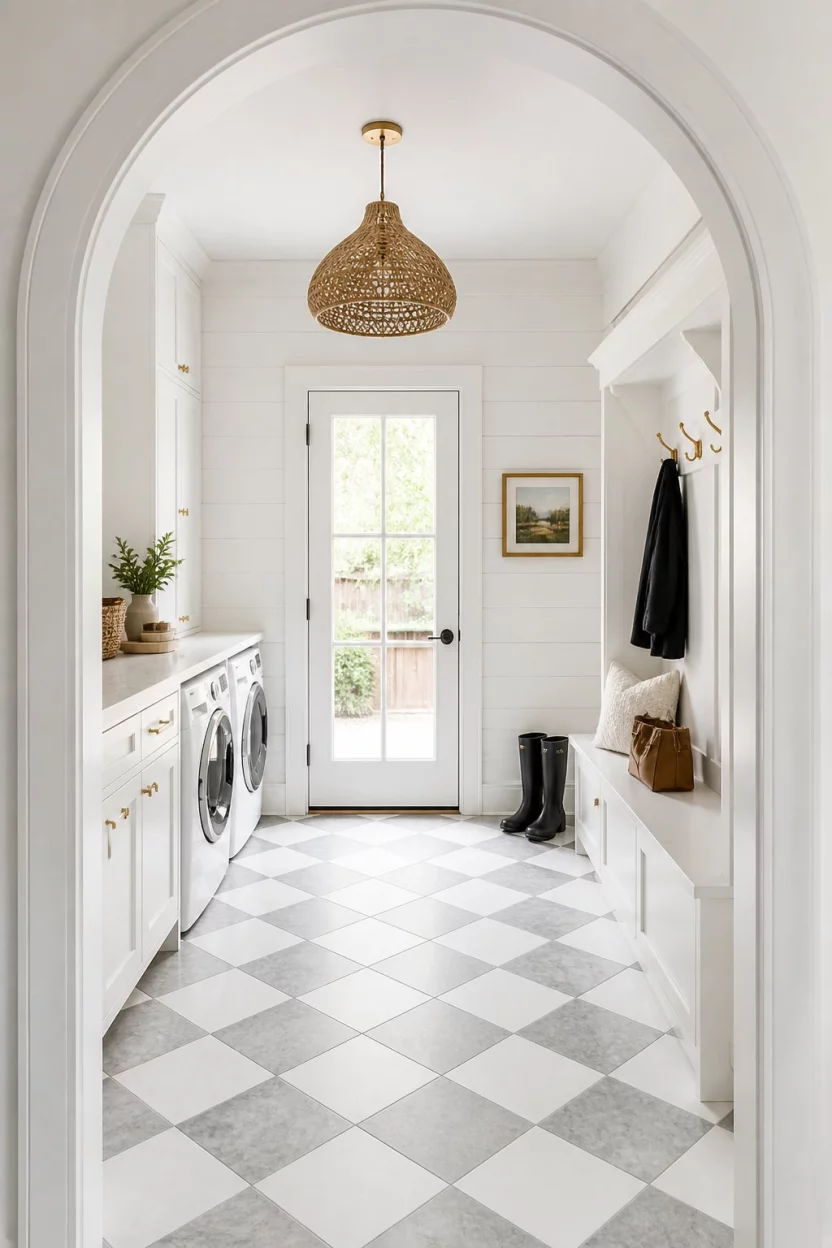
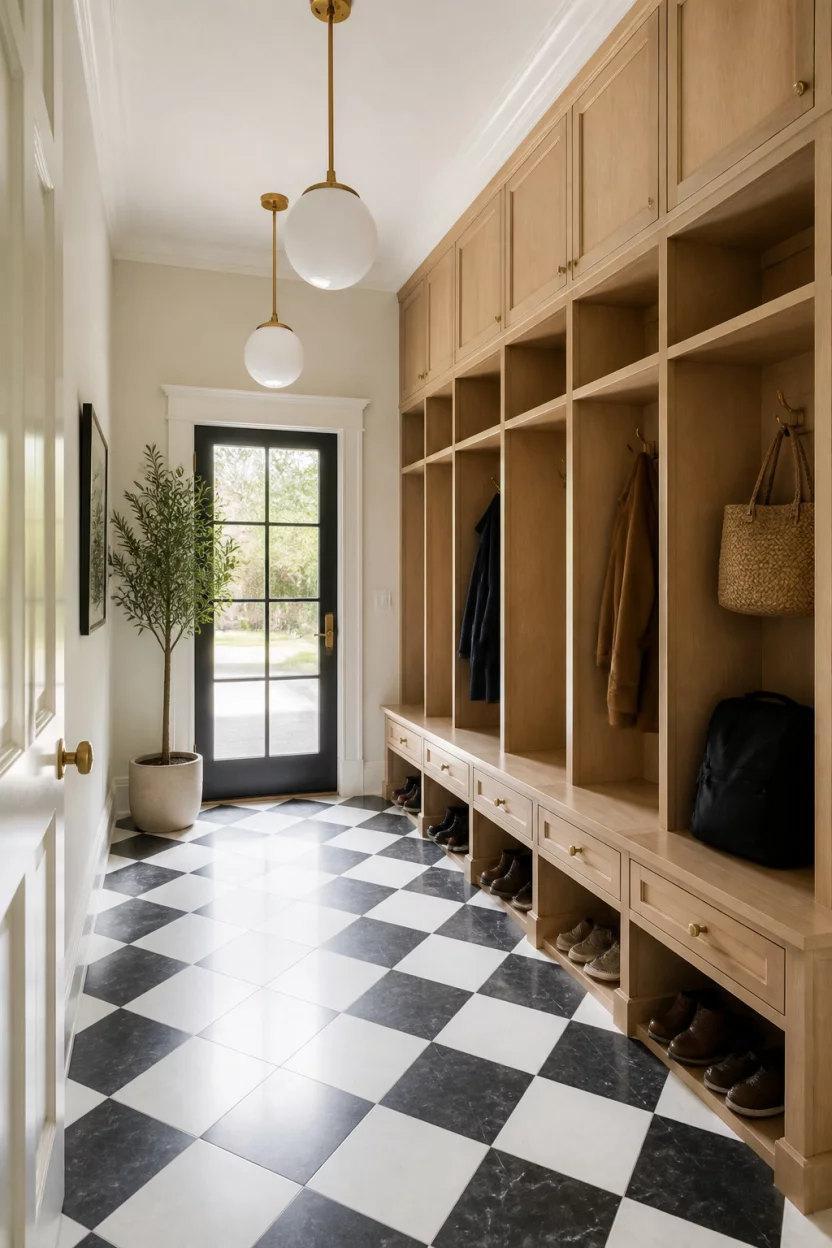
If you want your mudroom to feel like a luxury hotel instead of a glorified closet, go for the checkerboard.
This version uses marble look porcelain to provide that high end aesthetic without the high maintenance headache of real stone.
The white shiplap walls and rattan lighting keep the vibe light and airy rather than stuffy.
I suggest this pattern if you want to make a small hallway feel significantly wider.
It bridges the gap between a messy transition zone and an elegant living space.
Slate Herringbone For Industrial Vibes

Slate stands up to almost anything short of a direct hit from a falling meteor.
Laying these dark stones in a herringbone pattern adds a level of intentionality that raw flagging stones often lack.
The contrast with white shiplap and industrial lights creates a moody, architectural feeling.
I enjoy how the texture of the slate prevents family members from slipping when they run inside during a rainstorm.
This floor choice hides every bit of winter slush that your boots bring into the house.
Warm And Sustainable Cork Flooring

Cork feels like a soft hug for your feet after a long day of standing in uncomfortable work shoes.
This sustainable material naturally resists mold and mildew, which makes it a secret weapon for humid entryways.
The light brown tones here complement the dark wood cubbies without making the narrow space feel like a cave.
I appreciate the acoustic benefits of cork because it muffles the sound of your kids dropping their heavy backpacks.
It is the quietest flooring option you could possibly choose.
Budget Friendly Wood Look Planks

You do not have to spend your entire life savings to get a floor that looks like expensive timber.
These wood look planks offer the aesthetic of oak with the resilience of modern engineering.
The light tones prevent the entryway from feeling cramped or dark even if you lack a window.
I recommend this route for anyone with large dogs that treat the hallway like a racetrack.
You get the visual warmth of wood without worrying about deep scratches from puppy claws every afternoon.
Geometric Patterns In The Laundry Zone

Combining your mudroom with a laundry area requires a floor that can handle the occasional soap spill or water splash.
These grey geometric tiles add massive personality to an otherwise white and functional space.
The pattern draws the eye down and makes the room feel much larger than its actual square footage.
I love how the floor coordinates with the blue washing machine to create a cohesive color story.
This approach turns a chore-heavy room into a place where you actually enjoy spending time.
Dark Blue Geometry For Mood

Choosing a dark blue palette for your floor tile creates a sense of depth that white floors simply cannot match.
This narrow hallway uses bold patterns to distract from its tight proportions.
The dark accent wall and matching door frame the floor like a piece of art in a gallery.
I find that saturated colors like this hide dark debris and lint much better than lighter alternatives.
It is a bold move that pays off by making your home entrance feel incredibly high-end.
Large Format Pale Stone

Large format tiles minimize the number of grout lines you have to clean, which is a major win for any busy person.
These pale stone slabs create a seamless, expansive look that feels very clean and organized.
The light grey cabinetry above them maintains a monochromatic theme that feels calm despite the chaos of daily life.
I suggest this style if you prefer a minimalist aesthetic that does not scream for attention.
It provides a sturdy, cooling surface for those hot summer afternoons.
Rich Traditional Red Brick

Traditional red brick brings a sense of permanence and history to a new build.
This layout uses a cushioned bench to soften the hard edges of the masonry work.
The white cabinets pop beautifully against the deep earthy reds of the floor.
I think this choice is perfect for homes in colder climates where you want a floor that feels solid and substantial.
It handles grit and salt from snowy sidewalks without showing any signs of distress or permanent staining.
Classic Wood With Patterned Runners

Sometimes you want to keep the original wood floors but need a way to protect them from the elements.
Adding a long patterned runner allows you to inject color and texture while shielding the timber from wet soles.
The pale grey beadboard walls keep the focus on the vibrant textiles underfoot.
I love this solution because you can easily swap the rug when you want a fresh look for the season.
It provides a soft landing spot for your feet right at the door.
Chunky Stone And Wood Slabs

This design feels as though you brought a piece of a mountain lodge directly into your home.
Large stone look tiles provide a rugged foundation that supports heavy furniture like this thick wood slab bench.
The black framed glass doors add a contemporary touch that balances the more primitive elements of the room.
I recommend this for high traffic areas because the stone texture provides excellent grip.
You will never have to worry about anyone slipping as they rush out to catch the bus.
Contrast Between Light And Shadow

Using different floor patterns or colors to define separate zones helps organize a multifunctional space.
This split design uses classic checkerboard tiles to keep the mudroom side feeling bright and energetic.
The adjacent laundry area shifts to a moodier blue tone that differentiates the workspace from the storage zone.
I find this visual separation incredibly helpful for keeping your mind organized when you are juggling multiple household tasks.
It turns a large utility room into two distinct and beautiful areas.
Wainscoting And Brick Details

Brick floors do not always have to look rustic; they can appear quite formal when paired with the right elements.
White wainscoting and framed art pieces transform this entryway into a sophisticated transition space.
The herringbone brick adds a touch of architectural integrity that feels timeless and grounded.
I appreciate how the red tones in the floor pull warmth into an otherwise white environment.
This setup makes your mudroom feel like a legitimate room rather than just a place to dump shoes.
Organic Shapes In Terracotta
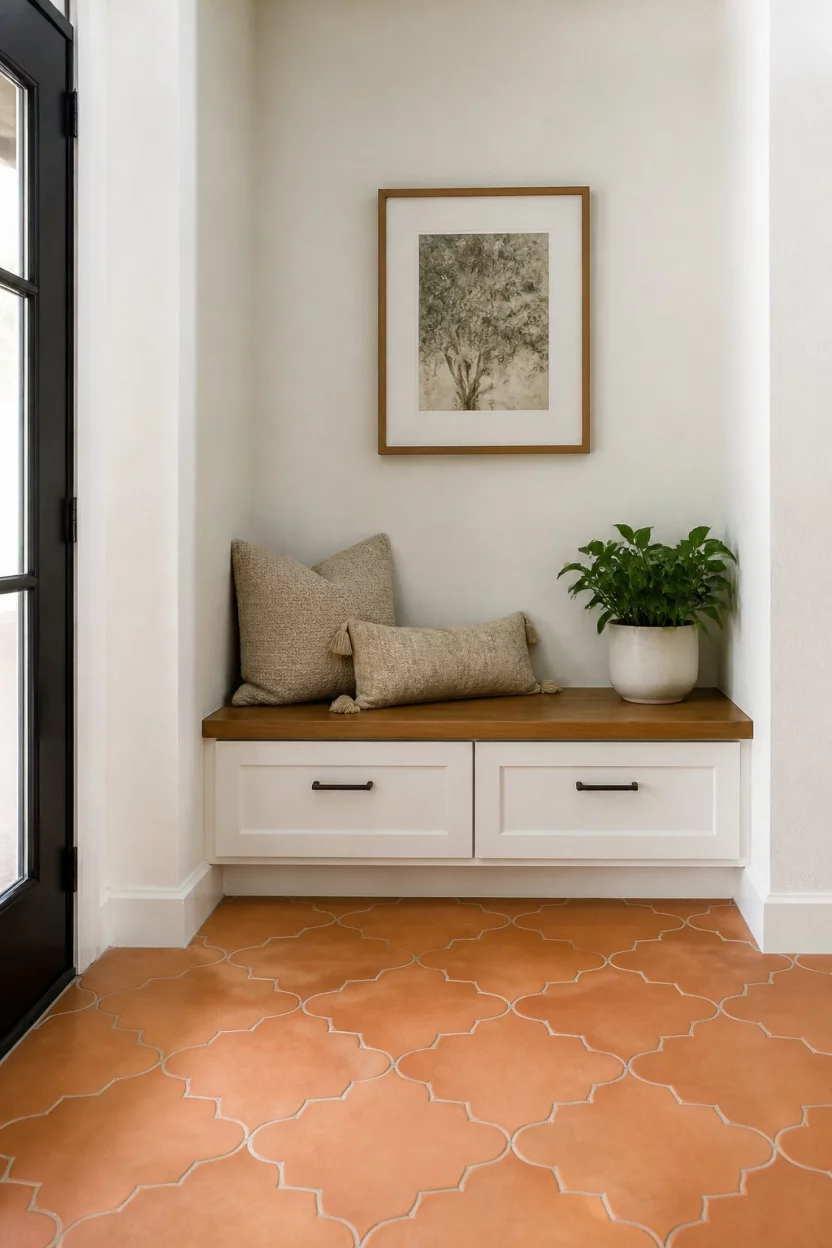
Moving away from standard squares and rectangles can give your floor an artisan, handcrafted feeling.
This terracotta floor uses interlocking organic shapes to create a visual puzzle that catches the eye immediately.
The wood topped bench ties in with the warm clay colors to create a cozy little corner for putting on your shoes.
I love how these tiles feel underfoot; they have a natural warmth that standard ceramic often lacks.
This design proves that small nooks deserve big personality through clever material choices.
Star Patterned Tile Magic

Star patterns bring a whimsical energy to a room that normally focuses on heavy duty storage.
These decorative tiles act as the main focal point of the space, allowing the rest of the decor to stay simple and functional.
The light wood bench under the window provides a sunny spot to rest while you lace up your boots.
I find that these bold patterns are excellent at hiding the small messes that accumulate throughout a busy week.
They turn your morning exit into a much more cheerful experience.
Grey Lockers And Dark Geometry

Tall grey lockers provide a sleek way to hide the clutter that usually defines an entryway.
Pairing these units with a dark herringbone floor creates a professional, organized atmosphere that encourages everyone to put their things away.
The black framed glass door lets in plenty of natural light to illuminate the intricate patterns of the floor.
I think the woven bench provides just the right amount of organic warmth to keep the space from feeling like a high school hallway.
Teal Nooks And Leading Lines

A dark teal bench creates a moody, jewel boxed effect that feels incredibly cozy for a mudroom nook.
The dark grey herringbone tiles lead the eye through the hallway and into the rest of the home seamlessly.
This flooring choice creates a sense of flow and continuity that makes the entire house feel more connected.
I love how the dark colors make the natural wood seating pop with warmth.
This design choice proves that mudrooms can handle bold colors and complex patterns with total grace.