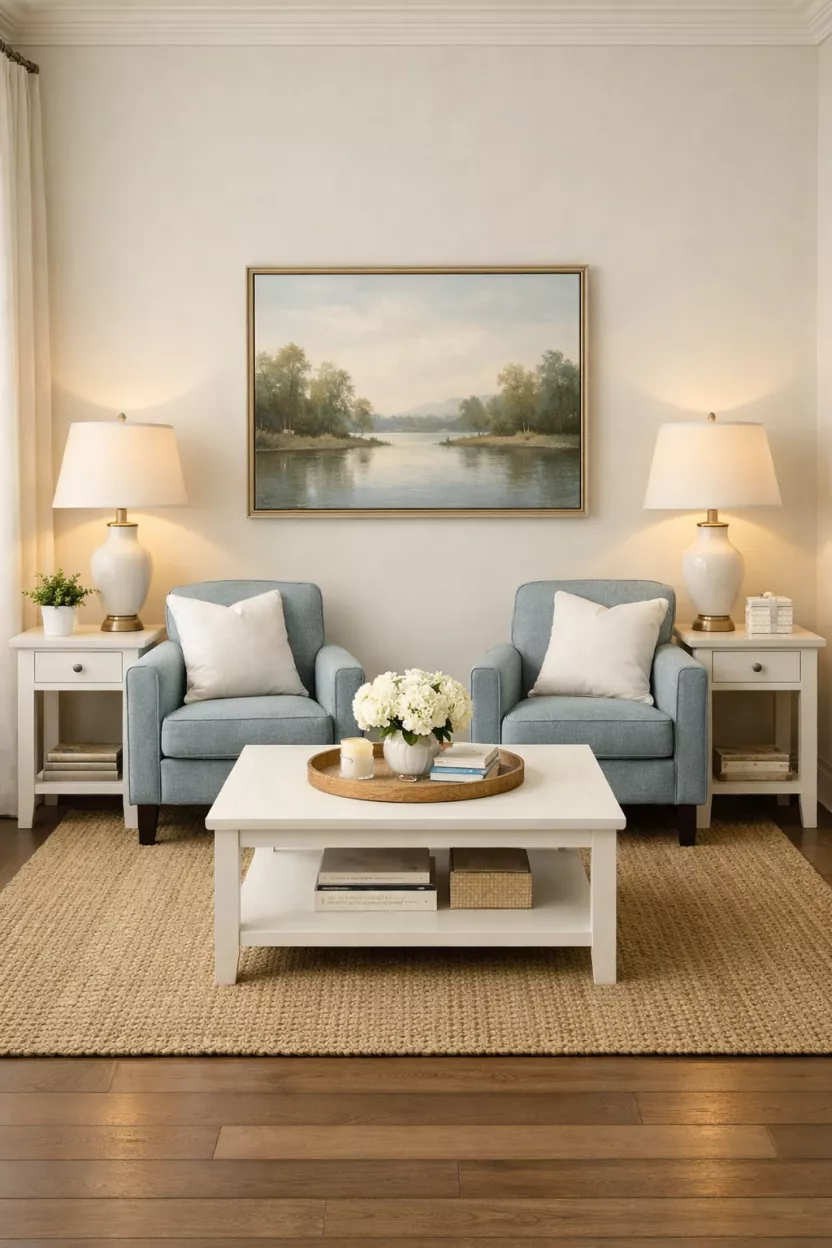
Why Furniture Scale Matters in Living Rooms?

I walked into a house last week where the sofa literally ate the entire room. You could not even open the front door all the way without hitting a velvet armrest. If you want a home that feels like a home and not a storage unit, you need to master scale.
The Big Mistake Everyone Makes

I see people buy massive sectional sofas because they look great in a giant showroom with twenty foot ceilings. Then they get that monster home and realize it blocks every walkway. You lose the battle against your own floor plan when you ignore how big things actually are.
Most of my friends think they need the biggest furniture possible to feel cozy. That is a lie that leads to bruised shins and cramped vibes. I promise that a smaller couch with the right proportions makes a room feel twice as large.
Furniture scale refers to how an item relates to the size of the room. I use it to create balance so pieces do not look like they belong in a dollhouse or a giant castle. If you get this wrong, no amount of expensive pillows or fancy lamps will save your pride.
The Difference Between Scale and Proportion
I often hear people use these words interchangeably but they mean different things in my world. Scale is how the furniture size compares to the room itself. Proportion is how the furniture pieces look when you put them next to each other.
Room Scale Basics
- High ceilings allow for taller bookshelves and high back chairs.
- Small apartments need furniture with legs so you can see the floor.
- Large rugs anchored under furniture make a space feel grounded.
- Tiny coffee tables next to giant sofas look like a mistake.
If I put a tiny side table next to a massive overstuffed recliner, it looks ridiculous. The eye notices that something is off even if you cannot name the problem. I always check the height of my chair arms before I buy a table to go next to it.
How Ceilings Dictate Your Choices
I always look up before I start measuring the floor for a new layout. Your vertical space carries just as much weight as your square footage. Low ceilings feel even lower if you buy a tall mahogany cabinet that reaches within inches of the paint.
I prefer low profile furniture for rooms with standard eight foot ceilings. It creates an illusion of more air and space above your head. On the other hand, if you have vaulted ceilings, use that height. I suggest tall mirrors or wall art to draw the eye upward and fill that empty void.
The Secret of Visual Weight
Visual weight behaves differently than actual physical pounds. A dark leather sofa looks much heavier than a light fabric sofa of the same size. I use this trick to balance rooms that feel lopsided because of heavy architectural features like fireplaces.
| Feature | Heavy Visual Weight | Light Visual Weight |
|---|---|---|
| Material | Dark wood, velvet, leather | Glass, acrylic, light linen |
| Design | Solid bases, skirted bottoms | Tapered legs, open frames |
| Color | Navy, black, forest green | White, beige, soft grey |
I love using glass coffee tables when a room feels cluttered. Since you can see through the glass, it occupies almost zero visual space. It is a magic trick for your floor plan that keeps the room feeling open and breezy.
Measuring Your Space Like a Pro

I never trust my eyes when I am standing in a furniture store. I use a tape measure every single time because showroom floors are built to deceive you. They have no walls or hallways to provide context for the actual size of a dresser or buffet.
The Tape Hack
- Clear the floor in your living area.
- Use blue painters tape to outline the size of the furniture you want.
- Walk around the tape for a full day to see if you trip.
- Leave at least eighteen inches between coffee tables and sofas.
I find that walking through the “taped” room reveals problems I did not see on paper. If I keep bumping into the blue lines, I know the sofa is too long. It is much easier to move tape than it is to return a thousand pound sectional to the store.
The Relationship Between Rugs and Scale
I hate seeing tiny rugs that look like floating postage stamps in the middle of a room. This is the most common crime against living room scale that I witness. A small rug makes a large room look disconnected and cheap, which is a tragedy.
I always buy a rug that is large enough for at least the front legs of every seating piece to rest on it. This creates a defined zone for conversation and keeps things looking unified. If the rug is too small, the furniture looks like it is drifting out to sea without an anchor.
Dealing with Awkward Corners
I used to think every corner needed a plant or a chair. Now I realize that empty space is actually a design choice that helps with scale. If you cram every inch of a room with stuff, the scale of the room disappears entirely.
If I have a weird corner, I choose one statement piece that matches the height of the windows. A tall floor lamp or a slender pedestal with a sculpture works well. I avoid putting bulky chests in corners because they cut off the flow and make the room feel like a box.
Proportions of Wall Art
I see people hang tiny pictures on massive walls and it makes me want to cry. Scaling your decor is just as important as scaling your furniture. Small art on a big wall looks like a lonely fly sitting on a white sheet.
I follow a simple rule for art above a sofa. The piece should take up about two thirds or three fourths of the width of the couch. If the art is wider than the sofa, it looks top heavy. If it is too small, the sofa overpowers the wall and makes the room feel unbalanced.
Gallery Wall Tips
- Group small items together to create one large visual shape.
- Keep the spacing between frames consistent to maintain order.
- Use a level because crooked art ruins the scale faster than size does.
- Hang centers of the art at five feet seven inches high.
Balance Your Seating Groups

I try to avoid putting all the heavy furniture on one side of the living room. If I have a massive sofa on the left, I need something with visual weight on the right. This does not mean I need another sofa. A pair of sturdy armchairs with a shared table usually does the job.
I think of the room like a seesaw. If one side is weighted down by a black leather recliner and a dark wood bookshelf, the other side needs help. I might add a dark framed window treatment or a heavy floor lamp to pull the weight back to the center.
Negative Space is a Tool
I use negative space to give the eyes a place to rest. You do not need to fill every wall or every floor plank with an object. Furniture scale works best when there is enough room for the furniture to actually breathe.
If you have a beautiful architectural chair, let it stand alone. Surrounding a great piece with clutter hides the scale and the beauty of the design. I treat space like a physical element in the room just like wood or fabric.
I find that people are afraid of empty walls because they think it looks unfinished. I disagree. An empty wall allows the furniture in front of it to tell a better story. It makes the scale of the room feel intentional rather than accidental.
Lighting and Scale
I often see people buy lamps that are way too small for their side tables. If the lamp is shorter than the person sitting next to it, the scale is likely wrong. I want my lamps to be tall enough to provide light for reading without looking like a toy.
Chandelier Sizing
- Add the length and width of the room in feet.
- The sum is the approximate diameter for your light in inches.
- A twelve by twelve room needs a twenty four inch wide light.
- Hang it high enough so tall guests do not hit their heads.
I also look at the bulk of the lamp base. A skinny lamp on a thick, chunky table looks fragile. I match the weight of the lamp to the weight of the furniture it sits on. This creates a cohesive look that feels professional and planned.
Final Thoughts on Choosing Pieces
I stick to my measurements even when a piece of furniture is on sale for a great price. A bargain is not a bargain if it ruins the flow of your home. I focus on how many people I actually need to seat on a daily basis.
I suggest buying furniture for your actual life, not the party you throw once a year. If you live alone, you do not need a twelve foot sofa. You need a space that fits you and your daily habits. Good scale makes a room feel like it was built just for you.
I always remember that humans are the scale. If the furniture makes a person look tiny or giant, something is wrong. I want my guests to feel comfortable and supported by the room around them.
Trust your gut when you walk into a room. If it feels tight, remove something. If it feels cold and empty, get a bigger rug or a taller plant. You have the power to fix your space once you understand why these sizes matter.