8 Best Extendable Dining Tables for Small Spaces 2026

This post may contain affiliate links. As an Amazon Associate I earn from qualifying purchases. If you choose to make a purchase, I may earn a small commission at no extra cost to you.
A small dining area can feel cramped when a table claims space all week but still needs to host friends now and then. An extendable design gives you a smaller daily footprint and extra room for meals with guests. The challenge is finding one that opens without blocking chairs or walkways.
A good choice starts with its closed and open measurements, then checks the extension method, storage, and usable seating. The options here include compact round tables, solid-wood designs, and a cabinet-based model.
Jocoevol Fluted-Base Extendable Dining Table takes the top spot for its four-to-eight-person range and two-tier base shelf. These are the best extendable dining tables for small spaces to shop in 2026.
Our Top Extendable Dining Tables Picks

Jocoevol Fluted-Base Extendable Dining Table
- Size range: 43.3-78.7 inches
- Seating: 4-8 people
- Material: Thick MDF

ONBRILL Fluted Extendable Dining Table
- Size range: 41-78 inches
- Seating: 2-8 people
- Material: MDF

Jocoevol Cross-Base Extendable Dining Table
- Size range: 43-59 inches
- Seating: 4-8 people
- Material: MDF, carbon steel
Mxtxmy Round Extendable Dining Table
- Size range: 43.3-59 inches
- Seating: 4-8 people
- Material: Thick MDF
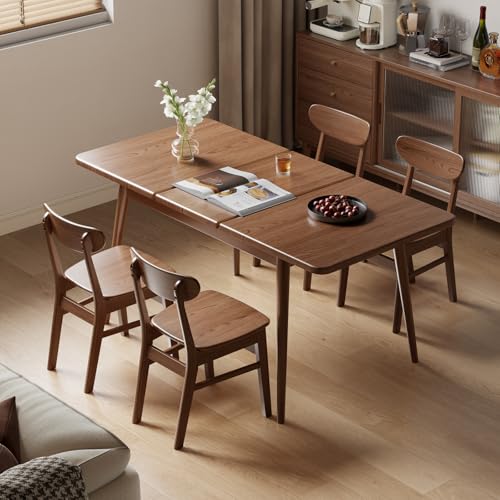
Muwuele Solid Wood Extendable Dining Table
- Size range: 47.2-63 inches
- Seating: 4-8 people
- Material: FAS-grade rubberwood

DONGMUWUJEE Solid Wood Folding Dining Table
- Size range: 23.6-47.2 inches long
- Seating: 2-6 people
- Material: FAS-grade rubberwood

HUAHUU Fluted Extendable Dining Table
- Size range: 39.3-77 inches
- Seating: 2-8 people
- Material: MDF

St.Mandyu Extendable Table Cabinet Set
- Size range: 19.7-102 inches
- Seating: 1-9 people
- Material: Eco-friendly materials
More Details on Our Top Picks
Jocoevol Fluted-Base Extendable Dining Table suits you if you need a compact daily table that can handle a larger meal. It grows from 43.3 inches round to 78.7 inches long and seats four to eight people.
The leaves tuck beneath the tabletop, so you do not need a separate place to store them. Its two-tier shelf adds room for dining items, while the fluted base gives the table a distinct look.
The thick MDF top resists heat, scratches, and water, and the table has a stated 350-pound capacity. Compared with the tables that stop at 59 inches, Jocoevol gives you more room for larger gatherings.
That longer oval shape takes up more floor space when extended, so measure your dining area before choosing it. The silent rails and secure clamps make the size adjustment practical for everyday use.
Bottom line: Choose it if you want under-table leaf storage, useful shelf space, and room to seat up to eight. Its extended length makes it a better fit for a dining area with space to spare.
ONBRILL Fluted Extendable Dining Table works for you if your everyday table needs to make room for guests. It shifts from a 41-inch round shape for two to four people into an oval that reaches 78 inches and seats six to eight.
Its built-in storage uses the space beneath the tabletop, helping keep dining items close by. The fluted base and curved top give it a mid-century look without changing its practical round-to-oval layout.
Metal slide rails and latches support the extension panels. Compared with tables that extend only to 59 inches, this one gives you a longer surface for larger dinners, though you will need room for the full oval shape.
The MDF top is easy to clean, and the package includes labeled parts and assembly instructions. ONBRILL Fluted Extendable Dining Table weighs 121 pounds, so plan where you want it before putting it together.
Bottom line: Pick it if you host larger meals but want a round table for everyday use. The under-table storage and longer oval setting suit you if you have room to open it fully.
Jocoevol Cross-Base Extendable Dining Table suits you if you want a round table with a shelf and a simple way to add seating. It measures 43 inches across when closed and extends to 59 inches long, with seating listed for four to eight.
The lower round shelf gives you a spot for tableware and kitchen accessories. Its cross-style base also leaves room for chairs to tuck underneath, which can help keep your dining area clear between meals.
The thick MDF tabletop resists heat, scratches, and water. A carbon steel frame and reinforced cross base support the table, while the removable leaf lets you change its size.
Compared with the longer oval tables in this group, this one stops at 59 inches, so it offers less surface for a large gathering. Jocoevol Cross-Base Extendable Dining Table comes with labeled parts, pre-drilled holes, and assembly instructions.
Bottom line: Choose it if you want a compact round table with a storage shelf and a cross base. Its shorter extended length suits you better than a 78-inch table if you have less room for guests.
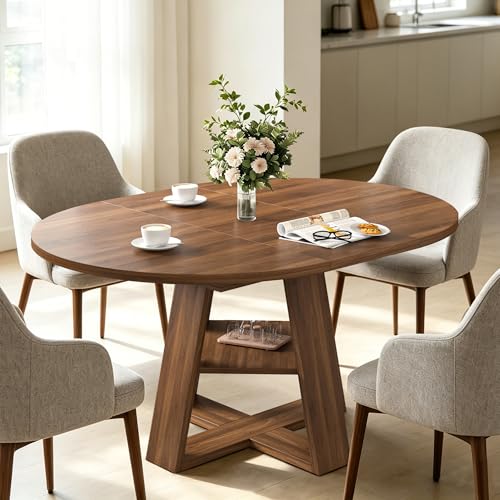
Mxtxmy Round Extendable Dining Table fits a small dining area where you want room for extra guests now and then. It starts at 43.3 inches round and opens to a 59-inch oval, with space for four to eight people.
The extension leaves store under the tabletop, so you do not need to find a cabinet or closet for them. A 20.55-inch shelf on the cross-shaped base gives you another place to keep dining essentials.
The MDF surface resists scratches and water, and you can clean it with a damp cloth. Its expanded length falls short of the 78-inch options, but that smaller reach may suit you if you do not need a long table for large gatherings.
Mxtxmy Round Extendable Dining Table has smooth, quiet rails and comes with labeled parts and tools. The farmhouse-style design also lets you use it as a work or craft table when you need another surface.
Bottom line: Choose it if you want a round everyday table with leaves that store beneath it. Its 59-inch extended length works for occasional gatherings without reaching as far as the larger oval tables.
Muwuele Solid Wood Extendable Dining Table suits you if you prefer rubberwood to MDF and need a table for four that can expand for guests. It opens from 47.2 to 63 inches and seats four to eight.
The FAS-grade rubberwood top has rounded corners and a smooth painted finish. Angled legs support the table, and the wood surface cleans easily.
A hidden lift system, silent track, and secure lock handle the extension. Its 63-inch maximum length is shorter than the 78-inch tables in this roundup, so you get less room for a large dinner party.
Muwuele Solid Wood Extendable Dining Table calls for attaching four legs during setup, and tools and instructions come with it. It also includes a two-year warranty, an extra not shared by most of the other tables here.
Bottom line: Pick it if solid rubberwood matters more to you than a long extended length or built-in storage. Its shorter span suits you if you host smaller groups.
DONGMUWUJEE Solid Wood Folding Dining Table is a fit for you if you have very little room for a daily dining table. It measures 23.6 by 31.5 inches closed and expands to 47.2 by 31.5 inches, with seating for two to six.
The concealed storage compartment sits below the tabletop and holds items such as tableware, books, or office supplies. FAS-grade rubberwood and reinforced outward-tilting legs set it apart from the MDF tables in this roundup.
The table expands to less than 48 inches long, so it gives you less room than the round tables that reach 59 inches or more. Its compact closed size makes it useful for solo work or a small meal when you do not need the larger setting.
DONGMUWUJEE Solid Wood Folding Dining Table needs just its four legs assembled, and the listed assembly time is about 15 minutes. The legs measure 1.57 inches thick, adding a sturdy support detail to its compact design.
Bottom line: Choose it if you need a small closed footprint and prefer solid rubberwood. It also suits you if you want a table that can serve as a compact work surface.
HUAHUU Fluted Extendable Dining Table suits you if you want three size options for everyday meals and occasional gatherings. It begins at 39 inches round and extends to 77 inches long, with seating for two to eight.
You can use one or two removable panels to change the table size. The fluted wood base gives it a farmhouse look, while metal slides and latches connect the extension sections.
The table has a stated 200-pound capacity. Unlike tables with storage shelves or compartments, this design focuses on changing size rather than adding a place for dishes or supplies.
HUAHUU Fluted Extendable Dining Table needs two people for assembly, and an electric screwdriver can speed up the work. Its 77-inch extended length gives you space for larger meals, but you will need room for the full oval shape.
Bottom line: Pick it if you want to adjust between three sizes and need a table that can seat up to eight. The extended length suits you if your room can fit the full oval shape.
St.Mandyu Extendable Table Cabinet Set suits you if your small home needs one table that can stretch far for a large gathering. It adjusts from 19.7 to 102 inches across five length settings, with seating listed for one to nine people.
The integrated storage cabinet gives you space for dinnerware, spirits, or kitchen supplies. Its arched glass doors also make the cabinet part of the room’s display.
Metal telescopic slides support the table’s expansion, and the cabinet has a floor-standing base. At 212 pounds, the set is much heavier than the other tables here, so it is a less convenient choice if you expect to move it often.
The antique white finish and wood-grain tabletop suit a modern look. St.Mandyu Extendable Table Cabinet Set reaches far beyond the other options, but its large expanded size calls for careful room planning.
Bottom line: Choose it if you need a table that can extend to 102 inches and value storage in the same set. Its heavy build and long expanded length make it better for a room where you can leave it in place.
Factors to Consider When Choosing Extendable Dining Tables for Small Spaces
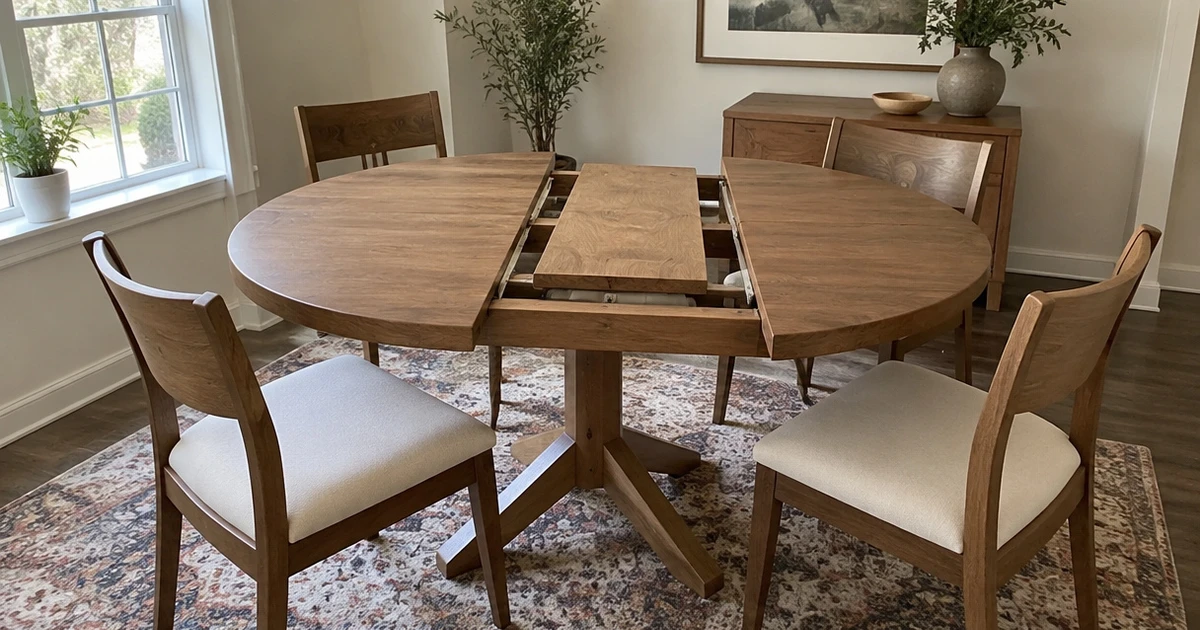
A table needs to work in your room every day, not just during a big meal. Compare its full footprint, seating, extension method, base, and surface before you choose.
Closed and Extended Size
Start with the table’s everyday length and its full extension, not just its largest measurement. Check the tabletop width too, since a short, wide top can crowd a narrow dining nook. Compare both sizes with the space between walls, cabinets, and doorways.
Mark the closed and open outlines on your floor with tape, then pull your chairs back as you would during a meal. Check that doors still open and that people can walk to nearby rooms. Leave a clear path for the extension itself, since some designs expand from the center while others open in a different way.
Seating Capacity
Use the seat count as a starting point, not a promise that every chair will fit comfortably. Wide seats and armrests need more room, so compare your chair widths with the usable tabletop space. Check whether the capacity applies to the table before or after you add the leaf, then plan around the group you host most often.
A household that usually eats with four people may prefer a four-seat daily setup with extra places for guests. The base can also affect where chairs fit. Before you decide, check:
- How many people usually eat at the table.
- The width of your chairs, including armrests.
- Whether the base leaves room for knees.
Extension Style
Check how the table expands before choosing a shape. Under-table leaves stay close to the top, removable leaves need a separate storage spot, and folding tops need room to open fully. Rails guide the movement, while latches can hold an extended setup in place.
Compare how each approach works in your room. If you have a narrow walkway or little storage, favor a mechanism you can open without carrying a leaf through the room or moving nearby furniture.
| Extension style | What you handle | What to check |
|---|---|---|
| Under-table leaf | Pull out stored sections | Clear space beside the table |
| Removable leaf | Lift and store a separate panel | Room in a closet or cabinet |
| Folding top | Open hinged sections | Clearance around the table |
Base and Storage
Look beneath the tabletop, not only at its surface. A pedestal can leave more room for chairs at the corners, while angled legs or a cross base may affect where diners can sit.
If you use armchairs, check that they tuck in without hitting a leg, shelf, or central support. Compare the base footprint with your usual walking routes.
Built-in shelves and cabinets give you a place to keep dining items, but they also take up floor space and can affect legroom. Decide what you plan to store before treating storage as a benefit. Measure the base at floor level, then check whether you can reach the storage easily when people sit down.
Material and Surface
Material affects a table’s look, weight, and care routine. Extendable tables use materials such as MDF and solid wood, with finishes that can include paint or visible wood grain.
Choose a surface that suits your room and the upkeep you prefer. Check the seam where the extension meets the main top, since it shows when you open the table.
Think about moving and setup too, especially if you expect to reposition the table. Match the material, surface, and base instead of choosing by the tabletop alone. In a dining nook, check that the finish works with your room’s light and surrounding furniture.
Picking an Extendable Table That Fits Your Room
Choose the Jocoevol Fluted-Base Extendable Dining Table if you want a 43.3-to-78.7-inch span, seating for four to eight, and a two-tier shelf. The ONBRILL Fluted table suits hosting, while the Jocoevol Cross-Base has a lower round shelf and Mxtxmy adds a 20.55-inch base shelf.
Pick the Muwuele for FAS-grade rubberwood, the DONGMUWUJEE if a 23.6-inch daily length matters, or HUAHUU if you want three size settings. St.Mandyu reaches 102 inches and adds cabinet storage for groups of up to nine. Compare the closed footprint first, then match the opening style and storage to your room.
Frequently Asked Questions
How much space should you leave around an extendable dining table?
Measure the table in both its closed and extended positions, then include room to pull chairs back and walk behind seated diners. Mark the full layout on the floor with tape and check doors, drawers, and routes to other rooms. Your chairs and room layout matter more than a generic clearance number.
How do you know how many people a table can seat?
Start with the number of people who use the table most days, then check the extended capacity for occasional guests. Seat counts vary with tabletop size, chair width, and how much elbow room you want. Measure the chairs you own and check the table’s open dimensions before relying on a maximum seating figure.
Are round extendable tables a good choice for small rooms?
Round extendable tables can work well when you want a compact shape for daily meals and a larger top for guests. The base may affect how many chairs you can place, so check legroom and chair positions before choosing. Measure the table both closed and open to see how it fits your walkways.
Where should you store a removable table leaf?
Choose a dry, easy-to-reach spot where the leaf can lie flat and stay protected from bumps. A closet or cabinet may work if it can hold the panel without blocking items you use often. Check the leaf’s size before you choose a storage spot, and keep the path to the table clear.
Should you choose MDF or solid wood?
Choose based on the look, finish, and care routine that suit your home. MDF uses engineered wood fibers, while solid wood tables use wood components; finishes and construction can vary across both types. Material alone does not tell you how the extension works, so check the opening mechanism and base as well.