9 Best Toddler Beds for Small Spaces 2026

This post may contain affiliate links. As an Amazon Associate I earn from qualifying purchases. If you choose to make a purchase, I may earn a small commission at no extra cost to you.
A toddler bed can make bedtime easier, but a bulky frame may crowd a closet or leave little room to play. In a tight bedroom, the bed’s full outside size matters as much as its mattress.
Look for a manageable footprint, a mattress that fits the frame, and rails that leave your child an easy way in and out. Decide whether a fixed frame or a floor bed better suits your daily routine.
The 2026 guide below covers wood frames, character designs, washable floor beds, and travel options. The Dream On Me Finn Toddler Bed is our top pick for its pinewood frame and two reinforced side rails.
Our Top Toddler Beds Picks

- Type: Pinewood toddler bed
- Dimensions: 53 x 30 x 24.5 in
- Materials: New Zealand pinewood, non-toxic paint
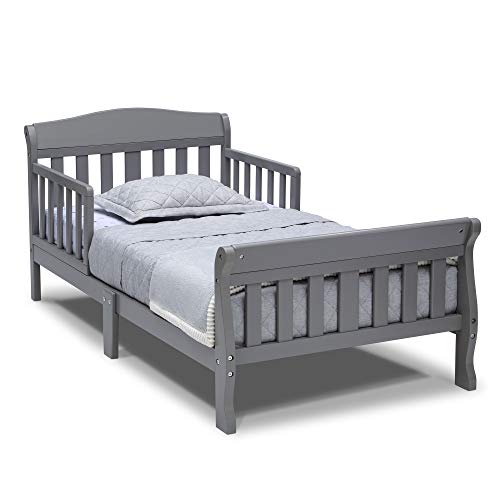
Delta Children Canton Toddler Bed
- Type: Wood toddler bed
- Dimensions: 56.25 x 29 x 24.5 in
- Materials: Wood

Delta Children Minnie Mouse Toddler Bed
- Type: Plastic toddler bed
- Dimensions: 53.94 x 29.13 x 26.18 in
- Materials: Steel, high-quality plastic

Delta Children Spidey 3D Toddler Bed
- Type: Character toddler bed
- Dimensions: 53.5 x 30.25 x 23.7 in
- Mattress: Standard crib/toddler mattress, sold separately

- Type: Foam floor bed
- Dimensions: 60.6 x 31.5 x 19.7 in
- Materials: High-density foam, velvet cover
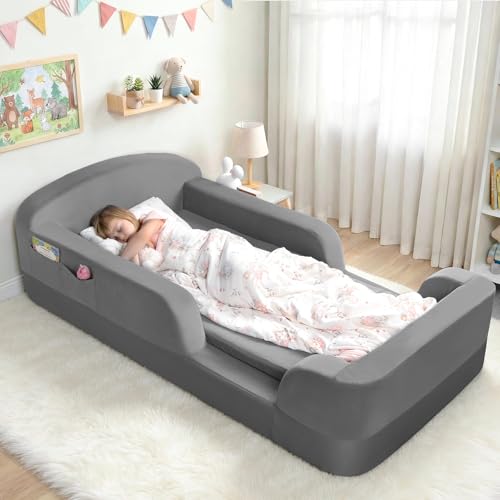
- Type: Foam floor bed
- Dimensions: 63 x 35.4 x 13 in
- Materials: High-density foam
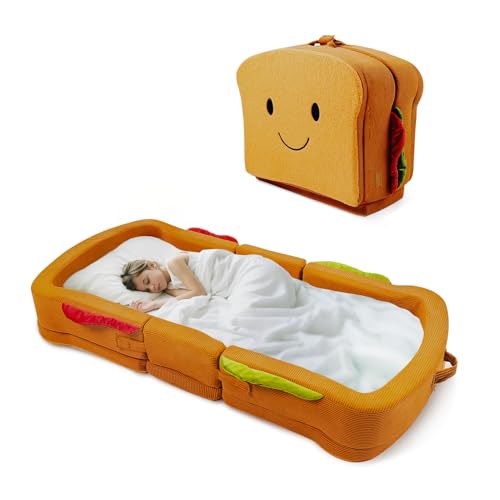
liftoza Sandwich Style Toddler Travel Bed
- Type: Foldable travel bed
- Dimensions: 54 x 25 x 7 in
- Materials: High-density foam, flannel lining

- Type: Portable foam bed
- Dimensions: 55 x 25 x 7 in
- Materials: High-density foam, soft fabric
liftoza Medium Sandwich Toddler Bed
- Type: Compact travel bed
- Dimensions: 48 x 22 x 6.5 in
- Materials: High-density foam, flannel lining
More Details on Our Top Picks
Dream On Me Finn Toddler Bed gives you a compact wood frame with a low entry for a child learning to climb in and out independently. Its 53 x 30-inch footprint is shorter than the Canton bed’s, while still fitting a full-size crib mattress.
New Zealand pinewood, two reinforced side rails and center legs make this a straightforward choice for everyday bedroom use. GREENGUARD Gold and BSA certifications, a 50-pound weight limit and a one-year limited warranty round out its practical features.
Dream On Me Finn Toddler Bed suits you if you want a fixed frame rather than a foldable travel bed. You’ll need to supply the mattress, and the 24.5-inch frame stands higher than the foam floor options here.
Bottom line: Choose it for a compact wood frame with reinforced rails, certifications and a clear weight limit for everyday use.
Delta Children Canton Toddler Bed gives you a simple wood frame that sits low to the ground, so your child can climb in with less effort. Its 29 x 56.25-inch footprint is slightly longer than the Finn’s, but a little narrower.
The frame fits a full-size crib mattress, which you’ll need to provide separately. You also get GREENGUARD Gold certification and JPMA certification, plus testing for lead and other toxic elements.
Delta Children Canton Toddler Bed works well if you want a traditional wood look without a tall frame. The low height helps your child reach the sleep surface, but the bed still takes up more floor length than the compact foam travel options.
Bottom line: Pick this bed if you want a low wood frame and already have a full-size crib mattress to use.
Delta Children Minnie Mouse Toddler Bed adds a bright character design to a compact plastic-and-steel frame. Its footprint measures about 54 x 29 inches, close to the Spidey bed’s size but a little narrower.
Two attached guardrails help keep your child on the sleep surface, and the bed fits a standard crib mattress that you buy separately. The frame holds up to 50 pounds and carries JPMA certification.
Delta Children Minnie Mouse Toddler Bed suits families looking for a themed bed with a familiar mattress fit. The character styling makes it more specific than a plain frame, and the 50-pound limit may matter as your child grows.
Bottom line: Choose it if your child likes Minnie Mouse and you want a standard crib-mattress fit with attached rails.
Delta Children Spidey 3D Toddler Bed brings colorful decals and raised character details to the headboard, footboard and toddler rails. Its roughly 53.5 x 30.25-inch footprint sits close to the Minnie Mouse bed’s size.
Two attached guardrails and JPMA certification add practical features beyond the character theme. The bed fits a standard crib or toddler mattress, which you’ll need to provide, and supports up to 50 pounds.
Delta Children Spidey 3D Toddler Bed fits a child who wants Spidey details in their room without taking up much more floor space than a typical toddler frame. Its themed look is more specific than a plain wood bed, so it may not suit every room.
Bottom line: Pick it for a child who wants Spidey-themed details and needs a compact bed with attached guardrails.
Oaskys Foam Toddler Floor Bed gives you a frameless sleep surface with 2.75 inches of high-density foam and a soft velvet cover. The ground-level design avoids a raised frame, while 9-inch guardrails form raised edges around the sleep area.
The 60.6 x 31.5-inch bed takes up more floor space than the compact travel mats in this roundup. Its cover comes off for machine washing, and the foam design needs no assembly.
Oaskys Foam Toddler Floor Bed is made for ages 3 to 8, so it may suit a child who has outgrown a smaller toddler frame. You can move it more easily than a full-size wood bed, though its wide sleep area still claims a sizable patch of floor.
Bottom line: Choose it if you want a washable foam bed with raised edges and can spare room for its wide sleep area.
ENITYA Foam Toddler Floor Bed gives your child an included mattress and a cushioned foam base without a hard frame. At 63 x 35.4 inches, it has a wider and longer sleep area than the other beds here.
Built-in rails run along both sides, and the base uses medium-firm foam beneath a softer mattress. You can unpack the bed without tools, then allow 48 hours for the foam to fully expand.
ENITYA Foam Toddler Floor Bed suits a child who needs more room to stretch, especially across the stated 3-to-6-year age range. Its generous dimensions make it a poor fit for a very tight room, so measure your available floor space before choosing it.
Bottom line: Pick it if your child needs a roomy floor bed and you have enough space for its broad footprint.
liftoza Sandwich Style Toddler Travel Bed folds for trips and gives your child a foam sleep surface with raised edges. Its 54 x 25-inch size is narrower than a typical toddler frame, while the flannel lining adds a soft layer over the high-density foam.
The cover comes off for machine washing, and the outer fabric resists stains. The bed has CPC certification, a child-safe zipper and space inside for storing toys when folded.
liftoza Sandwich Style Toddler Travel Bed works for trips or as a portable sleep spot at home, but it needs 24 to 48 hours to expand after you unroll it. Its foldable design and toy storage help if you want a bed that packs away between uses.
Bottom line: Choose it for a foldable travel bed with CPC certification, a washable cover and built-in toy storage.
ENITYA Toddler Travel Bed gives you a portable foam sleep space with raised edges and a two-inch base. Its 55 x 25 x 7-inch size works for travel or a temporary sleep spot without a full bed frame.
The foam base and rails connect as one piece, and the soft fabric cover comes off for machine washing. You don’t need to assemble it, but the foam needs 24 to 48 hours to expand after unpacking.
ENITYA Toddler Travel Bed folds for storage, making it easier to put away than a fixed toddler frame. It is a more specialized choice for travel or occasional use, rather than a wood bed set up as permanent bedroom furniture.
Bottom line: Pick it if you need a foam bed that folds away and has a removable, machine-washable bedspread.
liftoza Medium Sandwich Toddler Bed has a 48 x 22-inch sleep area, making it the smallest option here by length and width. Its raised foam edges and high-density foam create a compact floor bed for travel or naps at home.
The cover has a stain-resistant exterior, a flannel lining and a hidden zipper, and you can remove it for machine washing. A non-slip base and carrying handle add useful details when you move or set it up.
liftoza Medium Sandwich Toddler Bed suits toddlers ages 1 to 4 who need a portable sleep space. It folds down for storage and has a lifetime warranty, but its smaller size gives your child less room than the larger liftoza travel bed.
Bottom line: Choose it if you want the smallest listed footprint among these beds and need a foldable sleep spot for a young toddler.
Factors to Consider When Choosing Toddler Beds for Small Spaces
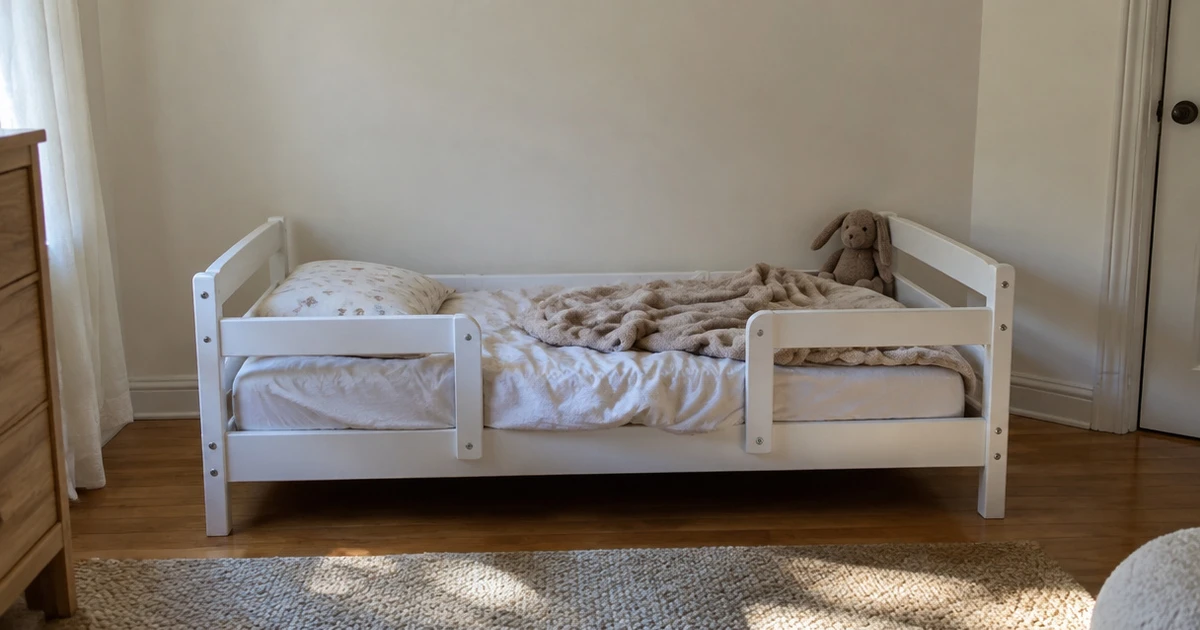
Start with the room, then compare the bed’s real footprint, sleep surface, and daily care needs. Small models can still feel bulky if rails extend far beyond the mattress or the bed blocks a doorway. Use your floor plan and your child’s routine to choose a style that fits.
Measure the Full Footprint
Start with the bed’s outside length and width, not just the mattress. A frame can add several inches around a mattress, while a foam bed may also take up more floor area than you expect. Measure the spot with a tape, then mark the outline with painter’s tape or paper.
Leave a clear path from the bed to the door, and check that drawers and closet doors still open. Measure the route through the room too, including tight turns. The chart below helps you compare broad bed styles, but check each model’s full dimensions before you choose.
| Bed style | Space pattern | Check before buying |
|---|---|---|
| Wood or plastic frame | Fixed footprint, raised mattress | Outer rails and entry path |
| Foam floor bed | Low sleep surface with raised sides | Full width around the mattress |
| Foldable travel bed | Opens for sleep, folds for storage | Open and folded measurements |
Check Mattress Fit
Match the bed to a mattress you already own only after checking exact dimensions and fit. A crib mattress can work with many toddler frames, but the word “crib” alone does not prove that two pieces fit safely together. Check the bed’s mattress size and thickness guidance, then measure your mattress from edge to edge.
Look for a snug fit with no open gaps around the sides. Mattress thickness matters too: a very thick mattress can sit higher beside short rails. If you need to buy a mattress, include its footprint in your room plan before selecting the bed.
Look at Rails and Entry
Guardrails change both safety and access. Check how much of each side they cover, whether they leave a clear opening for your child, and if the opening faces a convenient part of the room. For a child who moves around during sleep, higher or longer rails may feel reassuring, but they can make climbing in harder.
Low beds reduce the distance to the floor, yet you still need a clear landing area. Place the entry side away from sharp furniture corners and keep the route to a caregiver’s bed or doorway open. Follow the bed’s age and weight limits as your child grows.
Choose a Frame or Floor Bed
Choose a frame that suits your daily routine and floor. Wood frames give a familiar bed shape and keep the mattress raised, while foam floor beds sit closer to the ground and often build soft borders into the bed. A framed style can leave room beneath it only if its design allows; do not count on under-bed storage without checking clearance.
Foam styles can use a wider footprint than the mattress because their sides add bulk. Think about whether you need to vacuum underneath, move the bed often, or keep the room open during daytime. Use those habits to guide the style you choose.
Plan for Setup and Storage
Think through setup before you bring a bed into a tight room. A fixed frame can work well if you plan to leave it in one place, while a foldable foam bed may suit sleepovers, travel, or a room that serves more than one purpose. Check the folded size as well as the open footprint; a bed only saves space if you have a closet or shelf where it can go.
Also check the weight and how often you will carry it, especially if it moves between rooms. For a bed used every night, simple setup and a steady place in the room may matter more than folding.
Check Cleaning and Safety Limits
Care needs matter in a child’s room. A removable cover that you can machine wash can make spills and everyday mess easier to handle; check how the cover comes off and whether the sleep surface also needs spot cleaning. For a framed bed, wipeable surfaces may help with routine cleanup.
Check seams, rail joints, fasteners, and foam edges from time to time, and follow the cleaning and assembly steps for the bed you choose. Match its weight limit to your child’s current size and future use. Keep bedding tidy so it does not block the entry or cover the rails.
Picking a Toddler Bed That Fits Your Room
The Dream On Me Finn Toddler Bed suits you if you want a pinewood frame with two reinforced side rails. Choose the Delta Children Canton if a low-to-ground wood frame matters most.
The Minnie Mouse and Spidey beds add character styling with attached rails. Oaskys gives you a foam floor bed with a washable cover, while ENITYA offers a roomier floor-bed style with no assembly.
For travel, the CPC-certified liftoza Sandwich Style has raised foam edges, and the ENITYA Toddler Travel Bed has a removable, machine-washable bedspread. The liftoza Medium Sandwich has a 48-inch length for tighter temporary setups. Check your room clearance and mattress fit before you decide.
Frequently Asked Questions
What type of toddler bed takes up the least floor space?
Foam floor beds often have a low profile, but their raised sides can make the full footprint wider than the mattress. Measure the bed’s length and width, then compare it with a low framed bed. The smallest option depends on your room layout and whether you need the bed to fold away.
Can you use a crib mattress in a toddler bed?
Some toddler beds fit a crib mattress, but check the bed’s mattress size and thickness guidance before reusing one. Measure your mattress and confirm that it sits snugly inside the frame without gaps. A mattress that sits too high can also reduce how much the rails contain the sleep area.
Are floor beds safer than raised toddler beds?
Neither style suits every child by default. A floor bed puts the sleep surface close to the floor, while a raised frame may include attached rails. Check mattress fit, rail openings, weight limits, and your child’s ability to climb in and out. Keep the area around either bed clear and follow its safety guidance.
How much space should you leave around a toddler bed?
There is no single clearance number that fits every room, so keep an open route to the doorway and leave enough room to use nearby drawers and closets. Check the bed’s entry side and avoid placing it beside sharp furniture corners. Marking the bed’s full outline on the floor can help you test the layout.
How do you know when your child has outgrown a toddler bed?
Check the bed’s weight limit and watch how comfortably your child fits on the sleep surface. If your child reaches the stated limit, has little room to stretch, or struggles to climb in and out, it may be time for a larger bed. Check the mattress and frame for damage as well.