19 Christmas Door Hanger Ideas That Welcome Winter Guests in 2026

Finding thoughtful Christmas door hanger ideas in 2026 comes down to choosing honest materials rather than piling on plastic berries and oversized wired ribbon. A front entrance needs presence, yet standard heavy wreaths often conceal architectural woodwork and overwhelm modest porches.
Door hangers succeed when proportion and texture take priority over sheer volume. Fresh foliage, tarnished brass bells, rough woven cords, and carved wood shapes provide interest without demanding constant upkeep. This guide explores clipped evergreens, forged metal bells, orchard fruits, and quiet linen accents that hold up well in winter weather.
Below are 19 ideas you can adapt to your own home, whatever your exterior style.
Hang Weathered Iron Cowbells on Raw Jute Rope
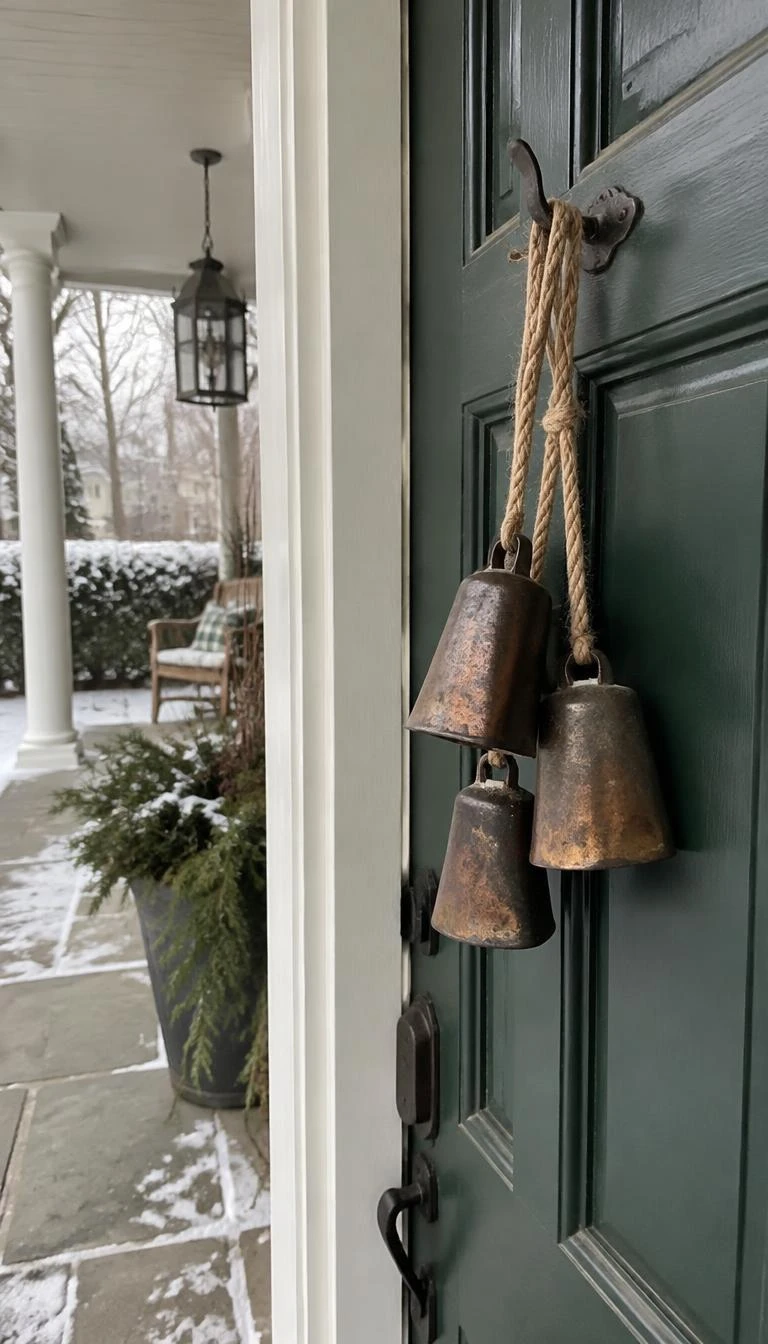
Heavy iron cowbells offer an earthy alternative to shiny gold holiday decor. Their flat matte charcoal finish grounds an entryway while introducing an audible greeting whenever the door swings open.
Thread three distinct bell sizes onto a piece of half inch jute rope. Stagger their heights so the bells rest between two and four inches apart, preventing them from catching awkwardly against the door frame.
Keep the rope unfinished at the cut ends instead of taping or burning them. Frayed hemp fibers look intentional against painted wood. This arrangement looks particularly sharp on charcoal, dark forest green, or black front doors.
The bells produce a soft, low chime instead of a sharp tin rattle.
Bundle Cedar and Olive Branches with a Velvet Ribbon
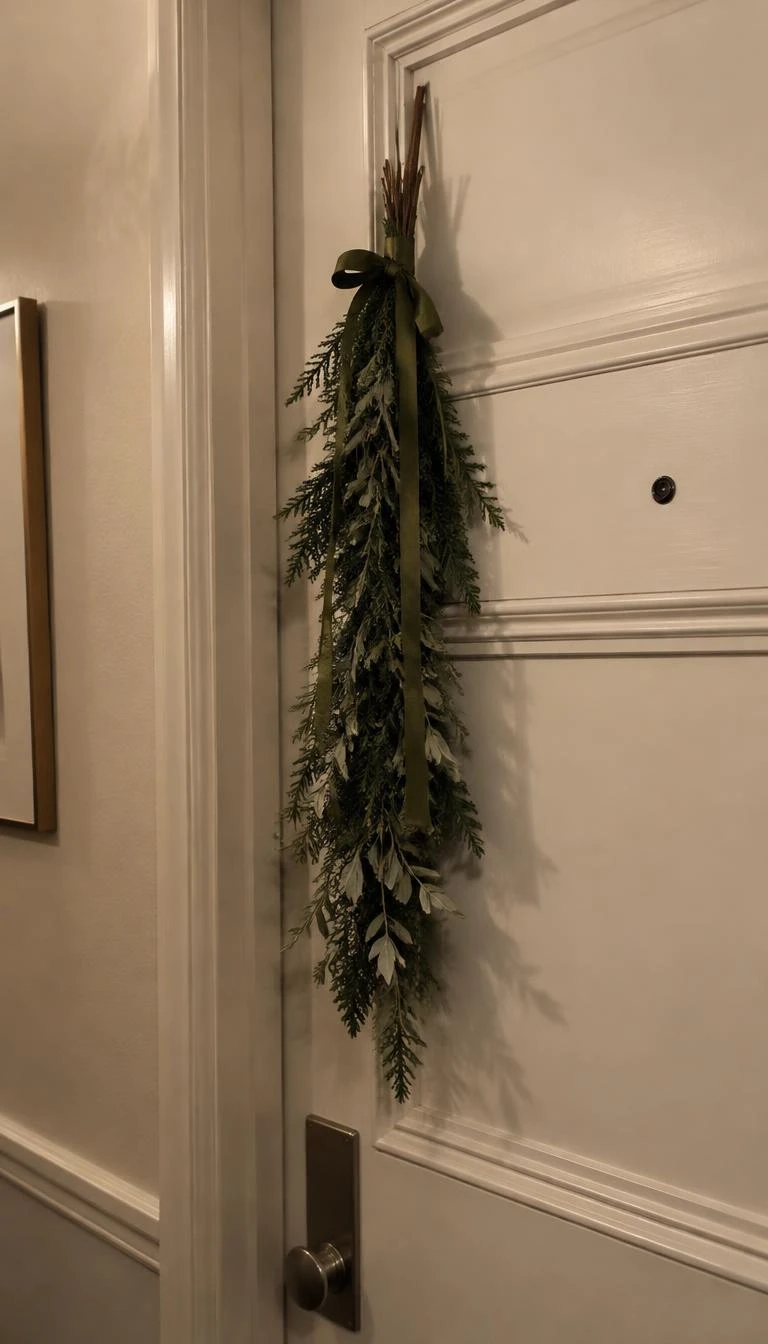
Flat branch swags lie neatly between a front door and a glass storm panel. Flat needle cedar drapes loosely, while pale olive leaves add an appealing silver gray underside.
Gather five ten inch stems of incense cedar and three stems of dried olive. Secure the stems tightly with green floral wire, then cover the wire with two yards of two inch moss green velvet ribbon. Let the ribbon tails drop eighteen inches below the leaves.
The mistake here is building the bundle too thick. A slender profile keeps the arrangement from snagging in the door jamb when visitors arrive.
The velvet softens the pointed evergreen tips nicely.
Mount Dried Orange Slices on a Flat Birch Sconce
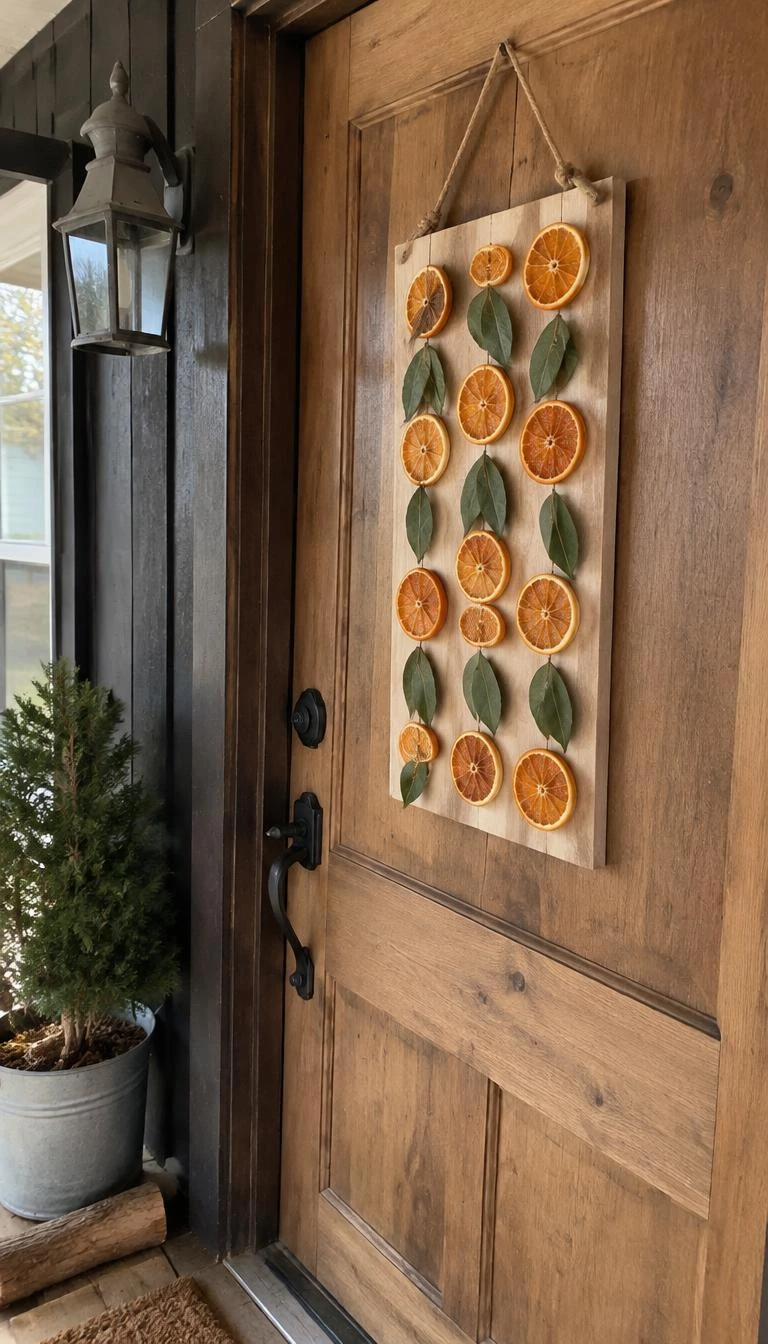
Dehydrated citrus catches winter sunlight better than artificial baubles. The translucent amber flesh contrasts warmly against pale birch bark, especially on rustic timber or craftsman style entryways.
Drill two small holes into a twelve inch birch wood shingle. Thread dried orange wheels and dry bay leaves on thin copper wire, creating three vertical columns that hang flush against the wood surface.
Dehydrate your orange rounds until they feel completely dry to the touch. Any leftover moisture invites mildew during damp winter weeks.
I like this arrangement on unpainted wood doors where earthy textures already feel at home.
Suspend Vintage Ice Skates Stuffed with Spruce
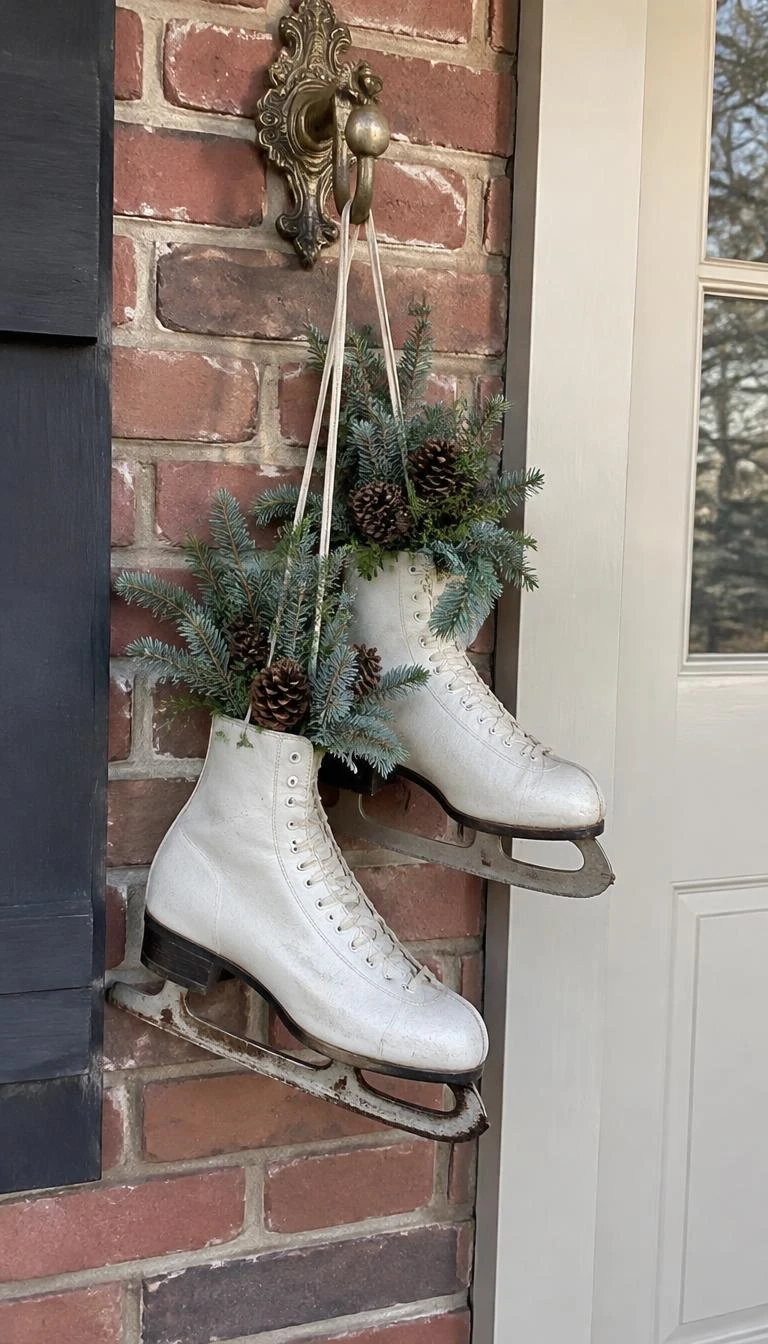
Worn leather ice skates bring narrative charm without relying on cheap plastic novelties. Their scuffs and creased ankles give a front porch lived in warmth.
Tie the skate laces together in a simple knot, adjusting the drop so one boot rests three inches higher than the other. Tuck short sprigs of blue spruce and two dried pinecones into each ankle opening.
Weight is the main consideration with actual footwear. Drive a firm steel nail or use a heavy duty exterior screw rather than a stick on plastic hook, which will fail in the freezing cold.
The soft leather patinas beautifully against red brick.
Frame Pressed Winter Ferns in a Thin Zinc Glass Panel
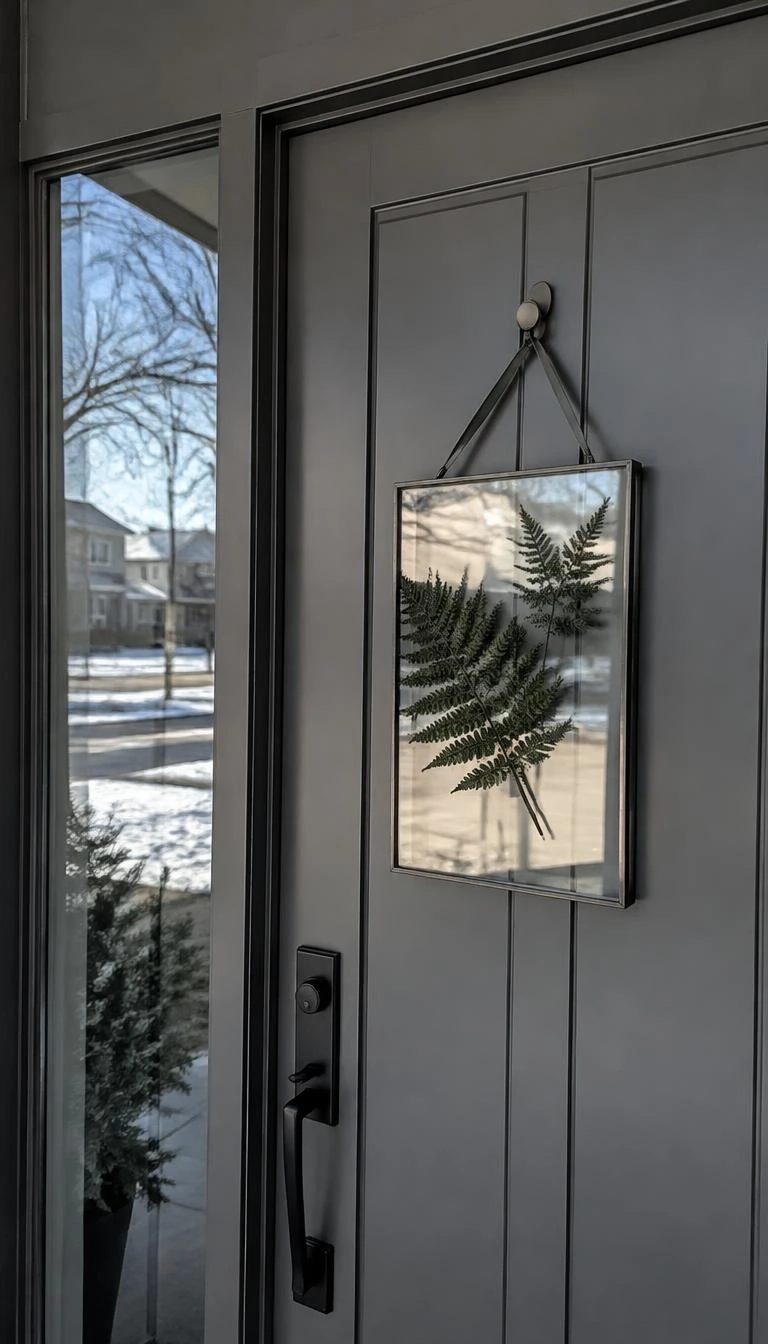
Pressed botanicals deliver seasonal color through an understated, architectural lens. A hanging glass frame turns delicate foliage into a crisp graphic statement suitable for modern entryways.
Sandwich two dried autumn fern fronds between glass in an eight by ten inch zinc frame. Loop an iron chain or a slate grey grosgrain ribbon through the top eyelet to secure it to the door knocker.
Make sure the glass seal stays watertight if your door lacks an awning. Moisture between the panes will spot the paper and rot the dried greenery within days.
The ferns appear to float against the painted panel.
Weave Cinnamon Sticks and Bay Leaves into an Asymmetrical Swag
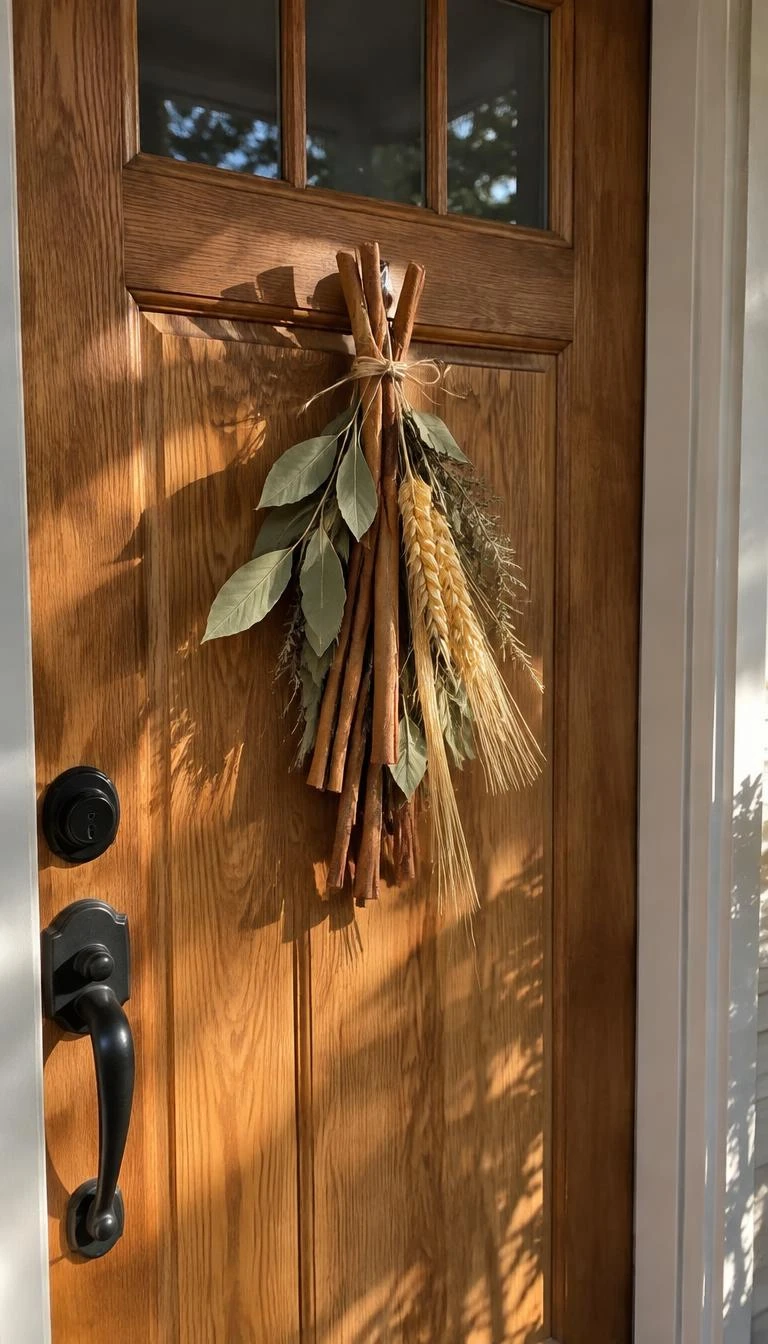
Fragrant kitchen spices create a welcoming scent before guests even cross your threshold. Long cinnamon quills provide structural lines that support soft bay foliage.
Bundle eight ten inch cinnamon sticks using floral wire. Wire dried bay branches to one side only, letting the leaves flare out sideways rather than forming a symmetrical diamond.
Balance is what makes asymmetry work here. Keep the bulk of the greenery low on the stem so the hanger does not tilt sideways against the door wood.
I find this look works best when left completely unadorned by shiny bows.
The rough bark introduces rich brown tones.
Suspend a Single Oversized Matte White Ceramic Bell
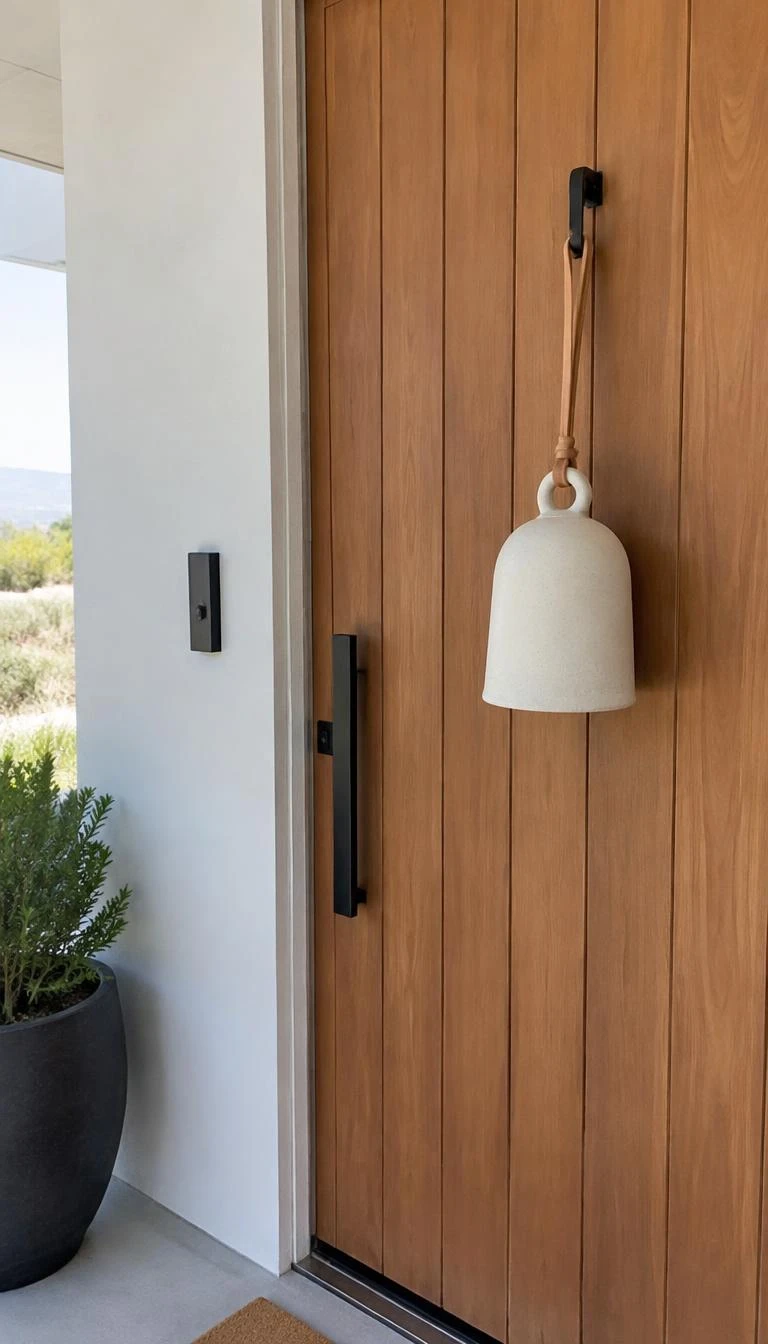
A solitary ceramic bell provides clean sculptural impact for homes with minimalist architecture. It strips away seasonal clutter while preserving a nod to traditional holiday bells.
Select an unglazed earthenware bell roughly seven inches in diameter. Thread a thirty inch strip of vegetable tanned leather through the top hole, securing it with an overhand knot just above the ceramic lip.
The pitfall to watch out for is wind damage. Add a tiny adhesive felt pad to the back edge of the ceramic rim so it never clatters against your door paint on windy days.
The matte clay looks crisp against natural cedar siding.
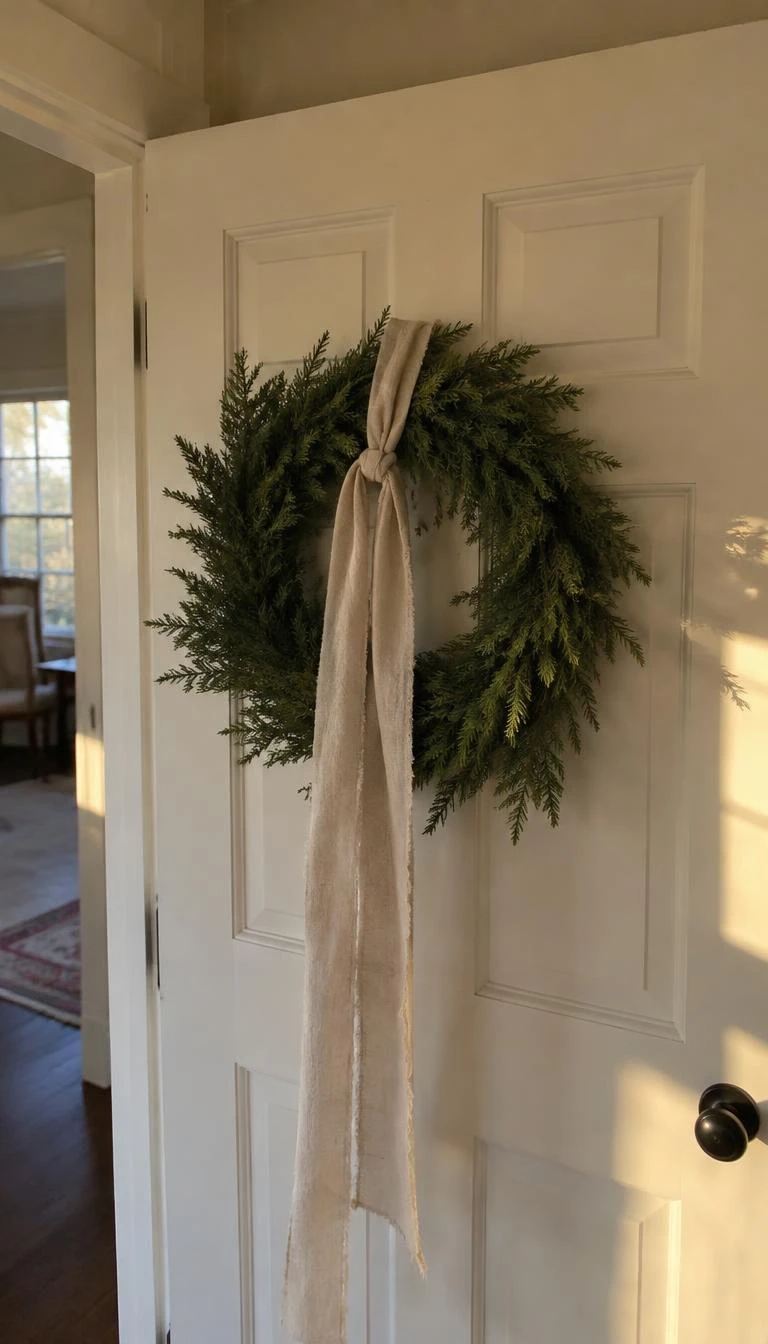
Tie Heavy Cotton Rag Ribbon Around Norfolk Pine
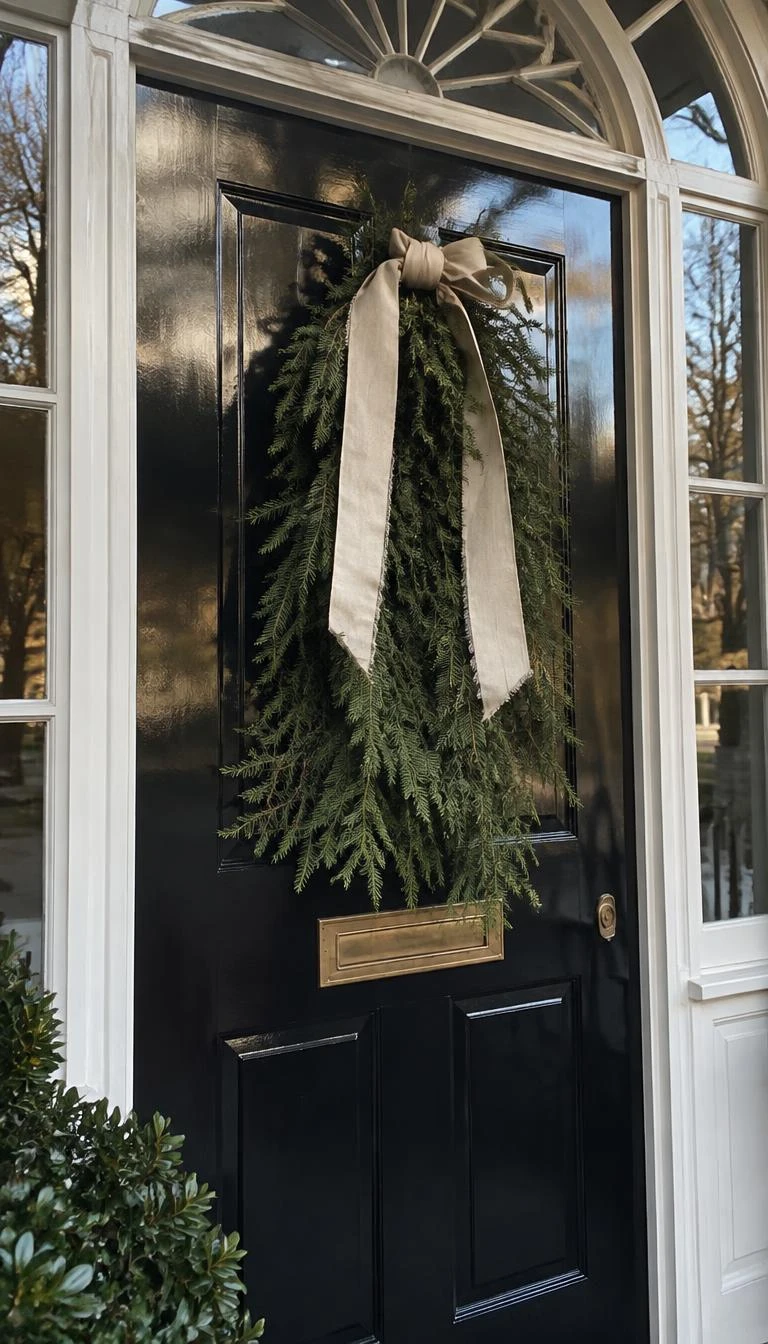
Norfolk island pine features softer, feathery needles that move easily in a light breeze. Pairing this delicate needle shape with torn cotton ribbon creates an informal, timeless aesthetic.
Cut four twenty inch sprigs of fresh Norfolk pine. Bind the cut ends with paddle wire, then wrap the joint in cream cotton rag ribbon with torn, feathered edges.
Avoid synthetic polyester ribbon, which catches needle sap and frays into plastic strings. Natural cotton absorbs moisture cleanly and weathers without curling or fading under porch eaves.
The pale fabric highlights the soft yellow green tips of the pine.
Repurpose a Wooden Butter Mold Filled with Berries
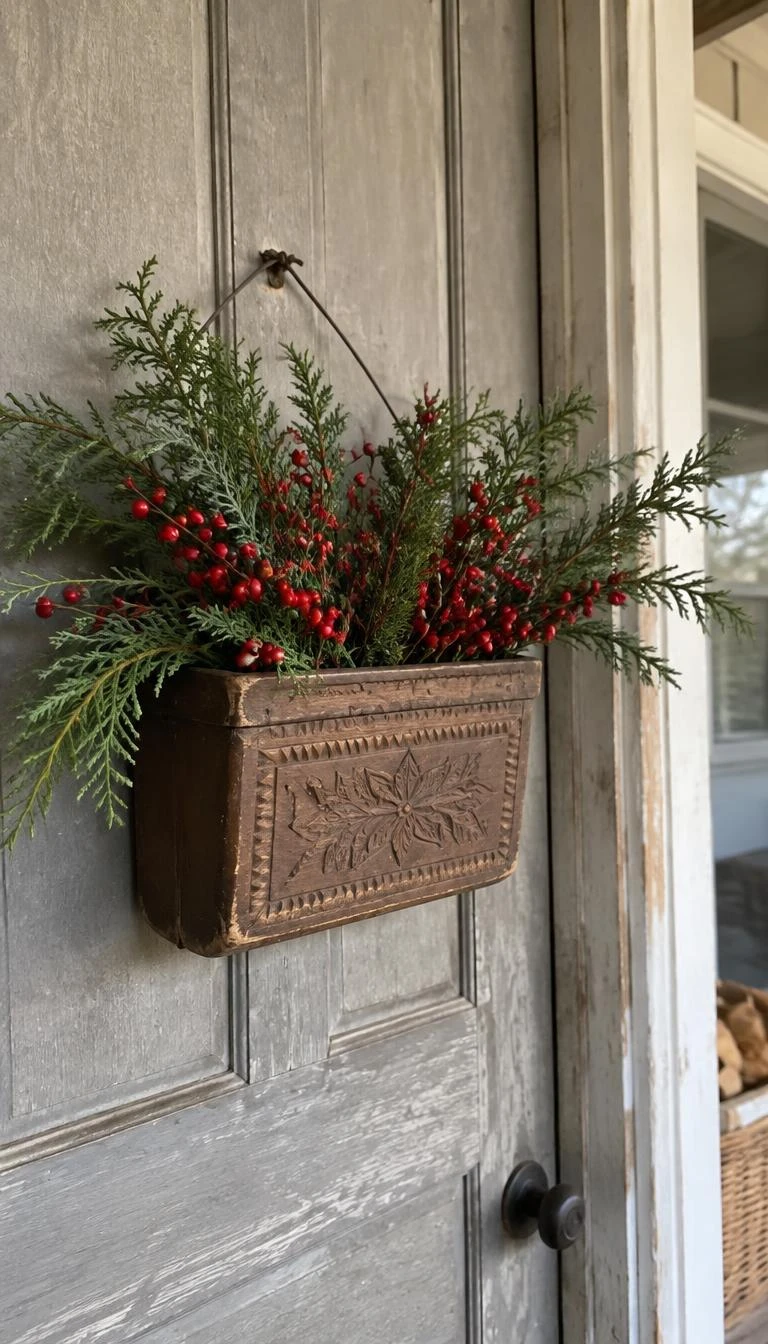
Antique wooden utility pieces give an entrance immediate character. A hollow butter mold acts as a shallow wall pocket that holds seasonal greenery flat to the entrance.
Screw a brass eye hook directly into the upper edge of an old carved butter press or spice drawer. Place a small block of damp floral foam inside, then press short juniper sprigs and real winterberries firmly into the base.
Check the box depth before hanging. Anything deeper than three inches will bump against visitors or catch on screen doors.
Carved wood carvings add rich historic texture.
Thread Muted Brass Rings Along a Slender Leather Cord
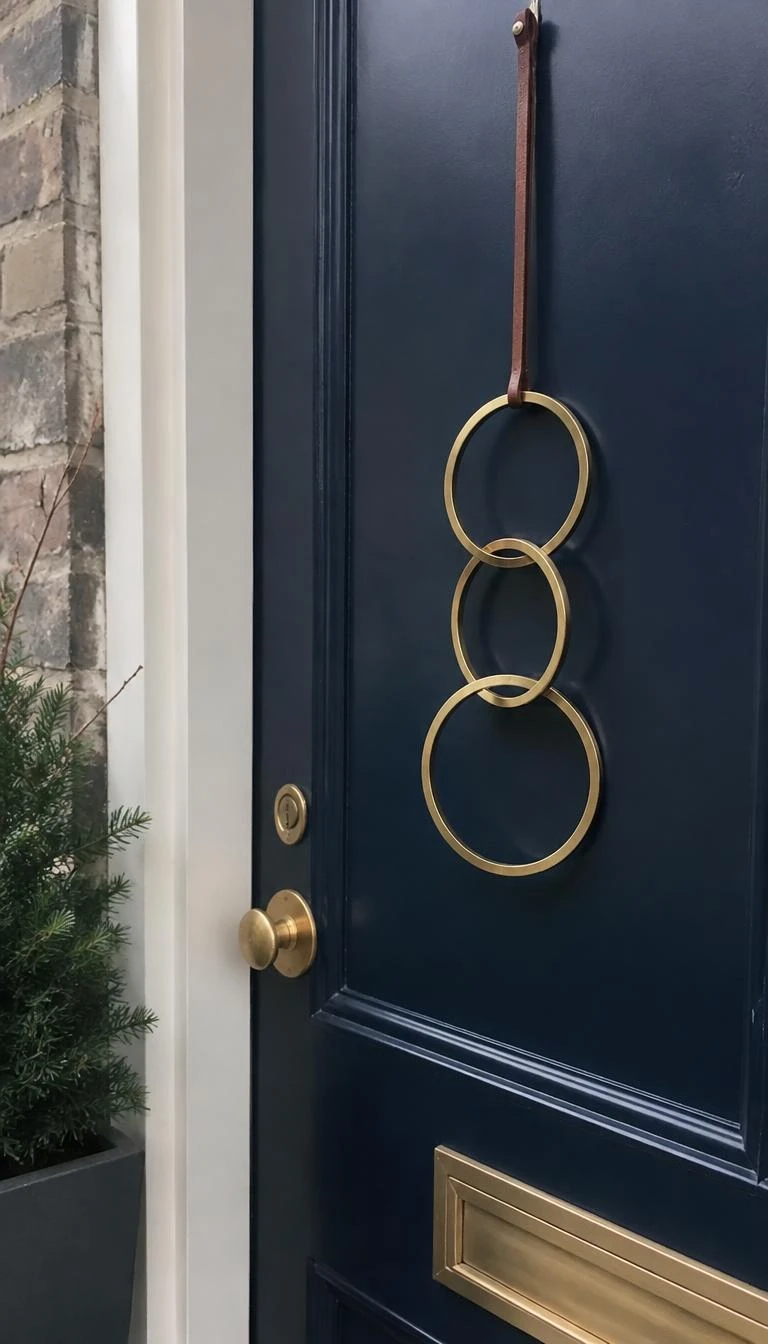
Geometric metal shapes offer a modern break from the standard evergreen circle. Concentric brass rings bring a warm, reflective gleam that catches the porch sconce light after dark.
Use three solid brass craft hoops measuring four, six, and eight inches. Connect them vertically with five inch lengths of raw bridle leather cord, letting the metal circles overlap slightly in a descending column.
Avoid high gloss polished brass, which looks cheap in winter daylight. Rub the rings with fine steel wool to give them a softened, brushed satin appearance before assembly.
The brass catches lantern light every evening.
Build a Vertical Garland of Dried Pomegranates and Boxwood
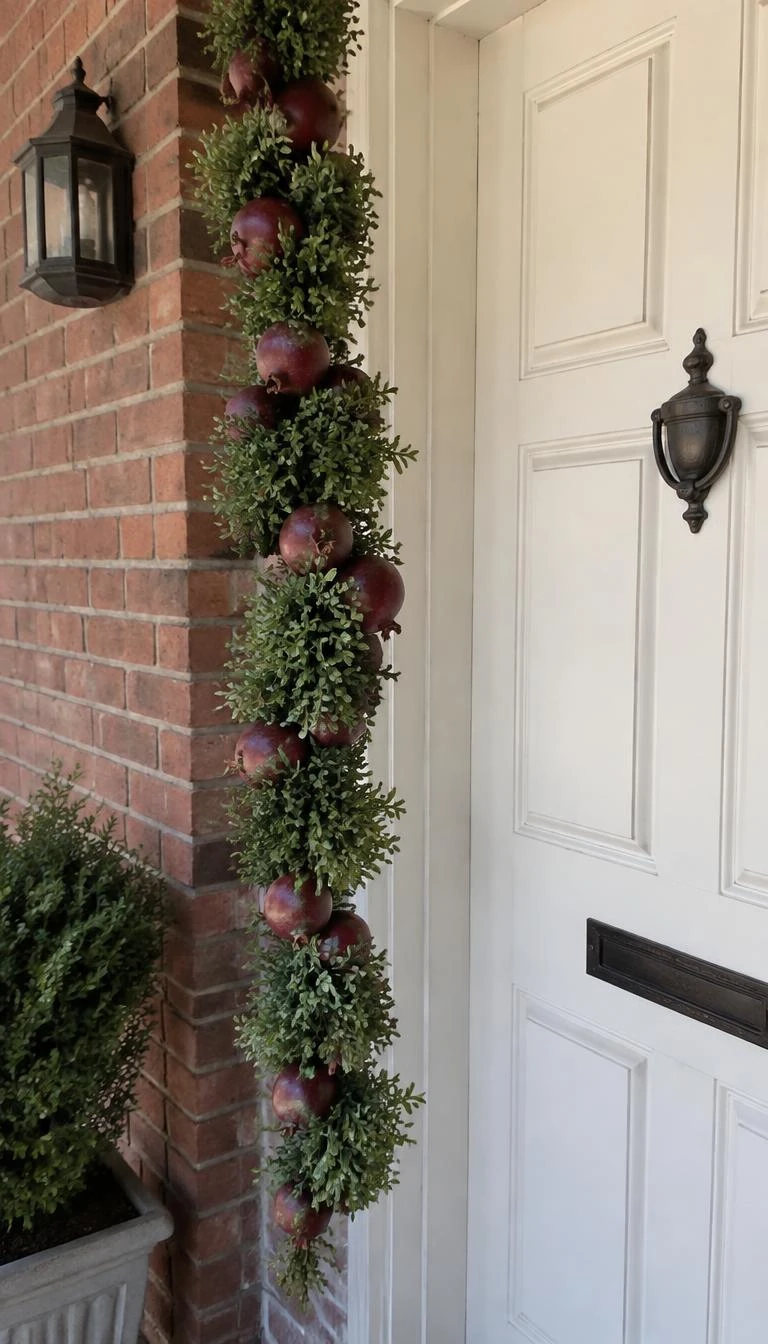
Vertical swags draw the eye downward and complement the classic proportions of tall paneled doors. Dried pomegranates add deep garnet tones that outlast fresh cranberries in cold snaps.
Drill through five dried whole pomegranates from stem to calyx. Thread them along a length of jute twine, spacing them six inches apart with dense bundles of glossy boxwood foliage wired between each fruit.
The mistake is choosing fruit that is too large. Pick miniature pomegranates under two inches wide so the garland hangs straight without sagging forward.
The dark burgundy skins mirror traditional holiday berries.
Hang an Antique Brass Horn with Whispering Pine
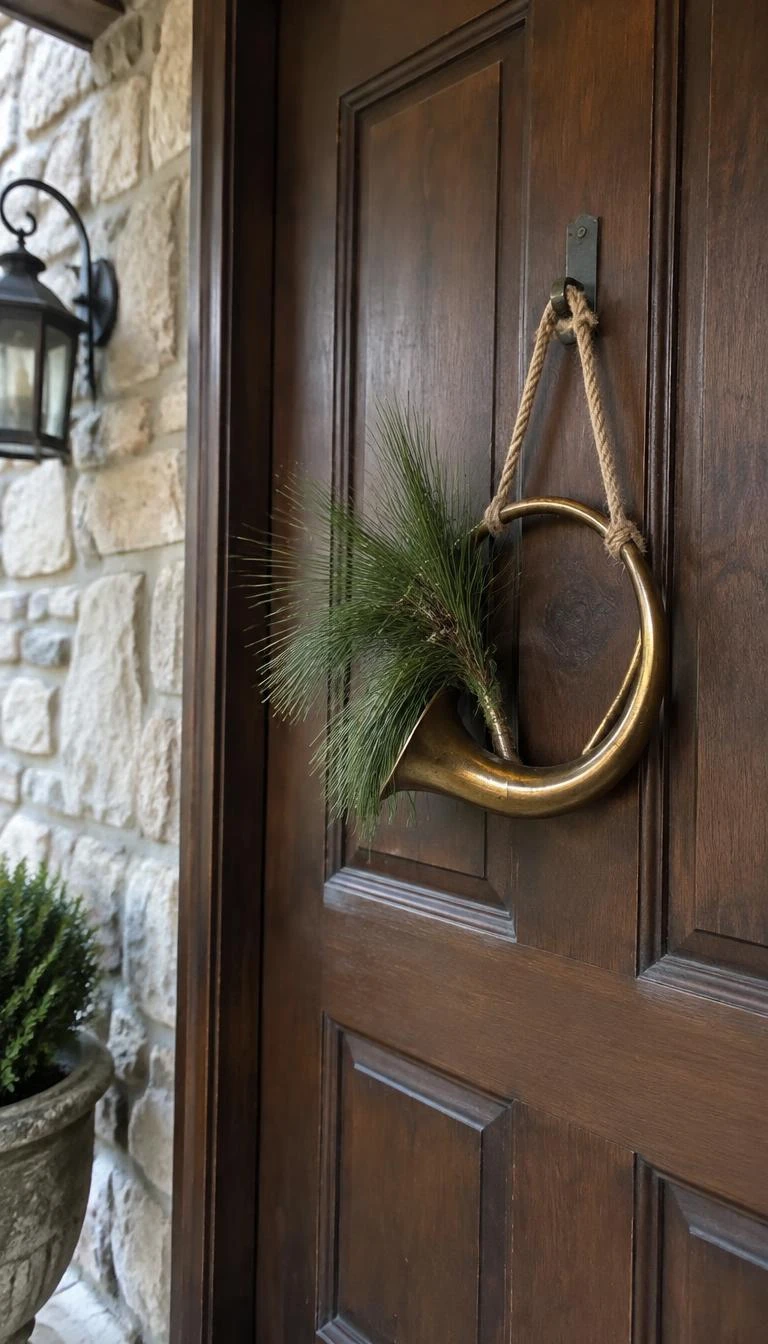
Vintage brass instruments provide instant holiday nostalgia without looking juvenile. A small hunting horn or pocket cornet offers an authentic historic profile that ages gracefully in cold weather.
Suspend the horn diagonally using unbleached braided cord tied around both ends of the instrument. Fill the wide bell opening with three stems of long needle white pine and two dried lotus pods.
Clean off surface grease, but leave the tarnish intact. That greenish grey oxidation provides the quiet charm you want on an exterior door.
I find this shape looks especially balanced on heavy paneled doors.
Drape Frayed Linen over a Willow Branch Horseshoe
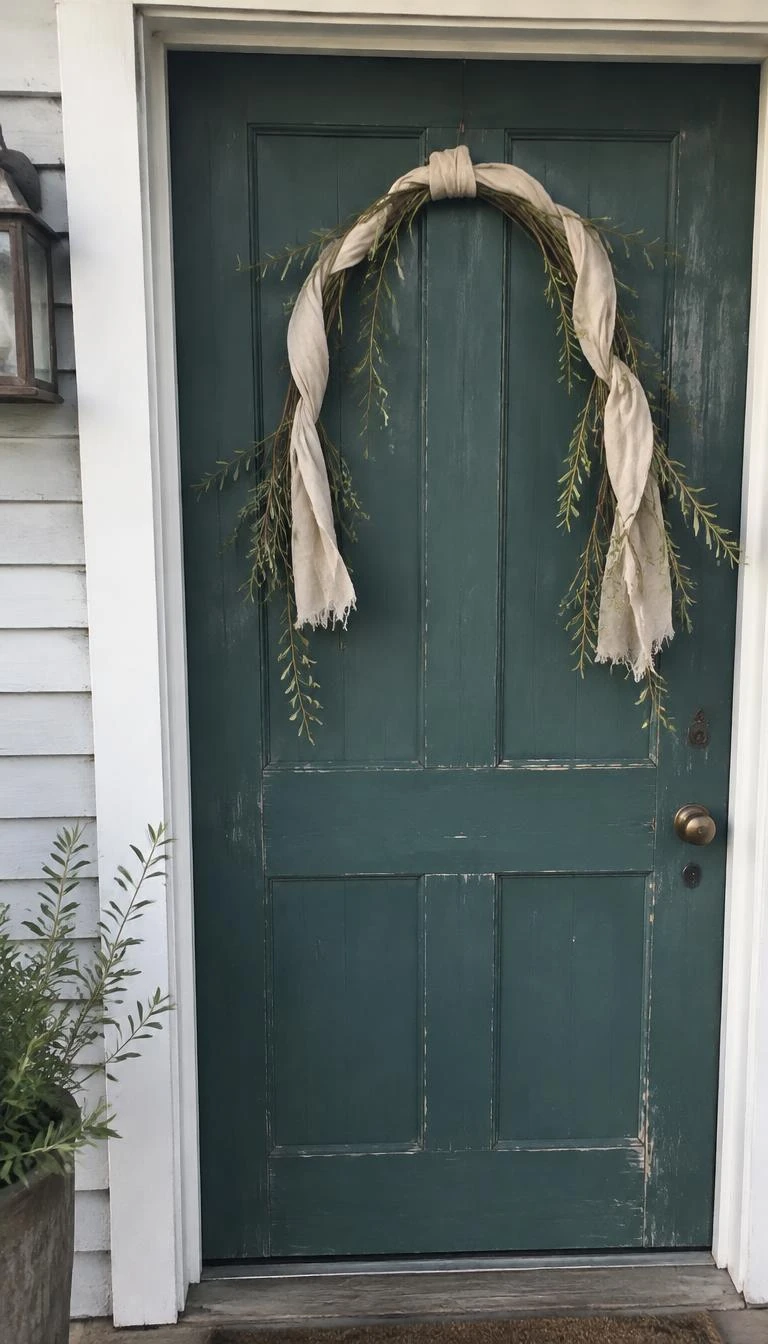
Bent willow stems create an airy, organic framework that feels lighter than a standard dense wreath. The simple arch shape honors traditional winter good luck charms.
Soak three long willow whips in water overnight, then bend them together into an inverted horseshoe arch roughly fourteen inches wide. Wrap a two inch strip of raw edged oatmeal linen loosely around the center bend.
Keep the willow framework visible. Overloading the branches with ribbons hides the structural curve that makes this silhouette so distinctive.
The pale linen drapes softly against cold timber.
Fasten Magnolia Leaves Backwards for a Matte Suede Texture
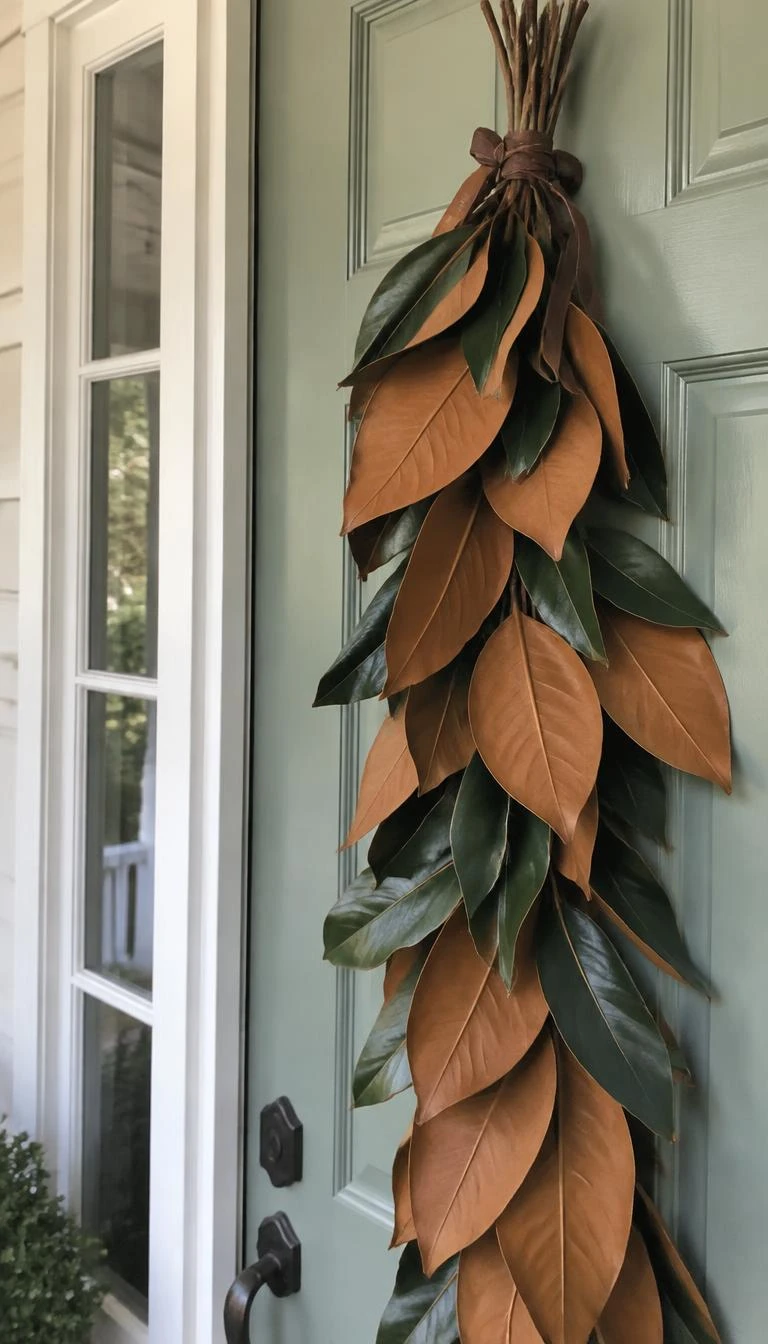
Magnolia foliage carries a two tone secret that many people overlook. The undersides of southern magnolia leaves feature a velvety brown coating that looks remarkably like soft suede.
Gather twenty fresh magnolia leaves. Wire them to a flat wooden paint paddle with their fuzzy brown backs facing outward, overlapping the leaves like fish scales from the bottom upward.
Pick leaves with a rich copper back rather than pale yellow fuzz. The deeper brown shades bring unexpected warmth to muted sage green or dusty blue doors.
The matte surface absorbs harsh winter glare.
Clustered Paper Mache Ornaments on a Wooden Dowel
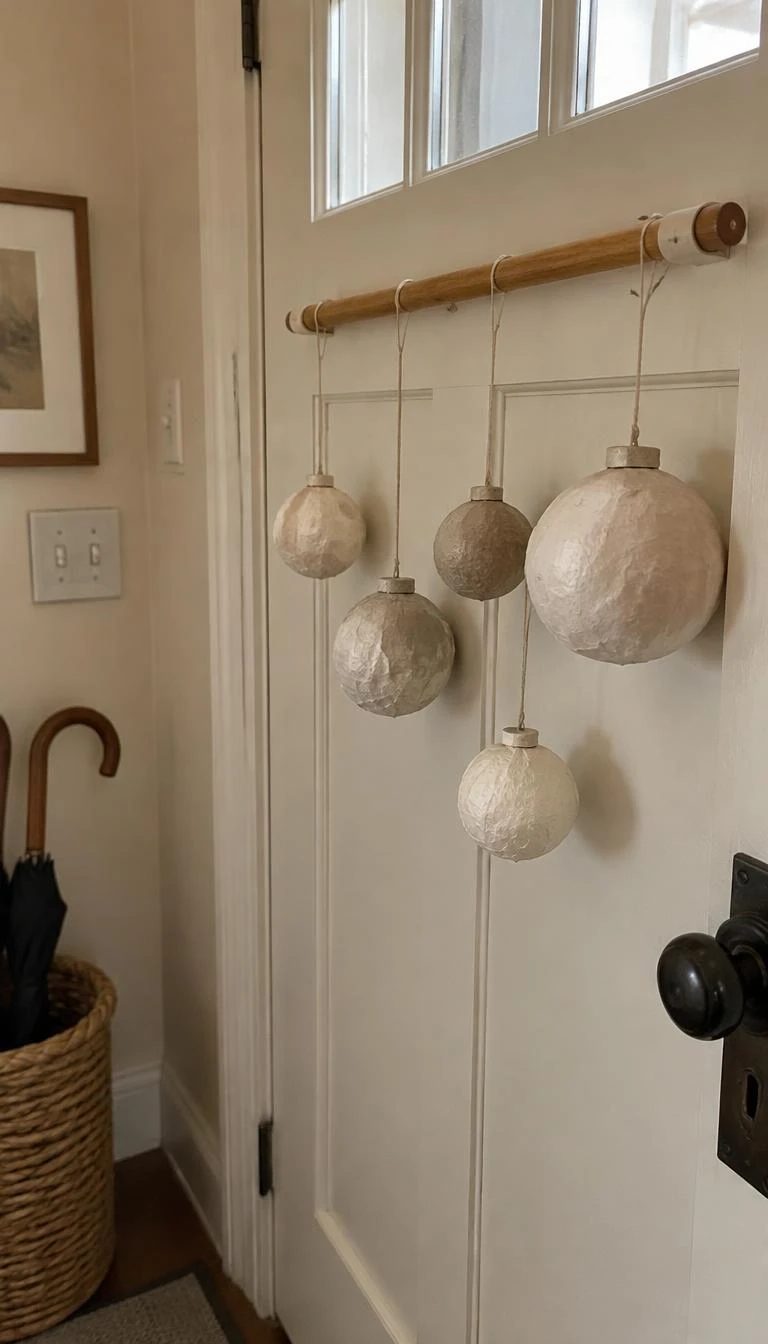
Paper mache baubles provide an earthy, handmade finish that glossy glass balls cannot match. This arrangement works best in covered porches or sheltered entryways out of direct rain.
Tie five raw paper mache spheres in mixed neutral tones to a twelve inch oak dowel using waxed linen thread. Stagger the thread lengths between six and twelve inches so the spheres cluster loosely together.
Do not coat the ornaments in lacquer or gloss. The raw, chalky texture is the entire reason this look feels sophisticated rather than store bought.
The neutral globes bounce soft porch light cleanly.
Knot Raw Wool Roving with Fresh Juniper Sprigs
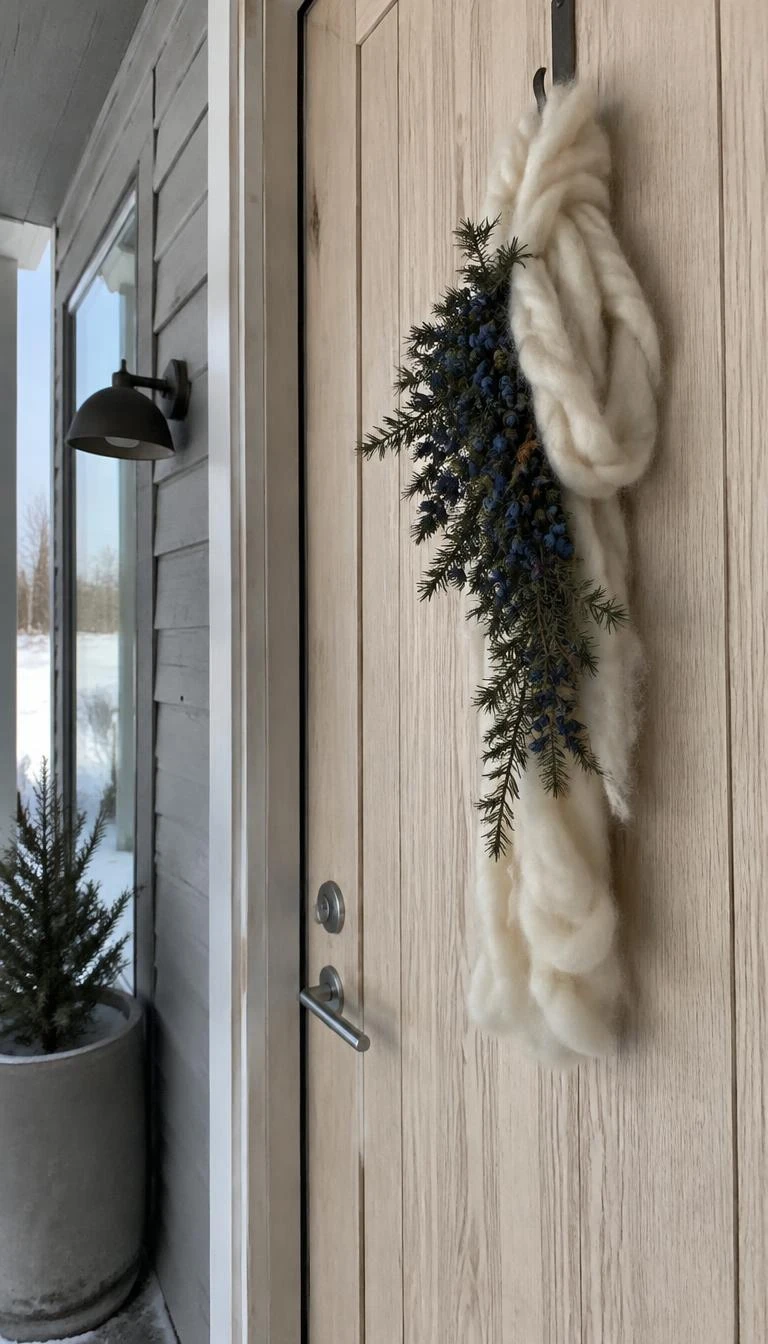
Unspun wool roving brings soft Scandinavian texture directly to your front entryway. Its cloudlike cream color mimics fresh snow while remaining warm and tactile to the touch.
Take a thirty inch length of chunky sheep wool roving and tie a loose sailor knot near the top. Tuck three short stems of berry laden juniper directly into the center of the wool knot.
The mistake is hanging this where driving rain hits the door. Unspun wool will felt and shrink into a hard lump if exposed to soaking water, so reserve this for deep covered porches.
The wool yields slightly whenever the door shuts.
Suspend an Enamel Winter Pitcher Holding Bare Birch Twigs
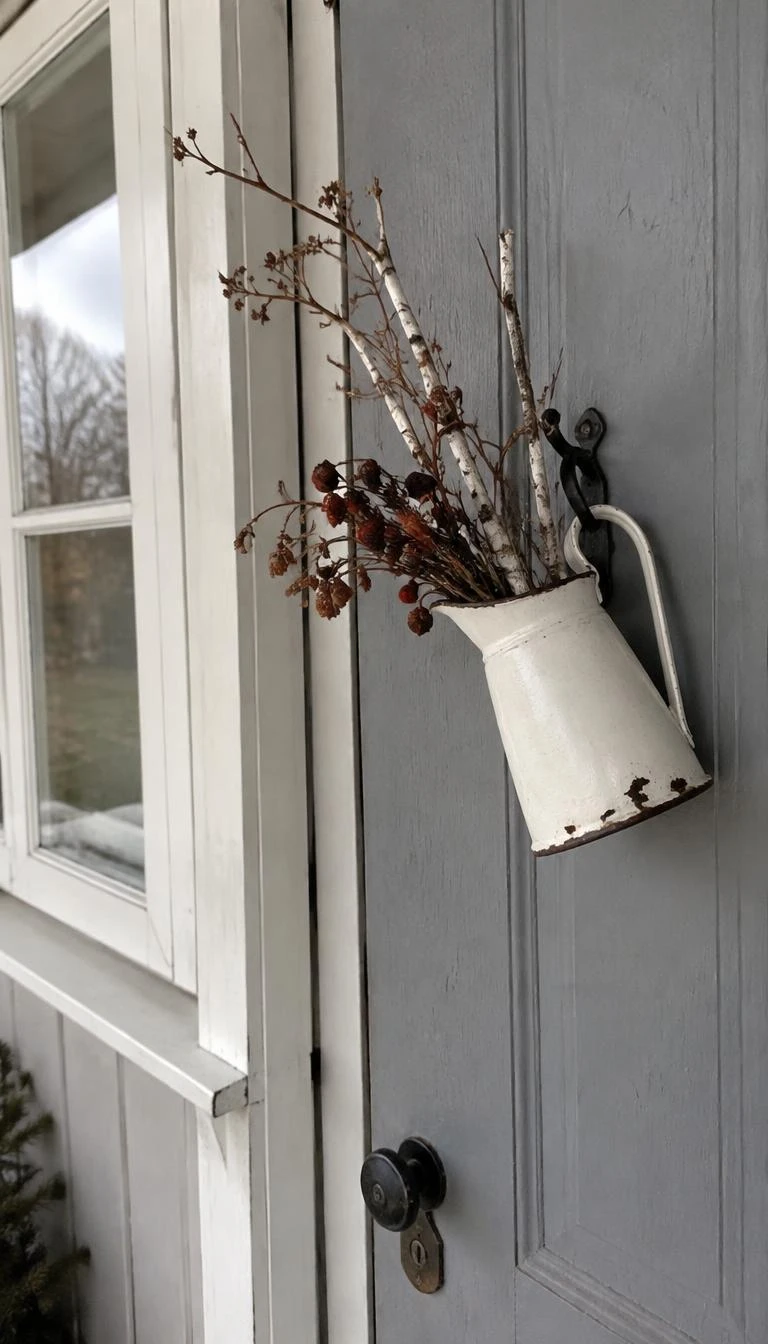
Utilitarian enamelware introduces quiet cottage character to a front entrance. A small pitcher hung by its side handle serves as a sturdy holder for winter twigs and wild berries.
Hang an eight inch white enamel measuring cup or small pitcher from a black forged iron spike. Fill the cavity with six slender bare birch twigs and four stems of dried wild rosehips.
Place a small round pebble inside the bottom of the vessel. That extra weight stops the metal pitcher from swinging and tapping against the door when blustery wind hits.
The chipped white rim feels authentic and unpretentious.
Arrange Sheet Music Cones with Rosemary Sprigs
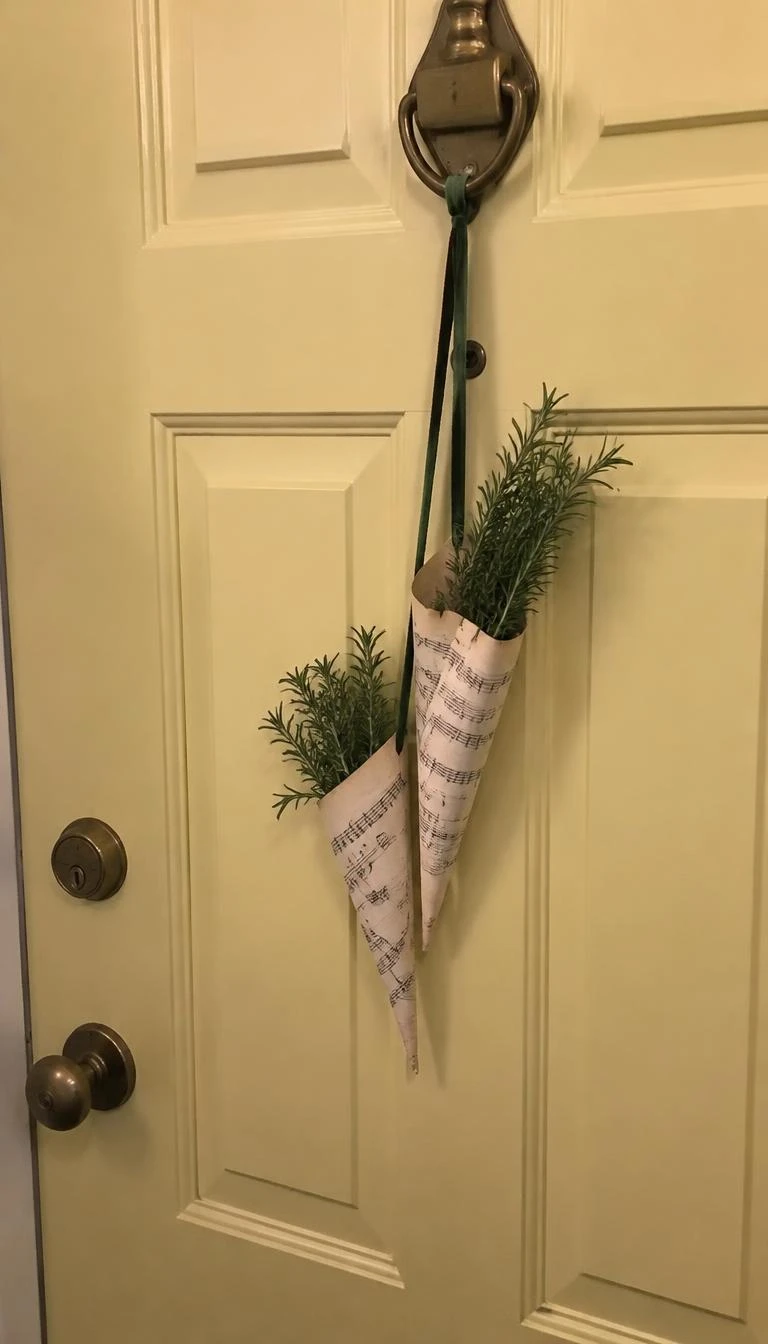
Yellowed vintage sheet music brings quiet graphic charm to holiday entryways. Rolled paper cones form slender cornucopias that easily cradle fragrant kitchen herbs.
Roll two heavy sheets of aged score paper into ten inch cones, securing the seams with double sided tape. Fill each cone with three sturdy stems of fresh upright rosemary and suspend them with narrow silk cord.
Always source actual aged paper rather than printed faux pages. The genuine sepia patina and slight brittle texture give the arrangement true historic weight.
Rosemary releases a clean pine scent when brushed.
Hang a Weathered Slat Shingle Painted with a Charcoal Numeral
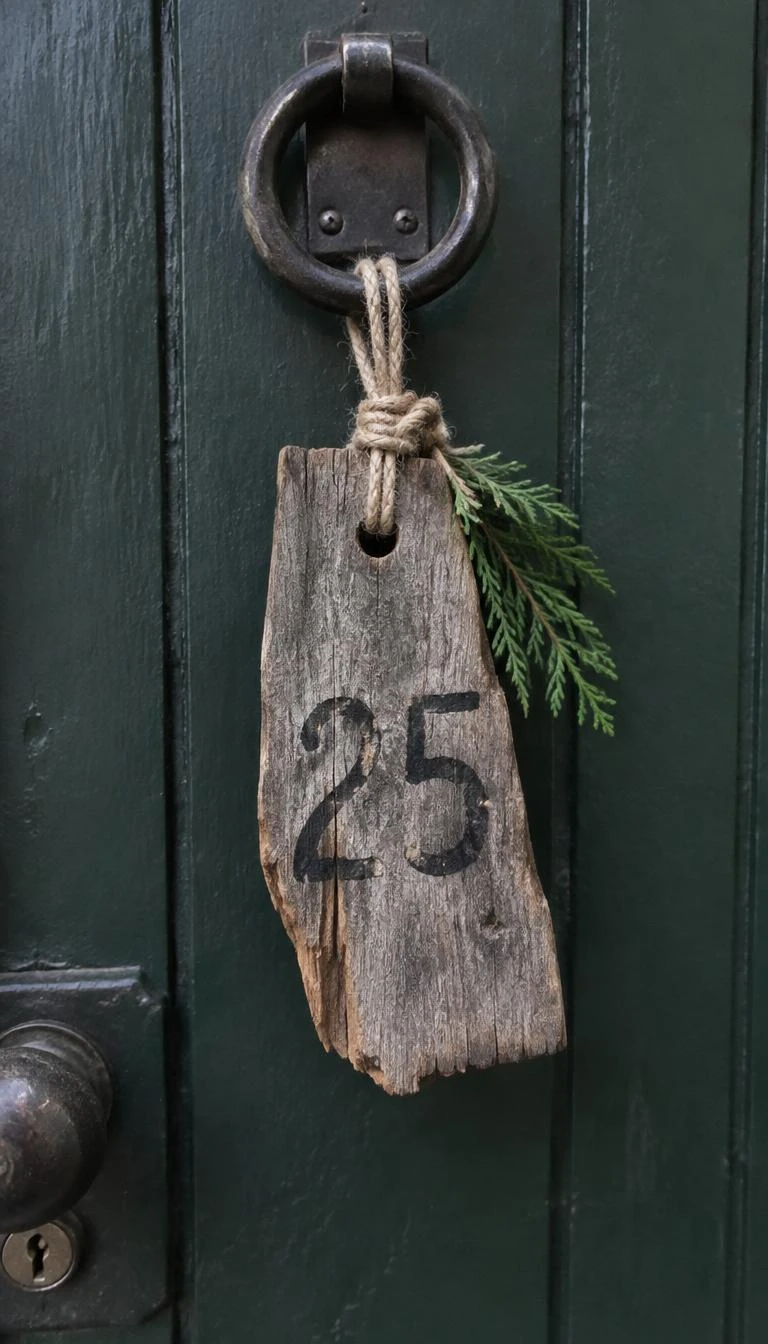
Reclaimed wood shingles add architectural history to an entrance without feeling manufactured. A single painted seasonal numeral provides graphic focus while keeping the display understated.
Take an old cedar shingle with weathered silver edges. Paint the number twenty five in simple charcoal lettering across the lower third, then drill a hole at the top and loop thick hemp twine through.
Do not distress the paint with sandpaper after writing. A dry brush technique looks far more natural than intentional distressing and lets the rough wood grain show through cleanly.
The silver wood matches frosty winter mornings.