18 Christmas Table Centerpiece Ideas for Holiday Dining in 2026

Finding good Christmas table centerpiece ideas in 2026 often comes down to paring back rather than piling on. Holiday dining tables work best when conversation moves freely across them without guests craning around tall towers of wire and plastic glitter.
A memorable dinner setting relies on real texture, balanced proportions, and quiet repetition across the linen runner. Low earthenware dishes, clipped yard conifers, seasonal orchard fruits, and unscented beeswax tapers create authentic warmth without crowding serving platters or bumping guest elbows.
Thoughtful arrangements give everyone room to pass food, linger over dessert, and enjoy soft light throughout long winter evenings. Below are 18 ideas you can adapt to your own dining room, whatever your entertaining style.
Run a Low Garland of Mixed Evergreen Boughs
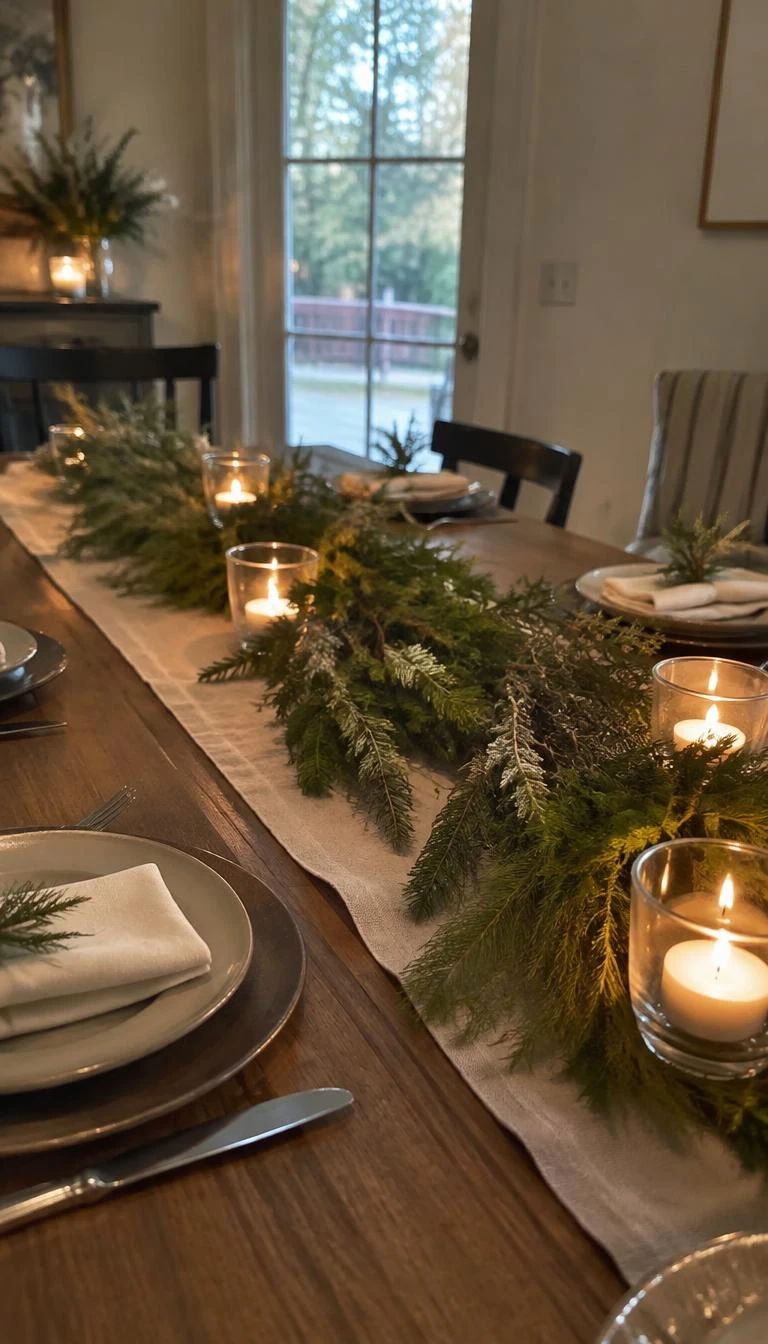
Flat greenery garlands solve the problem of blocked sightlines while perfuming the entire dining room. Laying trimmings directly on the runner feels far more grounded than perching bulky floral foam in a basket.
Cut five six-inch stems each of flat cedar, noble fir, and white pine. Weave them together loosely down the table spine, letting fronds spill around bread plates. Add four slender amber glass cups holding white tea lights among the needles.
The mistake is binding the branches too tightly with wire. Loose boughs look natural and take five minutes to sweep away after dessert.
This layout suits narrow tables where platter space remains scarce.
This post may contain affiliate links. As an Amazon Associate I earn from qualifying purchases. If you choose to make a purchase, I may earn a small commission at no extra cost to you.


Cluster Heavy Brass Candlesticks at Varied Heights

Solid metal holders bring instant weight and history to an evening meal. Mixing seven mismatched holders between six and twelve inches tall breaks up the rigid symmetry that often makes holiday tables feel stiff.
I like unpolished brass here because soft patina catches candle glow without harsh glare.
Insert dripless ivory tapers trimmed to three-quarter lengths so flames start below eye level. Keep the candlesticks clustered within a central twelve-inch footprint rather than lining them up like fence posts.
The result feels collected over decades, casting a warm wash across your glassware.


Fill Weathered Stone Bowls with Paperwhite Bulbs

Living bulbs offer a fresh presence that cut flowers rarely match in December. Shallow stone or concrete bowls hold moisture well and anchor the table with earthy substance.
Fill an eight-inch cast stone bowl halfway with smooth river pebbles. Anchor five forced paperwhite bulbs roots down, adding water until pebbles barely submerge. Tuck pale green sheet moss around the bulbs to conceal the water line.
Select bulbs that just started opening so blooms last through the whole weekend.
Their sweet, clean fragrance fills the room without fighting the aroma of dinner.


Scatter Whole Walnuts and Fresh Pomegranates Along Linen

Orchard produce brings honest holiday color without relying on artificial red plastic berries. Rich jewel skins contrast softly against dull, textured shells.
Slice two pomegranates in half to expose their glistening seeds, leaving three whole fruits intact for balance. Distribute them down an oatmeal runner alongside two generous cups of unshelled walnuts, hazelnuts, and dried bay leaves.
Do not arrange the nuts into rigid geometric piles. Dropping them casually from low height creates an effortless, inviting look.
Guests will naturally crack shells with brass nutcrackers after finishing their main meal.


Group Matte Ceramic Pitchers with Berry Branches

A cluster of three unglazed stoneware jugs introduces vertical structure without creating a solid visual wall. Their chalky surfaces soften the bright red of winterberry stems.
Select three ceramic vessels in cream tones, standing five, seven, and nine inches tall. Snip winterberry branches to twice the height of each vessel, stripping lower twigs so stems slip cleanly inside without crowding.
Arrange the vessels off-center on the table rather than dead center.
The stark branches provide striking visual height while leaving ample negative space between stems so dinner guests talk easily across the room.


Float Cranberries and Tea Lights in Clear Glass Cylinders

Water elements reflect candlelight across flatware in a subtle, quiet way. Clear glass cylinders maintain an open feel that keeps small dining spaces bright and airy.
Pour tap water into three six-inch straight-sided glass vases. Drop one cup of raw, firm cranberries into each until they float across the surface in a single scarlet layer. Rest a standard unscented white tea light gently in the center of each fruit ring.
Avoid soft berries that sink to the bottom and cloud the water.
The floating flames produce soft rippling reflections across crystal wine stems throughout supper.


Layer Dried Orange Slices on Bare Wood Boards
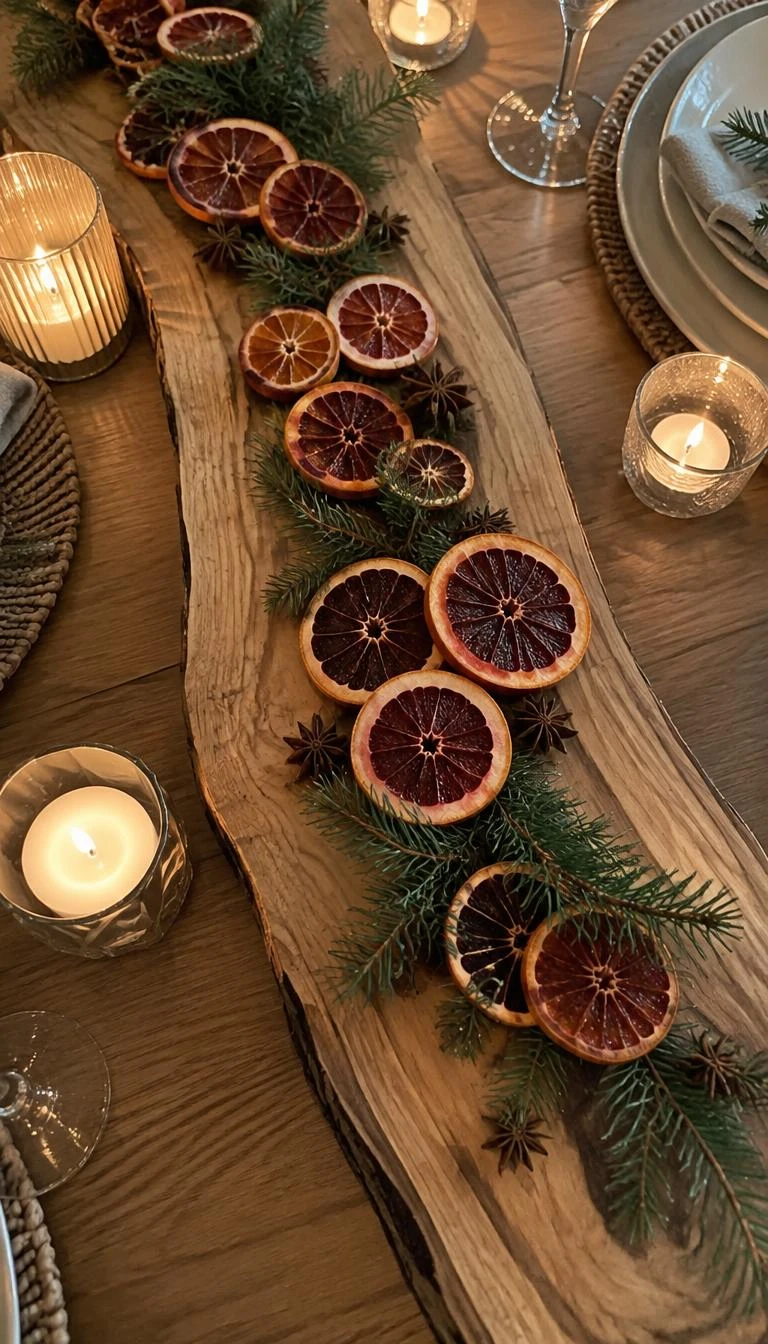
Dehydrated citrus wheels glow like stained glass under candlelight. Placing them on an untreated oak board protects the table while showing off beautiful wood grain.
Spread parchment paper on baking sheets and bake thin navel orange rounds at two hundred degrees for three hours. Lay an eighteen-inch wooden board down your table center, scattering the dried fruit rings alongside twenty whole star anise pods and tiny spruce tips.
Ensure the fruit dries completely crisp to prevent damp marks on your wood.
The scent of warm spice warms the air as dinner plates arrive.


Set Potted Rosemary Cones in Terra Cotta Saucers

Miniature herb topiaries resemble miniature evergreen forests while holding up through weeks of holiday meals. Aged clay pots add warmth and rustic texture.
Purchase three four-inch rosemary cones from a nursery. Slip them into shallow four-inch terra cotta dishes, wrapping the soil with moist forest moss to hide standard nursery pots. Run them in a straight, tidy rhythm down the center of your table.
Trim stray herb tips with kitchen shears before guests arrive to release fresh pine perfume.
These hardy potted herbs survive long after Christmas and transplant into the garden come spring.


Arrange Magnolia Leaves with Olive Branches Down the Center

The contrast between glossy green leaf faces and fuzzy cinnamon undersides gives magnolia foliage unmatched holiday weight. Pairing it with pale olive leaves keeps the look modern.
Cut twelve magnolia leaves and eight olive stems around ten inches long. Fan the magnolia leaves outward along your table runner, turning every third leaf over to reveal its suede brown back. Weave silver olive twigs into the base to soften the silhouette.
I find this arrangement works best on broad rectangular tables that can handle wide foliage.
The waxy leaves stay fresh for five days without water.


Combine Slender Beeswax Tapers with Ripe Green Pears

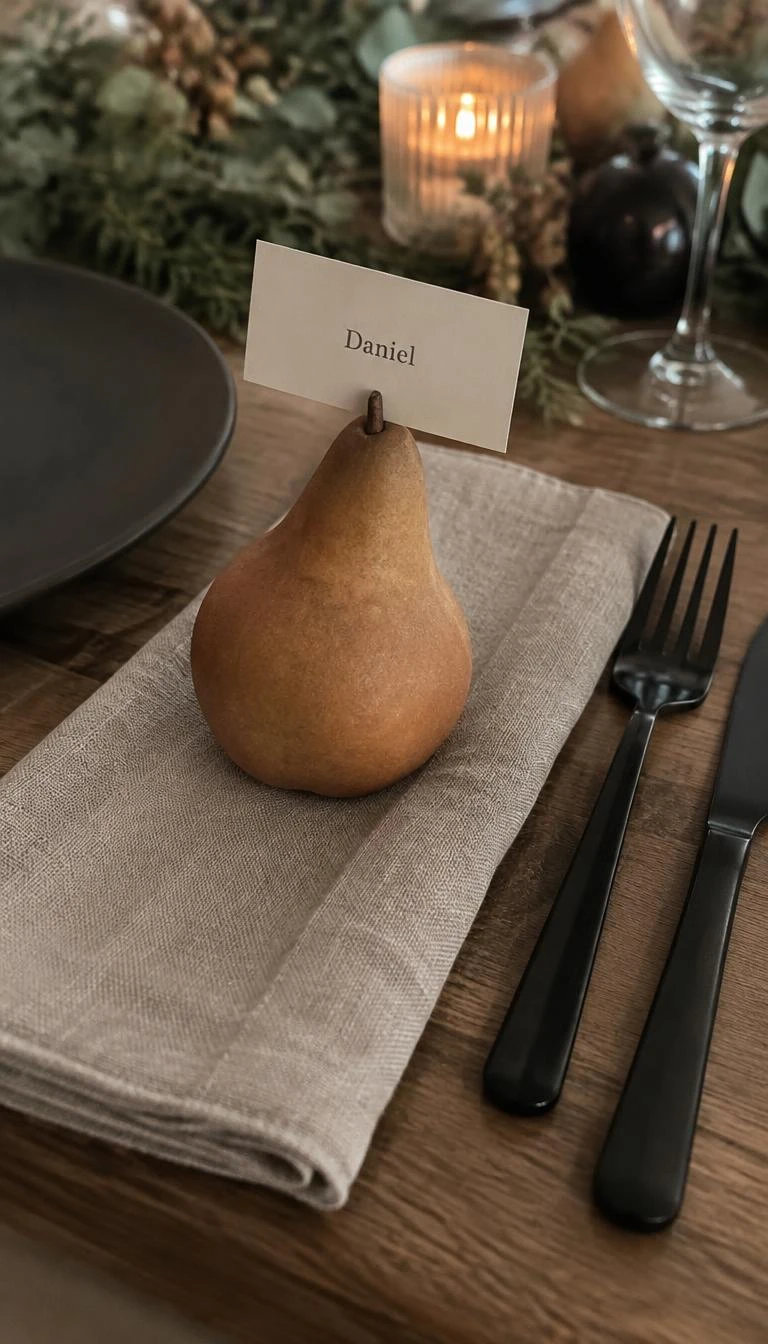
Muted green Anjou pears introduce soft form without loud holiday greens. Paired with honey-toned beeswax, they bring quiet warmth to winter meals.
Place five low ceramic pinch-pot candle holders in a meandering line down your table. Seat ten-inch hand-rolled yellow beeswax tapers into each holder, pressing firmly so stems remain plumb. Nestle six firm green pears around the candle bases in uneven pairs.
Choose firm fruit without bruises so skins stay clean through dessert.
Unscented beeswax burns clean and leaves plates free from overpowering floral perfumes.


Build a Trough of Moss, Lichen, and Pinecones

A narrow metal trough keeps natural woodland elements contained so needles do not wander into gravy boats. Dark zinc contrasts handsomely with pale woods.
Select a twenty-four-inch zinc planter box no taller than three inches. Fill the cavity with dried sheet moss, tucking small grey lichen twigs and ten gathered hemlock cones into the hollows. Place three glass votive cups into the moss bed at equal distances.
The rule here is keeping greenery low so food passes easily over the trough.
The woodland textures evoke winter hikes and calm outdoor mornings.


Rest Ribbed Glass Votives on Raw Slate Tiles

Dark slate grounds flickering flames and shields fine wood surfaces from stray wax drops. Ribbed pressed glass breaks single flames into dozens of soft points.
Lay three six-by-twelve-inch charcoal slate tiles end to end down the center of an ivory runner. Arrange nine ribbed clear glass votive cups across the stones, spacing them three inches apart. Fill each with a standard white wax candle.
Choose tiles with rough, hand-split edges rather than factory-cut ceramic tiles.
The textured glass multiplies the candlelight into dancing patterns across nearby dinner plates.


Plait Birch Twigs with Juniper and Velvet Ribbon

Pale birch bark and prickly blue juniper berries offer an unexpected alternative to heavy cedar ropes. A narrow ribbon lends understated holiday elegance without excessive fluff.
Gather twenty supple white birch twigs and plait them loosely down the table center. Thread fresh juniper stems heavy with powdery blue berries between the twigs. Knot half-inch sage green velvet ribbon around both twig ends, trimming tails short.
Avoid wiring the twigs into a stiff cylinder. Allowing twigs to splay freely keeps the centerpiece relaxed.
The cool blue berries and silver bark harmonize with pale dinnerware.


Alternate Quince Branches and Low Pillar Candles

Bare branches with knobby bark bring sculptural winter lines inside. Alternating them with broad pillars balances rustic wood with calm candlelight.
Place three three-inch wide, four-inch high ivory pillar candles on simple ceramic coasters down your table center. Interweave smooth quince branches around the coasters, allowing bare twigs to frame the wax bases without touching open flame.
I cut branches from my yard while trees sleep during early winter.
The minimalist lines suit contemporary dining rooms with high ceilings and clean architectural trim.


Display Clustered Iron Compotes with Small Winter Apples

Footed compotes lift fruit just high enough to clear plate edges while keeping overall sightlines open. Dark cast iron grounds bright apple skins.
Set two low six-inch cast iron compotes along the table runner. Heap each bowl with six miniature red Lady apples, letting fruit mound naturally into a pyramid. Tuck three short sprigs of dark boxwood into the gaps between apples.
Skip grocery store apples that look too uniform or coated in shiny food wax.
The deep crimson skin feels festive without looking commercial or loud.


Place Frosted Seeded Eucalyptus in Low Pewter Dishes

Pewter brings quiet historic luster that sits comfortably between bright silver and rustic pottery. The rounded leaves of seeded eucalyptus match the muted grey alloy.
Arrange three shallow seven-inch pewter dishes down your table length. Coil two flexible stems of seeded eucalyptus inside each plate so heavy seed clusters spill gently over rims. Add a single three-inch spherical ivory candle into the center of each dish.
Do not mist the eucalyptus with artificial spray snow.
The naturally dusty silver leaves provide plenty of soft winter tone on their own.


Ring Pillar Candles with Fresh Bay Wreaths

Small individual wreaths keep centerpieces modular so serving dishes fit between them when platters arrive. Fresh bay leaves look polished and hold shape for days.
Bend six-inch lengths of flexible green florist wire into small rings. Wire fresh bay laurel sprigs along each loop until foliage looks dense and uniform. Slip each mini wreath over a three-inch wide ivory pillar candle resting on an earthenware coaster.
Trim leaf stems neatly so they do not poke outward toward water goblets.
The spicy herbal aroma drifts up as candle heat warms the leaves.


Keep Center Heights Flat with Patterned Bread Boards and Salt Cellars

An edible centerpiece eliminates clutter by making table decoration an active part of the meal. Beautiful utility often looks far better than purely ornamental items.
Lay two antique carved bread boards flat down the center of the table. Rest two small brass salt cellars filled with flaky sea salt and cracked pepper alongside small dishes of salted butter. Scatter fresh thyme sprigs across board edges.
Center warm sourdough loaves directly on the boards right before guests sit down.
The shared food breaks barriers and invites people to dig into dinner immediately.