7 Best Mudroom Lockers and Cubbies 2026

This post may contain affiliate links. As an Amazon Associate I earn from qualifying purchases. If you choose to make a purchase, I may earn a small commission at no extra cost to you.
A busy entry can collect coats, shoes, and school bags before the day starts. A locker gives each person a place to hang outerwear, store small items, and sit for shoes, but an oversized unit can crowd a narrow room. Loose gear gets harder to sort when hooks and shelves do not match your household’s routines.
Match hooks and cubbies to your household, check the footprint against your wall, and favor stable construction with easy-clean surfaces. The best mudroom lockers and cubbies you can buy in 2026 should handle daily clutter without crowding your entry. ECR4Kids Five-Section Coat Locker is my top pick, with other options for rolling storage, bench seating, low profiles, and books.
Our Top Mudroom Lockers and Cubbies Picks
ECR4Kids Five-Section Coat Locker
- Storage Capacity: 10 cubbies, 5 sections, bench
- Dimensions: 54 x 13 x 48 inches
- Hooks: 10 double hooks

Jonti-Craft Five-Section Coat Locker
- Storage Capacity: 5 sections, upper and lower shelves
- Dimensions: 48 x 15 x 50.5 inches
- Hooks: 10 double hooks

Garvee Five-Section Coat Locker
- Storage Capacity: 10 cubbies, 5 areas, 2 boxes
- Dimensions: 47.6 x 12 x 48.4 inches
- Hooks: 10 double hooks

- Storage Capacity: 10 cubbies, 5 sections, 2 bins
- Dimensions: 47.24 x 11.81 x 48.03 inches
- Hooks: 5 hooks

Oakvera Two-Section Coat Locker
- Storage Capacity: 4 cubbies, bench, 2 areas
- Dimensions: 28.7 x 15.3 x 45.3 inches
- Hooks: 8 bear-shaped metal hooks

IDEALHOUSE Two-Section Coat Locker
- Storage Capacity: 4 cubbies, 2 open areas
- Dimensions: 47.6 x 12.9 x 22 inches
- Hooks: 4 double hooks

LEISULIF Ladder-Style Coat Locker
- Storage Capacity: 9 cubbies, stepped shelves, cabinet
- Dimensions: 47.2 x 12 x 47.6 inches
- Hooks: 10 hooks
More Details on Our Top Picks
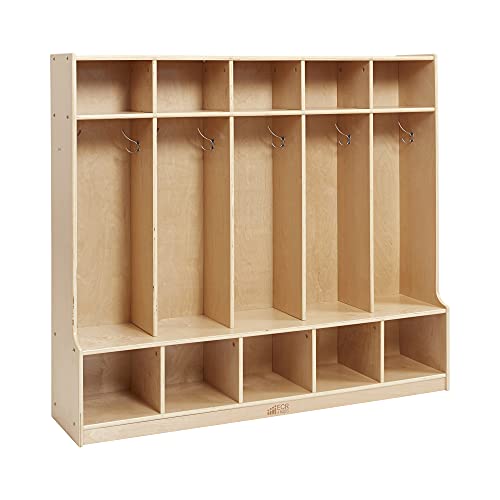
ECR4Kids Five-Section Coat Locker gives you a roomy landing zone for a classroom, daycare, or busy family entry. Five open sections, ten cubbies, ten double hooks, and a bench give children separate spots for coats, bags, and shoes.
The natural finish shows the wood grain, while rounded corners and smooth surfaces suit a shared space for kids. An all-steel anti-tip kit adds stability, and UL GREENGUARD Gold certification plus TSCA and CPSIA compliance stand out among these picks.
At 54 inches wide and 13 inches deep, this unit needs a generous stretch of wall. Its 74-pound weight also makes it a better fit for a planned spot than a locker you move often.
ECR4Kids Five-Section Coat Locker needs adult assembly and direct supervision around children. A lifetime warranty against manufacturer defects adds reassurance for long-term use.
Bottom line: Choose it if you want a wide, shared locker with a bench, plenty of cubbies, and added safety certifications.
Jonti-Craft Five-Section Coat Locker suits schools, daycares, or homes that need several defined storage spots without an assembly project. Each section has two double hooks plus upper and lower shelves, giving coats, bags, boots, and lunchboxes their own places.
The wood construction includes a recessed hardboard back for added support, and rounded corners help avoid sharp edges around kids. Its open shelves offer a simpler setup than the cubby-and-bin storage on the Garvee and Volkmi units.
At 48 inches wide, 15 inches deep, and 50.5 inches high, it needs more depth than Volkmi’s narrow locker. The shelves keep belongings in view, so this style works best if you prefer open storage over boxes.
Jonti-Craft Five-Section Coat Locker comes fully assembled and has a limited lifetime warranty. It gives you a practical five-station layout, though it lacks the rolling casters found on some other options.
Bottom line: Pick it if you want five open locker sections and prefer furniture that comes assembled and ready to use.
Garvee Five-Section Coat Locker helps you sort gear for several children in a playroom, mudroom, or classroom. It pairs ten cubbies with five open storage areas, so bags, shoes, and supplies can stay separate.
Ten double hooks hold jackets and backpacks, while two storage boxes keep smaller items together. The clear lacquer leaves the wood grain visible, and the rounded edges suit a busy space used by children.
At 47.6 inches wide and 48.4 inches high, it takes up a good stretch of wall, though its 12-inch depth keeps it relatively shallow. Its wheeled design makes it easier to reposition than a fixed locker such as the ECR4Kids.
Garvee Five-Section Coat Locker also includes an all-steel anti-tip kit. An adult needs to assemble it, and its width makes the smaller Oakvera locker a better fit for a tight entryway.
Bottom line: Choose it if you need storage for several children and want to move the locker between rooms as needed.
Volkmi Mobile Coat Locker is a good match for a classroom or playroom where you may want to shift storage around. It has ten cubbies, five hanging hooks, and two bins for coats, backpacks, toys, and small items.
Four casters make it easy to roll, and the plywood frame has a glazed surface that resists scratches and moisture. An anti-tip kit adds stability when you park the locker in place.
Its 47.24-inch width and 11.81-inch depth give you a roomy layout without much front-to-back reach. The trade-off is its five hooks, fewer than the ten double hooks on Garvee and ECR4Kids.
Volkmi Mobile Coat Locker suits homes and group spaces, and its simple modern style can fit either setting. Two bins add flexible storage, though the unit has less hanging space than the larger-hook options.
Bottom line: Pick it if you want a shallow, wheeled locker with bins that you can move around a shared room.
Oakvera Two-Section Coat Locker gives you a compact spot for coats and shoes, with a built-in bench for sitting while kids change footwear. Four cubbies and two open storage areas help keep everyday items in reach.
Eight bear-shaped metal hooks add a playful detail, and the raised space below fits boots. The kid-friendly height helps children reach their things, while rounded corners and an anti-tip design add safety features.
At 28.7 inches wide, it takes less wall space than the five-section lockers. Its smaller layout also gives you fewer hooks and cubbies than ECR4Kids or Garvee, so it works best for a couple of children rather than a large group.
Oakvera Two-Section Coat Locker has a smooth surface that you can clean easily, and the white finish suits a range of rooms. It needs assembly, with hardware and tools included.
Bottom line: Choose it if you want a small entryway locker with a built-in bench and a place for boots below.
IDEALHOUSE Two-Section Coat Locker gives you a wide, low storage option for a bedroom, play area, or classroom. Two open areas and four cubbies handle daily bags and toys, while four double hooks hold coats and backpacks.
The white finish resists scratches, and rounded corners and smoothed surfaces suit rooms used by young children. A metal anti-tip kit adds stability, and adults can assemble the unit with basic tools.
At 47.6 inches wide but 22 inches tall, it has a lower profile than the taller lockers here. That shape may suit a room where you want storage along a low wall, but it offers less vertical hanging and shelf space than ECR4Kids.
IDEALHOUSE Two-Section Coat Locker has a simple layout that children can use for their everyday things. Its four-cubby capacity makes it a more compact choice for a small household than a five-section classroom unit.
Bottom line: Pick it if you want a broad, low locker for a smaller set of coats, bags, and toys.
LEISULIF Ladder-Style Coat Locker combines coat hooks and cubbies with stepped open shelves and a top cabinet. It suits a child’s room or hallway where you want space for books and toys alongside everyday belongings.
The MDF frame has a smooth, burr-free surface and a light oak finish. Its wide base and low center of balance add stability, while the 12-inch depth helps it fit in a narrow hallway or small bedroom.
With 9 cubbies and 10 hooks, it offers plenty of places to sort small items and hang coats. The stepped shelves and closed cabinet set it apart from the straightforward locker layouts on ECR4Kids and Jonti-Craft.
LEISULIF Ladder-Style Coat Locker targets children ages 8 to 12, with open book storage that lets them see what they can grab. Its 47.6-inch height uses vertical space, but the shelf-and-cabinet layout gives it more of a bookcase role than a basic mudroom locker.
Bottom line: Choose it if you want a child-height storage piece that pairs coat hooks with visible book shelves and a closed cabinet.
Factors to Consider When Choosing Mudroom Lockers and Cubbies
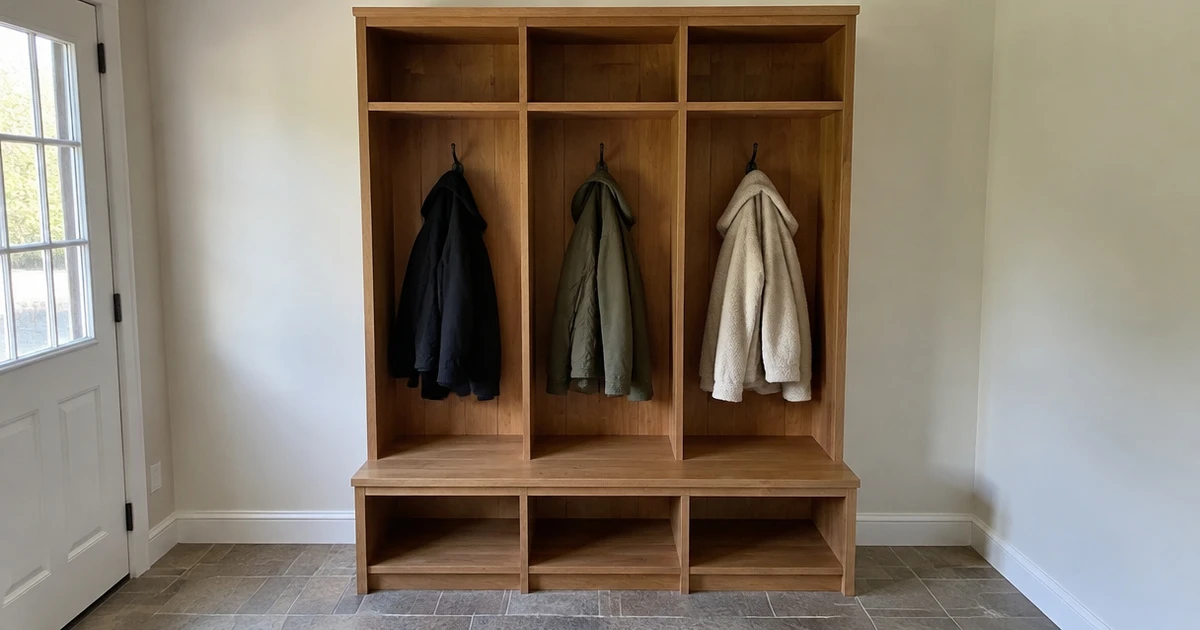
A useful locker fits your space and gives everyday items a clear place. Start with the room and the people who use it, then compare storage layouts, materials, and stability.
Footprint and Clearance
Measure the wall and floor area, then check depth as well as width. Leave room for doors to open and people to pass while someone sits on the bench; a tall unit may use vertical space, while a low unit can fit under a window or below wall hooks.
Compare dimensions rather than judging from a product photo. Sketch the footprint on the floor with painter’s tape, and check for baseboards, vents, or door swings that could interfere.
| Locker profile | May suit | Check |
|---|---|---|
| Low | Space below a window | Seat clearance |
| Tall | More vertical storage | Ceiling and door clearance |
Storage Layout
Count the people who will use the locker and plan one hanging spot for each regular user. Then decide where shoes, bags, hats, and sports gear should go; open cubbies give quick access, while a cabinet can keep items out of sight.
Check shelf height and cubby openings against the items you store most. Deep bins can hold loose gear, while narrow openings may limit bulky footwear or bags.
- List the items each person needs to store.
- Measure bulky shoes, bags, or sports gear.
- Give shared items a separate shelf or bin.
If children share the space, assign each person a cubby or zone so belongings do not spill into someone else’s area. A bench helps with shoes, but it takes floor space and may not give every person a separate seat.
Hooks and Seating
Count hooks, not just sections, and check whether each hook can hold more than one item. Double hooks can create room for coats and backpacks in a shared entry, but hanging items still need enough space between them.
Think about hook height, too. Adults may prefer hooks they can reach without bending, while children need lower hooks to hang their own coats.
A built-in bench makes shoe changes easier, so check whether it leaves enough room for feet and shoes beneath it. If several people get ready at once, consider whether the seat can fit their routine without blocking the walkway.
Materials and Cleaning
Choose a surface that matches the mess in your entry. Muddy shoes and wet outerwear can leave grit or moisture behind, so a smooth finish that wipes clean can cut down on scrubbing.
Wood and engineered wood give a furniture-like look, while plywood can make a locker easier to move. Check the finish for scratch resistance if bags, buckles, or shoes will rub against it.
Think about how much daily wear the unit may face. Rounded corners can soften contact in a tight walkway, and sturdy panels matter if people lean on the bench or load the shelves heavily.
Match care needs to your routine. A quick wipe-down works well for a busy household, especially if muddy shoes often end up under the locker.
Mobility and Placement
Decide whether the locker needs to stay in one place or move between rooms. A fixed unit suits a dedicated entry wall, while a mobile design can help in a shared room that needs open floor space for other tasks.
If the locker rolls, check how the base sits on your flooring and whether you can keep it steady while children use the hooks or bench. Measure narrow doorways and turns before moving a large unit into the room.
For a locker that will stay parked, avoid placing it where doorways or daily walking paths cross its footprint. Think about where people drop bags and shoes, then position the storage close enough to serve that routine.
Stability and Safety
Stability matters because people may pull on hooks or lean on a seat. Look for a broad base, a low center of balance, and an anti-tip kit that lets you secure a tall unit to the wall.
Follow the wall-anchoring directions and use hardware suited to your wall type. Keep heavier items on lower shelves to reduce the pull near the top.
Check edges and corners along the paths where children move, especially near a bench or doorway. If you expect the locker to serve a classroom or another shared space, look for safety certifications that fit your needs and check local rules.
Choosing a Mudroom Locker for Your Daily Routine
If you want space for a household’s coats and shoes, ECR4Kids Five-Section Coat Locker pairs ten cubbies with a bench, ten double hooks, and an anti-tip kit. Jonti-Craft Five-Section Coat Locker has upper and lower shelves with rounded edges, while Garvee Five-Section Coat Locker offers two boxes and an anti-tip kit for a flexible room layout.
Volkmi Mobile Coat Locker suits you if you want rolling storage with two bins. Oakvera Two-Section Coat Locker adds a bench and bear-shaped metal hooks; IDEALHOUSE Two-Section Coat Locker keeps its height to 22 inches; LEISULIF Ladder-Style Coat Locker adds stepped shelves and a cabinet for books. Choose the layout that fits your floor space and the items you store every day.
Frequently Asked Questions
How many cubbies do I need?
Start with one spot for each regular user, then add room for shared gear such as sports bags or reusable totes. A household that stores shoes in the same unit may need more cubbies than one that only hangs coats, so measure bulky items before you choose.
Should a mudroom locker include a bench?
A bench gives you a place to sit while putting on or taking off shoes. It also uses floor space, so check how much room it leaves for walking and whether shoes can fit beneath it.
What size locker works in a small entry?
Measure the wall, floor space, and doorway before you shop. A low or narrow unit may suit a tight area, but check its depth and leave room for doors to swing and people to pass.
How can I keep a tall locker stable?
Choose a unit with a broad base or low center of balance, and use an anti-tip kit to secure it to the wall. Keep heavy items on lower shelves and follow the anchoring directions for your wall type.
Which material is easiest to clean?
A smooth, easy-clean finish helps you wipe away dust, grit, and moisture from everyday use. Check whether the surface resists scratches if bags, shoes, or buckles often rub against the locker.