7 Best Space Heaters for Basements 2026

This post may contain affiliate links. As an Amazon Associate I earn from qualifying purchases. If you choose to make a purchase, I may earn a small commission at no extra cost to you.
Basements often stay colder than rooms above them, and a heater suited to a bedroom may not warm an open lower level evenly. Limited floor space and safe placement around stored items matter, too.
Match stated room coverage to the area you use, then compare heat style, controls, noise, and safety features. A thermostat or timer can make daily use easier, while oscillation spreads warmth across a wider area.
The DREO 1500W Ceramic Space Heater is our best overall choice. The picks below suit different needs, including quiet rooms, large spaces, and wall mounting, so you can choose among the best space heaters for basements in 2026.
Our Top Space Heaters for Basements Picks

DREO 1500W Ceramic Space Heater
- Heater type: PTC ceramic
- Room coverage: Up to 270 sq ft
- Controls: ECO mode

DREO 25-Inch Ceramic Tower Heater
- Heater type: Ceramic
- Room coverage: 100-270 sq ft
- Controls: Four modes and fan

- Heater type: Infrared quartz and PTC
- Room coverage: Large rooms
- Controls: Remote control

- Heater type: Ceramic
- Room coverage: Medium rooms
- Controls: Remote control

- Heater type: PTC ceramic
- Controls: App and voice
- Oscillation: 120 degrees
- Heater type: PTC ceramic
- Room coverage: Bedrooms, studies, offices
- Controls: Remote control

- Heater type: PTC ceramic
- Room coverage: Small spaces
- Controls: Remote control
More Details on Our Top Picks
The DREO 1500W Ceramic Space Heater suits you if you want to warm a basement room without much noise. Its PTC ceramic element heats quickly, and 70-degree oscillation spreads warmth across spaces up to 270 square feet.
A temperature sensor adjusts the heater’s output in ECO mode, while its 12-hour timer and 24-hour automatic shutoff help manage run time. It runs at 34 dB, and the overheat and tip-over protections add useful safety features.
At 15.8 inches tall, this model takes less vertical space than the 25-inch DREO tower. You need to plug it directly into a wall outlet, not an extension cord, so plan its spot near an outlet.
Bottom line: Choose it if you want quiet, adjustable heat for a basement area up to 270 square feet. Its direct-to-wall outlet rule may limit where you can place it.
The DREO 25-Inch Ceramic Tower Heater fits a basement where you want broad airflow and fine temperature control. Its 70-degree oscillation covers areas from 100 to 270 square feet, and its airflow runs as quietly as 25 dB.
You can set the temperature from 41 to 95°F in 1-degree steps. ECO mode adjusts the heat automatically, while three other heat modes and a fan setting give you more ways to manage comfort. The child lock, tip-over protection, and overheat protection add useful safeguards.
Compared with the shorter DREO 1500W Ceramic Space Heater, this 25-inch tower has a taller profile. Its stated coverage matches that model’s upper limit, so the choice comes down to its quieter airflow and extra operating modes versus a more compact shape.
Bottom line: Pick this tower if quiet operation and precise temperature settings matter in your basement. Its tall 25-inch body suits you better than a low-profile heater if you have room for a tower.
The DR Infrared Heater DR-968 gives you a dual heating system for a large basement room. It pairs an infrared quartz tube with a PTC element and produces about 5,200 BTU at 1,500 watts.
Its electronic thermostat lets you set temperatures from 50 to 85°F, and the remote handles heat settings. The heater also includes a 12-hour shutoff timer, tip-over protection, and overheat protection. Its noise level reaches 39 dB.
At 19 pounds, it weighs more than the smaller ceramic models in this roundup, but caster wheels help you roll it between rooms. The 17-inch height and 12.5-inch width give it a boxier shape than a narrow tower, so check that you have floor space for it.
Bottom line: Choose the DR-968 if you want its infrared-and-ceramic heating system for a larger basement room. Its wheels help with repositioning, though its 19-pound weight makes it less convenient to carry.
The Lasko Ceramic Tower Heater works well for you if you want simple remote controls and warmth for a medium-sized basement room. Its ceramic element runs at 1,500 watts, and wide oscillation helps spread heat beyond the area right in front of the heater.
Use the remote to adjust the heat, oscillation, or timer without getting up. The timer runs for up to seven hours, and the built-in handle makes it easier to move the heater between rooms. Its cool-touch housing, self-regulating ceramic element, overheat protection, and ETL listing add practical safety features.
Compared with the DREO models, this tower offers a shorter timer than the AUBKN’s 12-hour setting. Its controls are straightforward, but you get less scheduled run time than with some other picks here.
Bottom line: Pick the Lasko if you want a portable tower with a remote and a simple timer for a medium-sized room. Its seven-hour timer suits shorter heating periods.
The DREO Smart Wall Heater suits you if you want to keep a basement floor clear. It mounts to the wall and swings through 120 degrees to distribute warm air from top to bottom.
Set the temperature from 41 to 95°F in 1-degree steps, or use the DREO app to schedule heat from your phone. You can also control it with Alexa or Google Home. The heater lowers its LED panel brightness in low light, and its quieter operation suits a bedroom or work area.
Unlike the portable heaters in this roundup, this model needs a wall mount and the installation that comes with it. The package includes mounting accessories and a drilling guide, which helps you plan the setup before you put it in place.
Bottom line: Choose this DREO if you want a wall-mounted heater with app scheduling and voice control. It suits a basement room where you prefer to keep a portable heater off the floor.
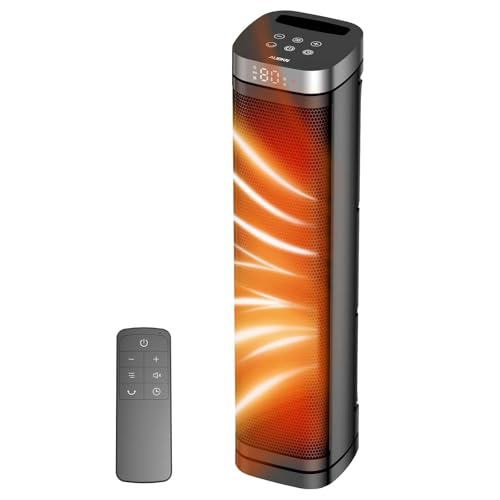
The AUBKN 24-Inch Ceramic Heater suits you if you want a tall heater with a long timer and remote operation. Its 1,500-watt PTC ceramic element starts producing heat within seconds, and the remote lets you adjust temperature, mode, and timer settings.
Set the timer for anywhere from one to 12 hours, or let the 24-hour automatic shutoff stop the heater after a long stretch without interaction. It also has tip-over and overheat protection, ETL certification, and a six-foot flat power cord.
This model offers more timer range than the Lasko tower’s seven-hour setting. Its narrow 5.51-inch width takes up little floor space, but the remote needs two AAA batteries that you must supply.
Bottom line: Pick the AUBKN if you want remote adjustments and a timer that runs up to 12 hours. Its 24-hour automatic shutoff adds another way to limit long run times.
The WINHL Portable Ceramic Heater makes sense for you if you need quick warmth in a small basement area. Its PTC ceramic heating element warms up within seconds, and 70-degree oscillation spreads heat across the room.
The remote lets you adjust temperature, fan speed, heat mode, and timer settings from your seat. Overheat protection and tip-over shutoff add safety features, and the heater carries ETL certification. Its compact size measures 9.85 inches tall and 5.91 inches wide.
Unlike the larger room heaters here, WINHL focuses on small spaces rather than a stated square-foot coverage range. The remote needs two AAA batteries, which do not come with the heater, and you need to plug it directly into a wall outlet.
Bottom line: Choose the WINHL for a compact basement spot where you want oscillation and remote adjustments. Its small size suits a tighter area better than a large-room heater.
Factors to Consider When Choosing Space Heaters for Basements
Factors to Consider When Choosing Space Heaters for Basements
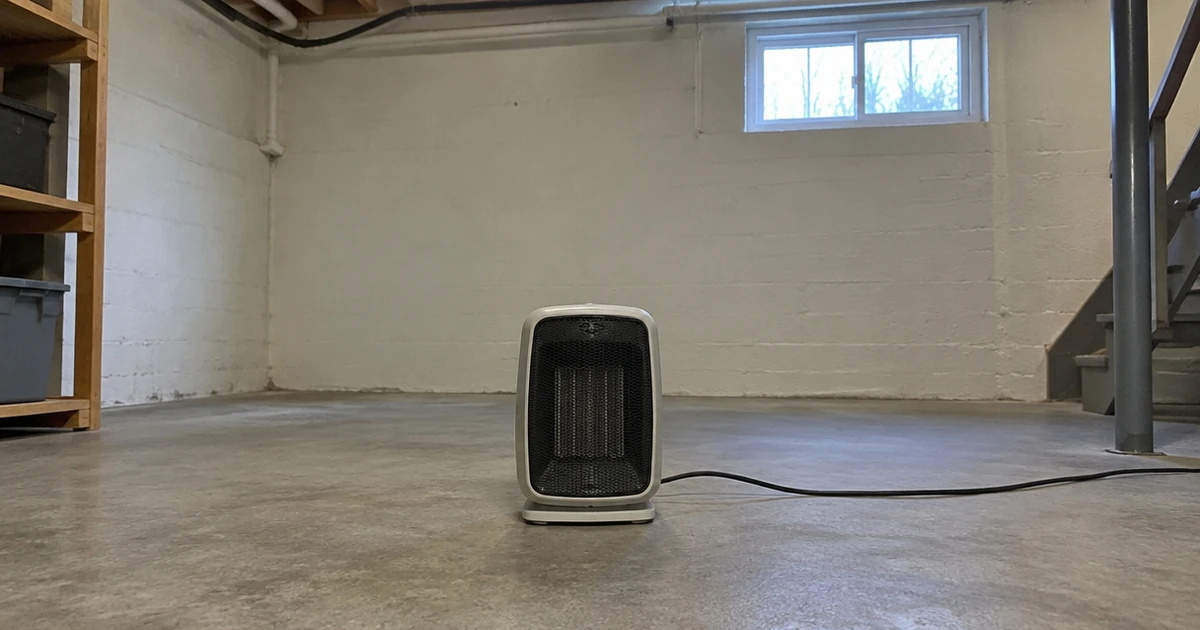
A basement heater should fit the space you use and the way you spend time there. Compare coverage, heating style, controls, safety features, and placement before choosing a model.
Room Size and Layout
Start with the part of the basement you want to heat, not the total floor area if you only use one corner. Measure the usable zone and compare it with the heater’s stated coverage. An open room and a divided layout can feel different even at the same area.
Treat coverage as a guide, then think about how heat can reach the places where you sit or work. A unit with oscillation can spread warmth across a wider angle, while separate rooms may call for heat in the area you occupy.
| Basement layout | What to check | Useful feature |
|---|---|---|
| One open area | Coverage for the full zone | Oscillation or broad airflow |
| Several rooms | Coverage in each occupied room | Portable placement by zone |
Heating Style and Airflow
Think about how a heater delivers warmth. Ceramic models use a heating element and often a fan to move warm air, which can help circulate heat through a room. Infrared models direct warmth toward people and objects in their path, which can suit a spot where you sit for longer periods.
Fan-assisted heaters can add airflow and sound, so check for a low or quiet mode if you work, read, or sleep nearby. A radiant style does not rely on room-wide airflow, but placement matters because its warmth reaches the area it faces. Choose the heat style that matches how you use the basement.
Controls and Temperature Settings
Check how you set the temperature and whether the heater can hold a target level. A digital thermostat with small temperature steps gives you more control than a few broad heat settings. If you prefer simple operation, look for clearly marked buttons and settings you can change from the unit itself.
A remote can help when the heater sits across the room, while app or voice controls may suit a connected home. Timers help limit how long the heater runs, and a child lock can prevent unintended changes. Choose the features you will use often, rather than paying attention to a long list of controls you may never touch.
Safety Features
Basements can have narrow walkways and stored belongings, so check for safeguards that fit your routine. Look for a recognized electrical safety mark and automatic shutoff if the heater tips or overheats. Use it on a stable surface, keep vents clear, and follow the clearance instructions for the unit.
- Tip-over shutoff for a heater that gets bumped.
- Overheat protection that stops the heater if it gets too hot.
- A child lock if children can reach the controls.
Keep the heater away from water, fabrics, and clutter. Do not run it with a damaged cord, and avoid placing it where people could trip over it.
Placement and Daily Use
Choose a spot that lets warm air reach the area you use without blocking a walkway or a doorway. A portable heater gives you flexibility, but you need clear floor space and a safe place to set it. A wall-mounted model can free up floor area, though you need to choose a location that suits the room and its heat coverage.
Think about noise and controls as part of everyday use. A heater near a desk or sleeping area should have settings that feel comfortable for longer stretches. A timer can help manage run time, while oscillation can move warmth across a wider part of an open room.
Picking a Heater for Your Basement
Choose the DREO 1500W Ceramic Space Heater for a well-rounded option, or the DREO 25-Inch Ceramic Tower Heater for a quiet room and precise temperature steps. For a larger room, the DR Infrared Heater DR-968 combines infrared quartz and PTC heat. The Lasko Ceramic Tower Heater suits shoppers who want remote control.
Pick the DREO Smart Wall Heater if you prefer app or voice controls and wall mounting. The AUBKN 24-Inch Ceramic Heater offers a 1-12 hour timer, while the WINHL Portable Ceramic Heater fits a small space. Match coverage, controls, and safety features to your basement layout before you decide.
Frequently Asked Questions
What size space heater do I need for a basement?
Start with the room or zone you plan to heat and compare its area with the heater’s stated coverage. An open basement may need a different approach from a divided layout. If you use several rooms, consider heating the occupied zone rather than expecting one portable unit to warm every corner evenly.
Are ceramic or infrared space heaters better for basements?
Neither style suits every room. Ceramic heaters often use a fan to move warm air, which can help circulate heat. Infrared heaters direct warmth toward people and objects in their path, which can work well for a specific seating or work area. Choose based on the layout and where you spend time.
Can a space heater warm an entire basement?
That depends on the heater’s stated coverage and your basement’s layout. One open room is different from several closed-off rooms, where warmth may not spread evenly. Compare coverage with the area you want to heat, and focus on the room or zone you use most rather than assuming one heater will warm every part.
Which safety features should a basement space heater have?
Look for tip-over and overheat shutoff, along with a recognized electrical safety mark. Place the heater on a stable surface and keep its vents clear. Follow the unit’s clearance instructions, keep it away from water and clutter, and avoid using it if the cord becomes damaged.
Can I leave a space heater running overnight?
Follow the heater’s instructions for unattended or overnight use, and do not assume a timer makes every setup safe. Keep the unit clear of bedding, curtains, and stored items, and place it where nobody can trip over it. If you are unsure about the room or setup, turn the heater off before sleeping.