18 Christmas Shelf Decor Ideas That Bring Warmth In 2026

When curating Christmas shelf decor ideas in 2026, restraint often creates a much stronger impression than packing every surface with seasonal figurines. A bookshelf or kitchen ledge looks best when its everyday rhythm remains intact, softened by small seasonal shifts rather than hidden beneath them.
Successful holiday styling relies on balanced materials, varied heights, and genuine negative space. Bringing in unlacquered brass, pruned winter branches, warm paper ornaments, and soft candlelight keeps the shelves grounded. The room feels festive without feeling crowded.
Below are 18 ideas you can adapt to your own home, whatever your architectural style.
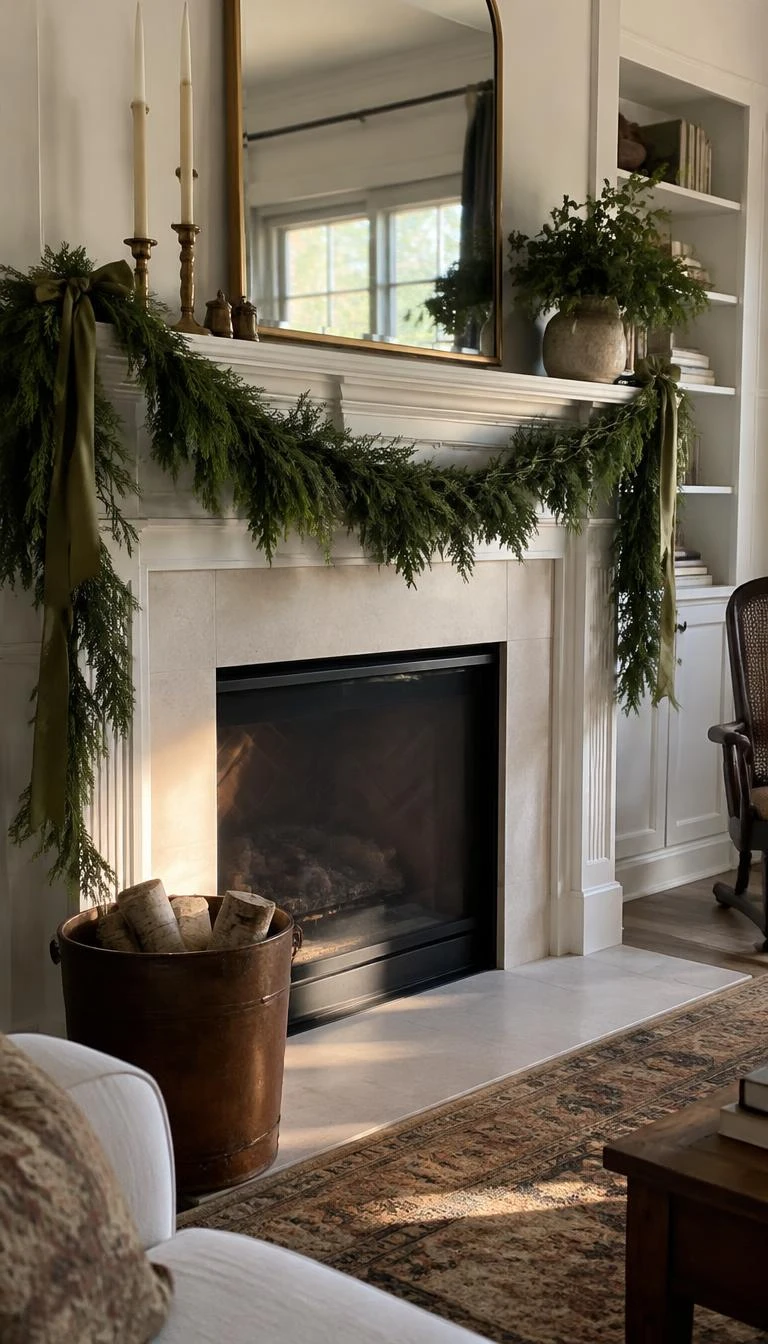
Mix Real Cedar Branches With Vintage Brass Candlesticks
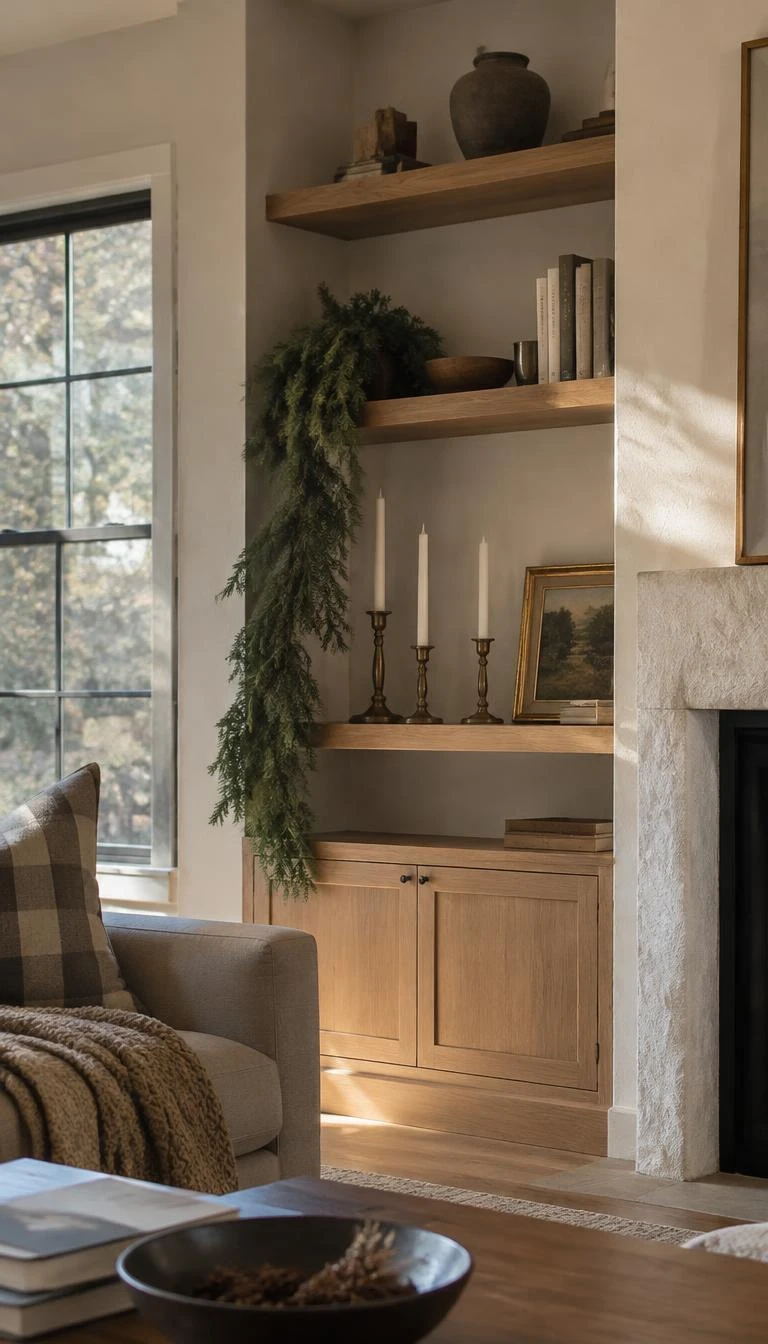
Fresh greenery softens the straight lines of wood shelves instantly. Flat cedar works particularly well because it drapes naturally over shelf edges without dropping needles right away.
Set two or three vintage brass candlesticks of varying heights between your books. Weave a small cedar cutting around the bases, keeping the stems hidden behind bookends. Three stems are usually plenty for a four-foot shelf.
I especially like this combination against light painted walls where the dark brass silhouette stands out clearly.
The key is avoiding dense, packed arrangements. Let the branch tips trail freely so the display looks collected rather than constructed.
Stack Neutral Hardcovers Beneath Ceramic Houses
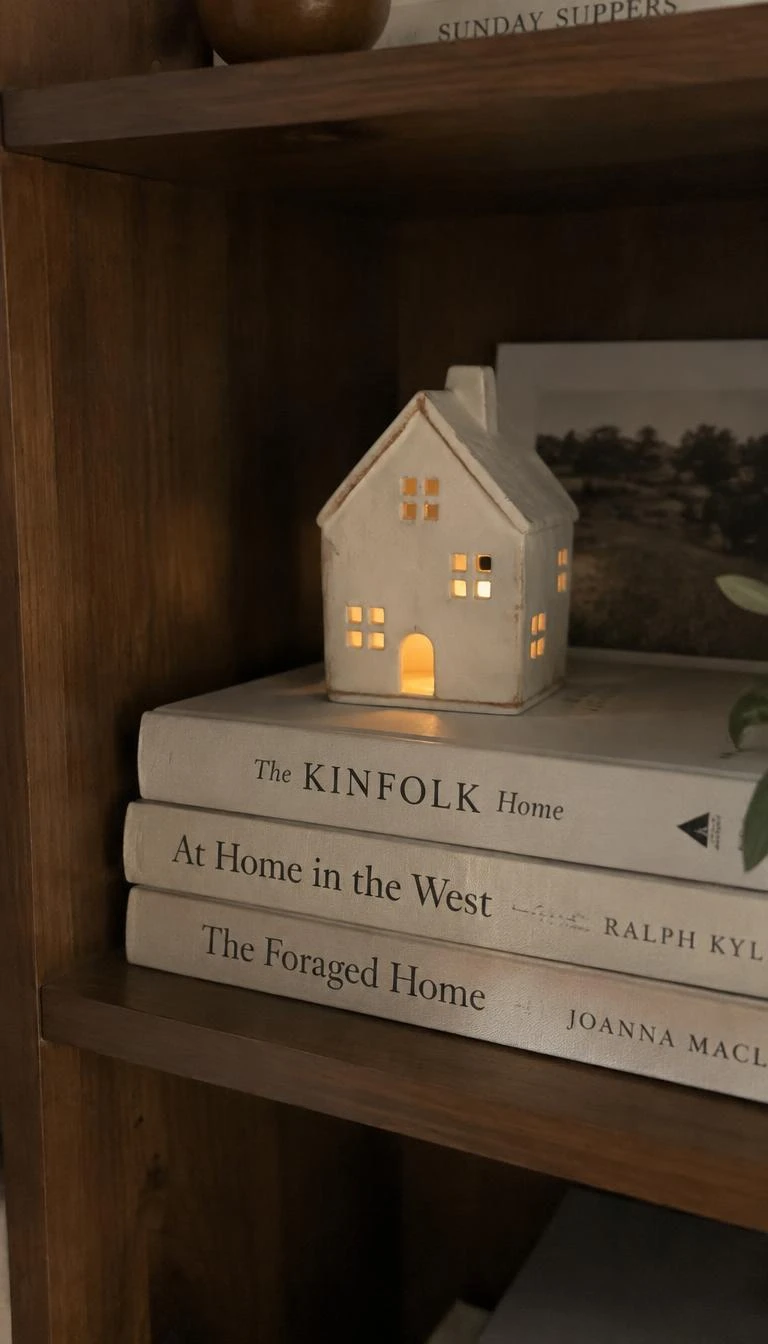
Most holiday ceramic houses get lined up in straight rows on a mantelpiece. Placing them individually on horizontal book stacks gives them better visibility and varies your shelf heights.
Strip the dust jackets from three or four thick hardcovers with cream or gray spines. Place the stack near the center of a middle shelf and set a single unglazed ceramic building on top.
Pop a warm battery tealight inside the house for evening glow. The paper spines insulate the ceramic base visually, giving the shelf an architectural, quiet rhythm that works throughout winter.
Hang Paper Star Lanterns From Shelf Brackets
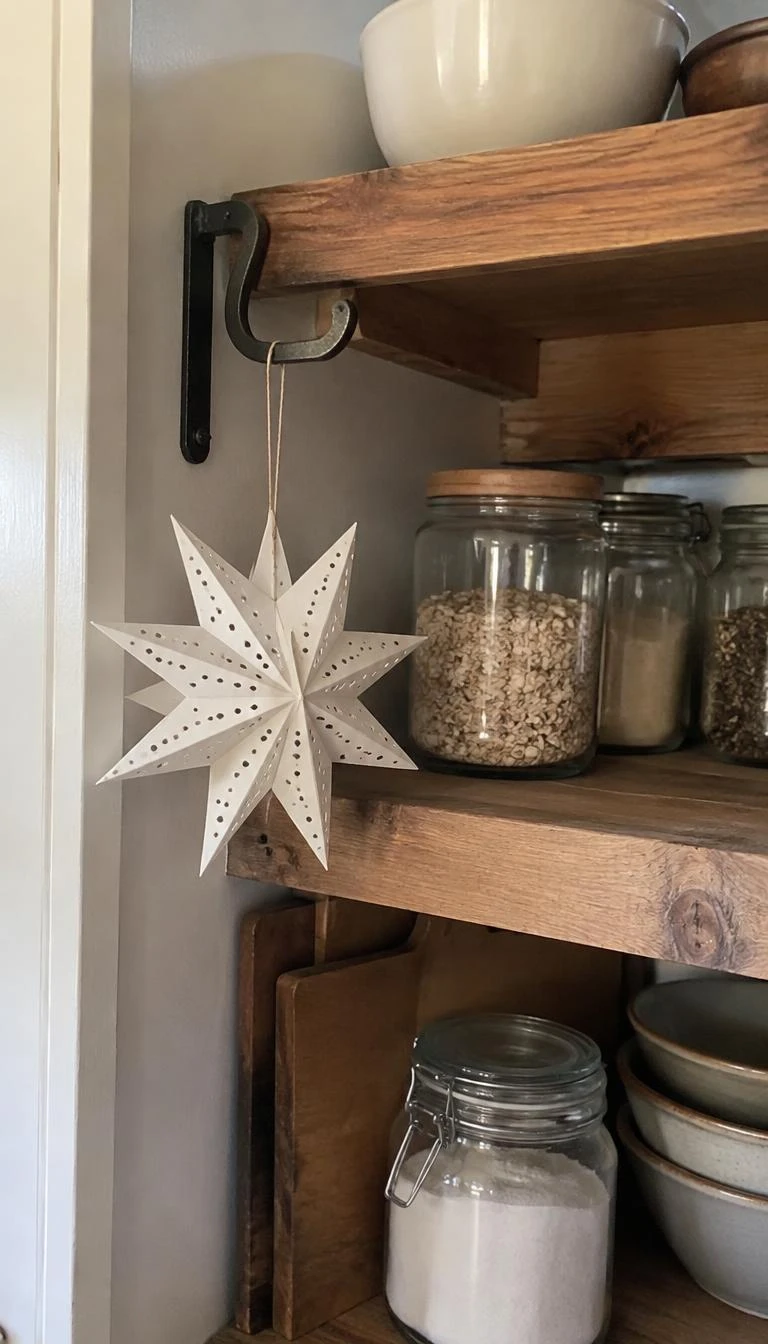
Brackets beneath floating shelves often remain empty, leaving vertical gaps between tiers. Small hanging decorations draw the eye downward and connect multiple levels.
Select folded paper stars measuring six to eight inches across in cream or unbleached kraft paper. Tie them to the iron or wood shelf supports using thin linen twine.
Avoid plastic cords or metallic thread, which catch the light too harshly. The matte texture of heavy paper holds its shape and creates soft shadows against the wall beneath each shelf board.
Lean Framed Winter Landscape Prints Against The Back Wall
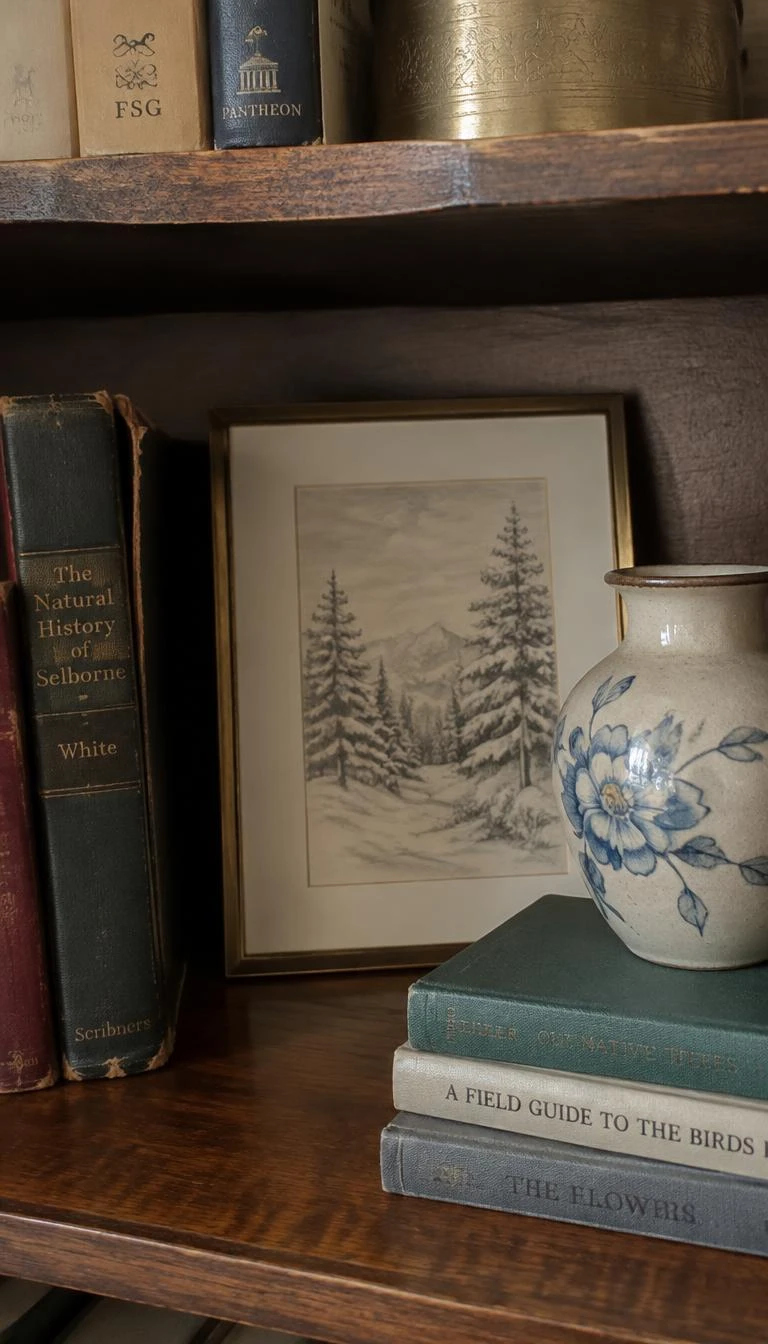
Replacing family photos for the season feels like a chore. Leaning a small winter print directly behind existing ceramics or brass items adds quiet context instead.
Look for vintage prints of bare birch trees, snowy pastures, or charcoal sketches of winter woods. Place them in simple oak frames measuring five by seven inches. Rest the frame on the back edge of a shelf, partly overlapping the item in front.
This layering method creates real physical depth. The shelf appears settled rather than staged for an occasion.
Fill Low Stoneware Bowls With Whole Walnuts And Dried Clementines
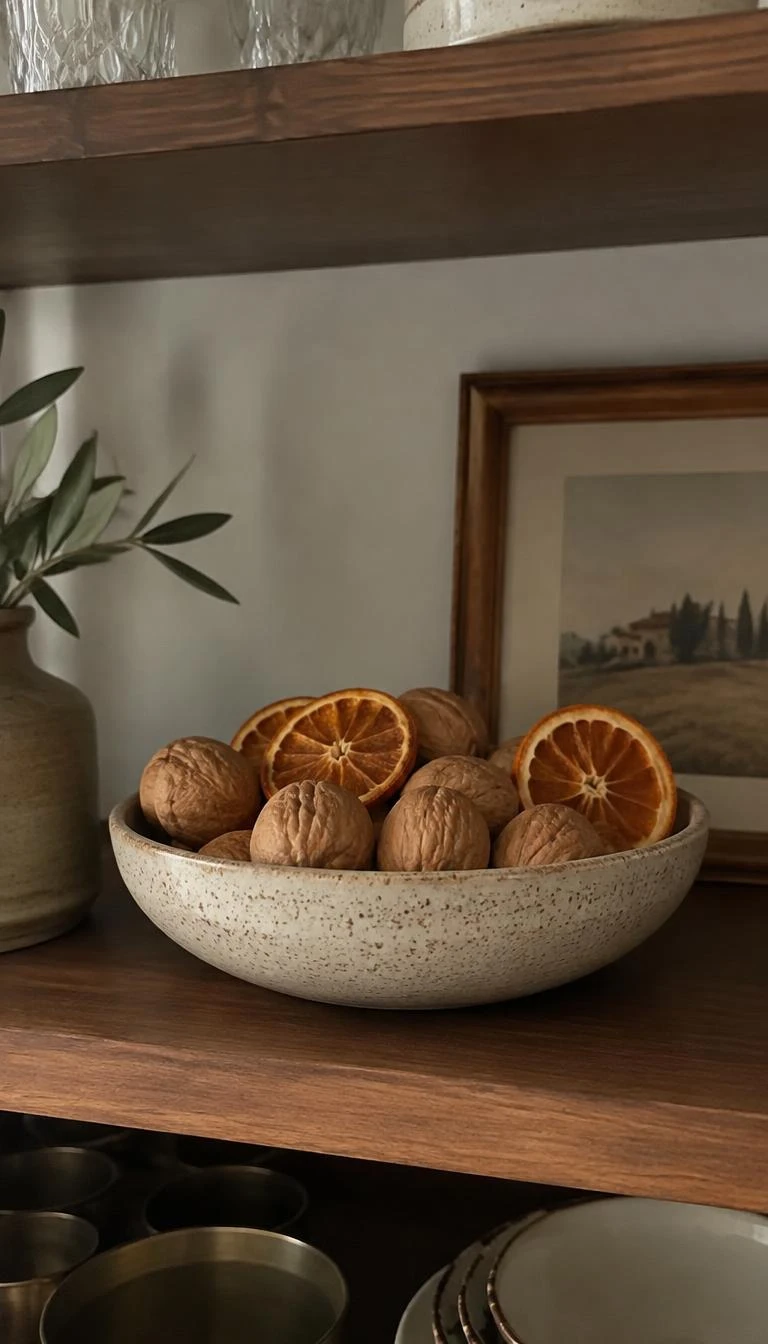
Edible elements bring an authentic seasonal feel that synthetic ornaments cannot duplicate. A low ceramic dish keeps the elements contained while adding rich, earthy color.
Choose an unglazed stoneware bowl with an eight-inch diameter. Fill the bottom with whole English walnuts in their shells, then scatter five or six dehydrated clementine slices across the top.
The citrus gives off a faint, pleasant fragrance without overpowering the room. Place this arrangement on a lower shelf within easy sightlines when seated.
Thread Velvet Ribbon Through Hanging Sconces And Bookends
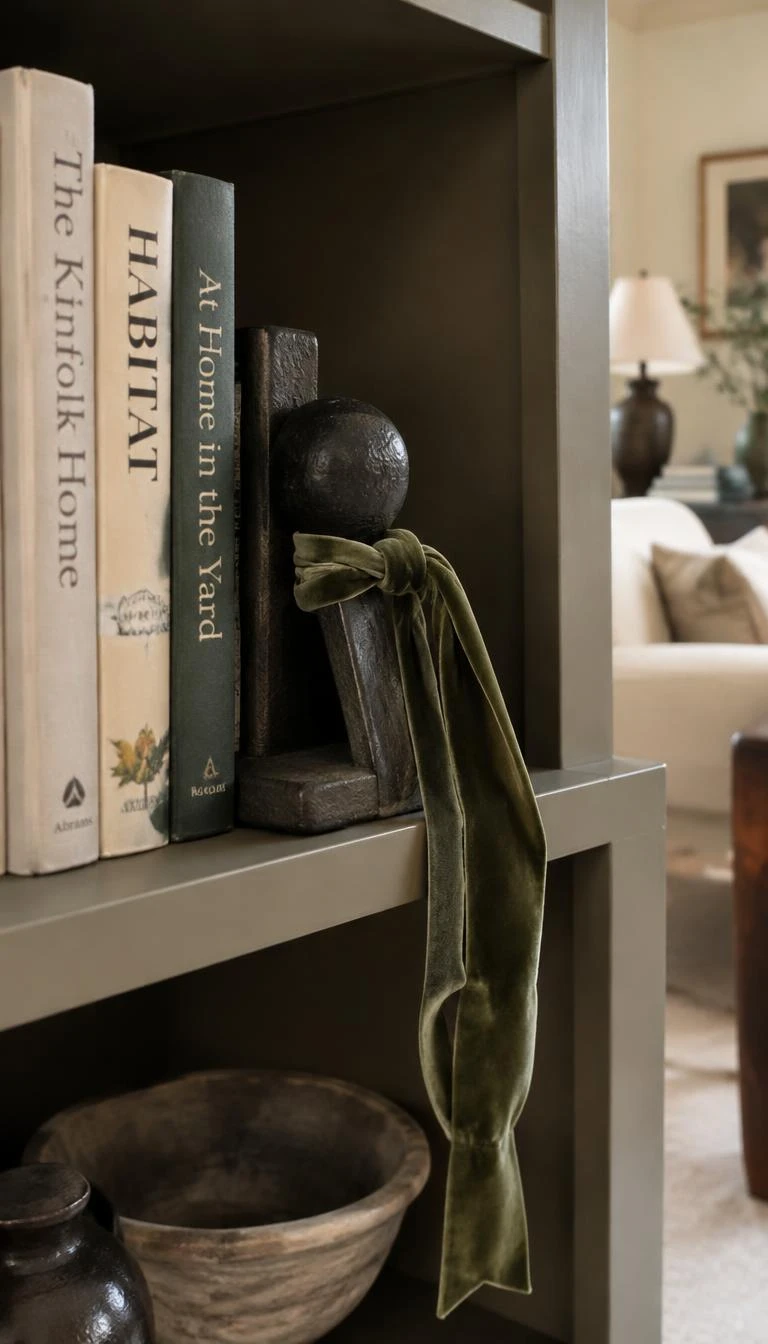
Ribbon often gets tied into oversized, stiff bows that distract from the shelving architecture. Using a loose, untied length of velvet provides a relaxed alternative.
Select a one-inch-wide rayon velvet ribbon in moss green, warm cedar, or muted taupe. Drape an eighteen-inch strip casually around the base of a heavy iron bookend, letting the ends pool onto the shelf surface.
Cut the tails on a diagonal to prevent fraying. The plush texture absorbs light, balancing smooth glassware and glossy paper covers nearby.
Place Beeswax Tapers In Simple Glass Holders
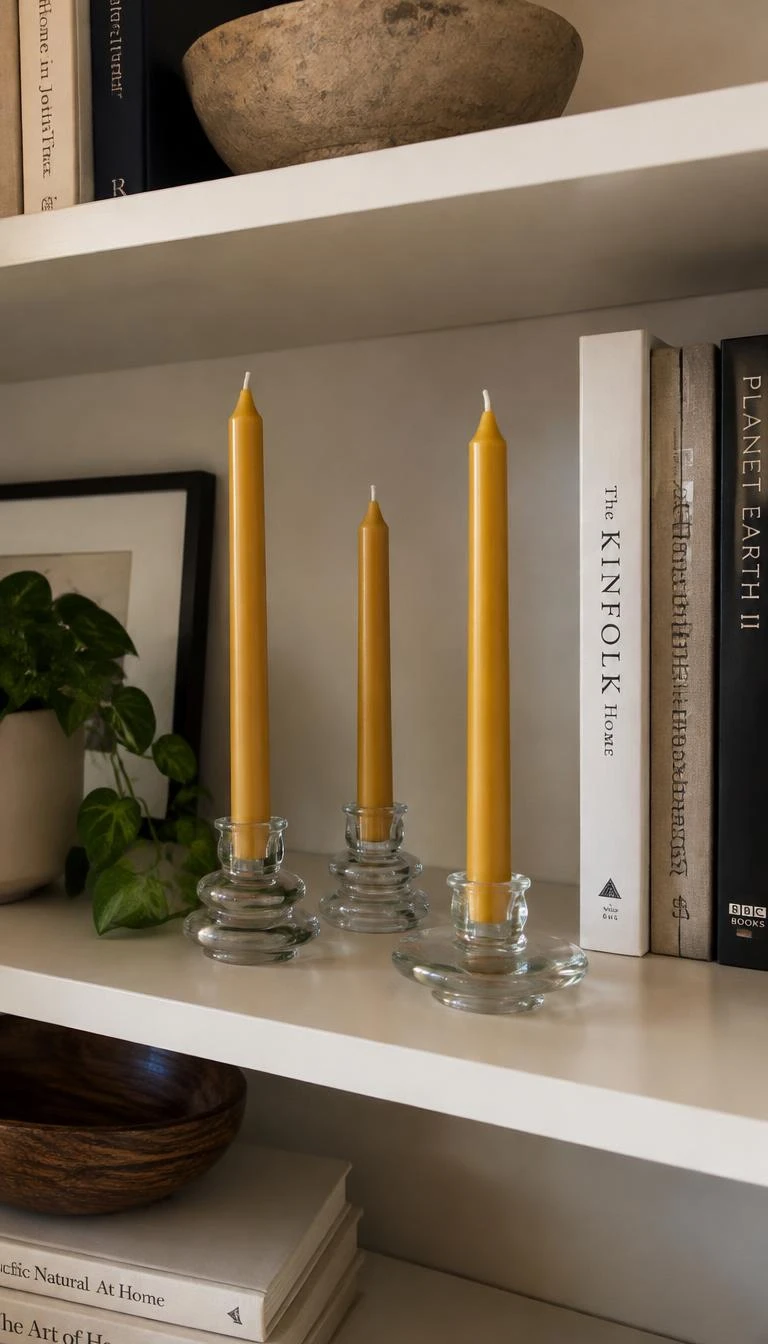
Pure beeswax has a rich, honeyed yellow tone that flatters book spines far better than stark bleached paraffin. Glass holders let the full taper remain visible.
Pick three heavy, pressed glass holders with round bases. Trim your beeswax tapers to uneven lengths before setting them into the sockets. Cluster them slightly off-center on an upper shelf.
I find keeping the tapers unlit preserves their clean form while the raw wax adds its own soft warmth to the room during the day.
Group Matte White Village Houses In Uneven Numbers
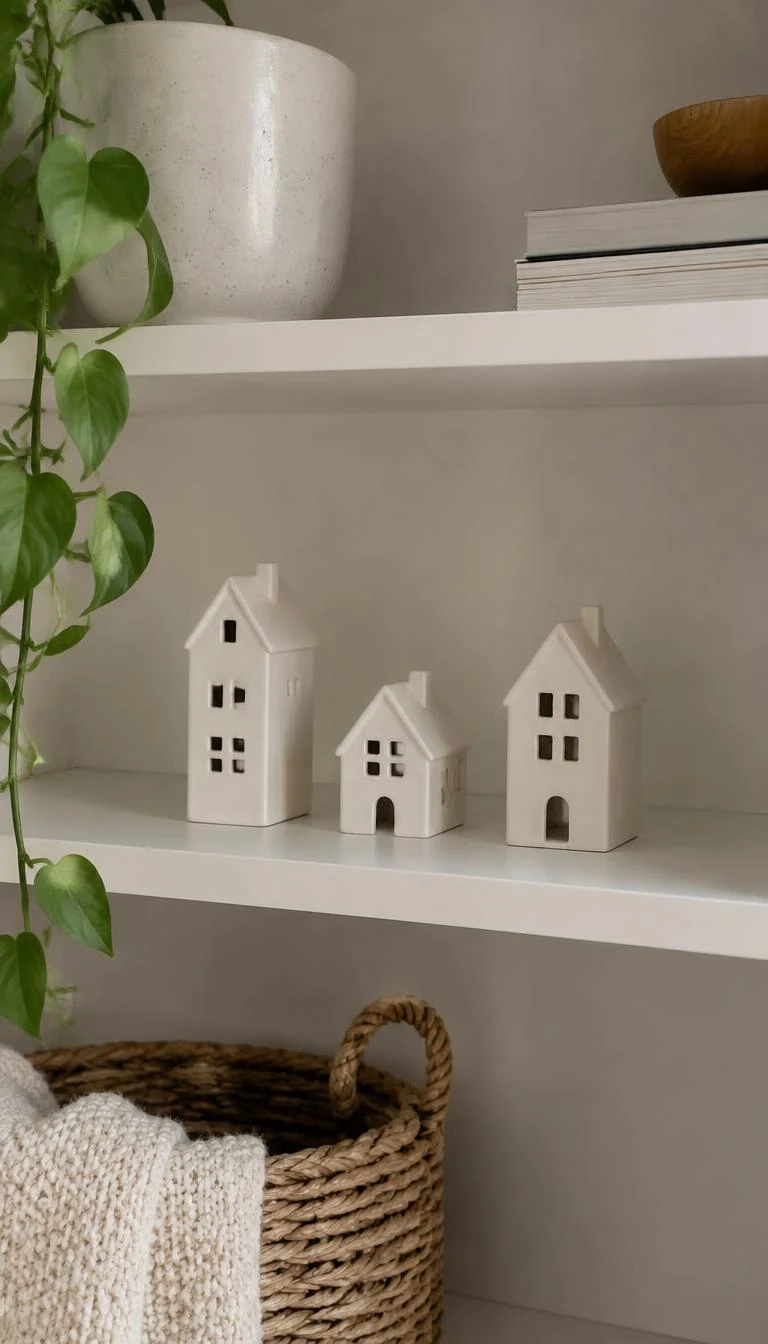
Spreading miniature village pieces across every shelf dilutes their charm. Gathering them into a single tight cluster concentrates the architectural impact.
Take three porcelain houses of varying silhouettes, all finished in flat chalk white. Set the tallest piece in the center rear, with the two smaller ones angled slightly outward in front.
The empty shelf space surrounding the cluster allows the forms to register clearly. The white matte surfaces catch the winter light without producing glares or reflections.
Drape Wooden Bead Garlands Across Book Spines
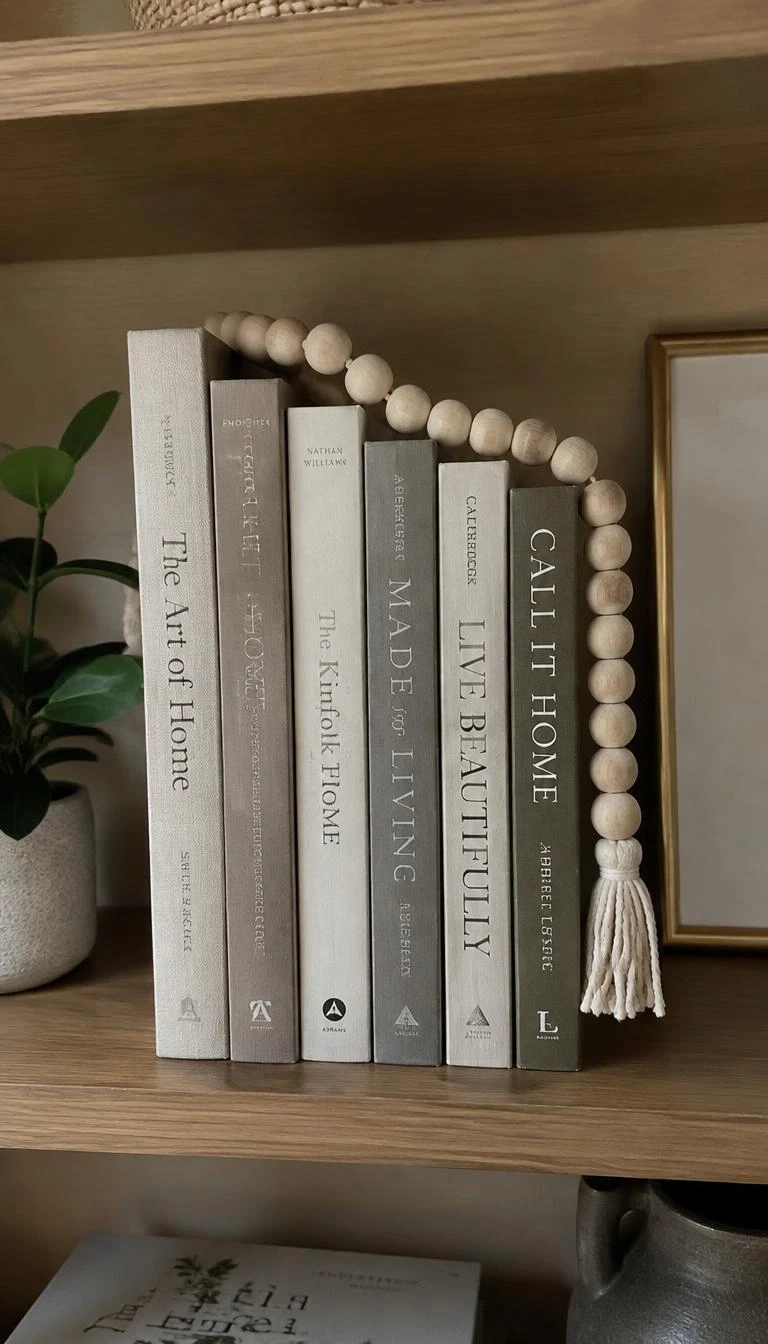
Shiny bead garlands feel noisy on a bookshelf. Raw, unfinished timber beads introduce tactile texture while respecting the quiet nature of paper and cloth bindings.
Select a garland made from unfinished maple or beech beads measuring roughly half an inch across. Rest it across the tops of a dozen vertical books, letting each end dip down the sides of the volume stack.
Keep the swag gentle and loose. The pale wood grain brings an honest, unpretentious quality that complements mid-century and traditional rooms equally well.
Anchor Dark Shelves With Fresh Juniper Bunches
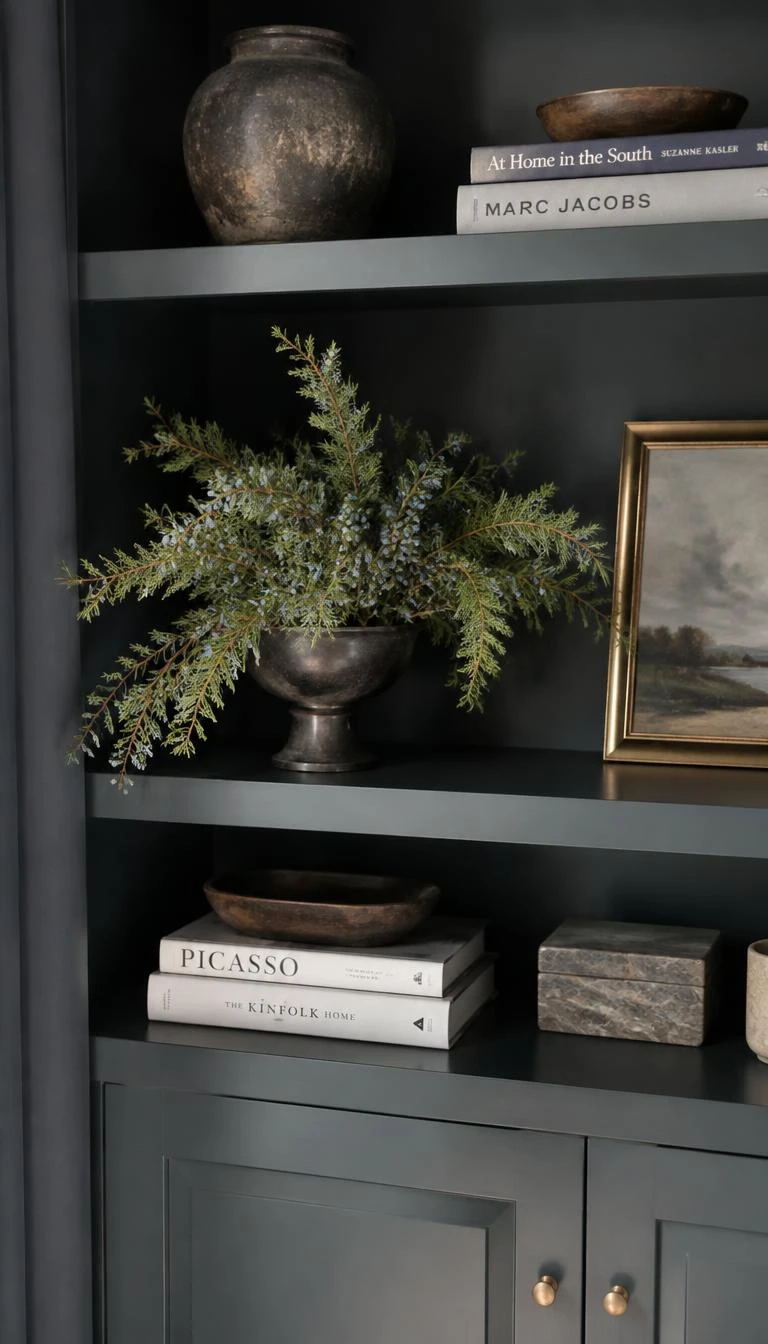
Dark painted shelving can swallow decorative items unless you incorporate foliage with distinct tonal shifts. Juniper with pale blue berries provides immediate contrast against charcoal or navy paint.
Cut four short sprigs of fresh berry-laden juniper, around five inches long. Arrange them loosely in a shallow cast iron compote or dark stoneware saucer.
The dusty blue berries catch light against the dark woodwork. Fresh juniper holds its structure well in heated indoor rooms and does not drop debris rapidly.
Rest Handblown Glass Trees On Small Pedestals
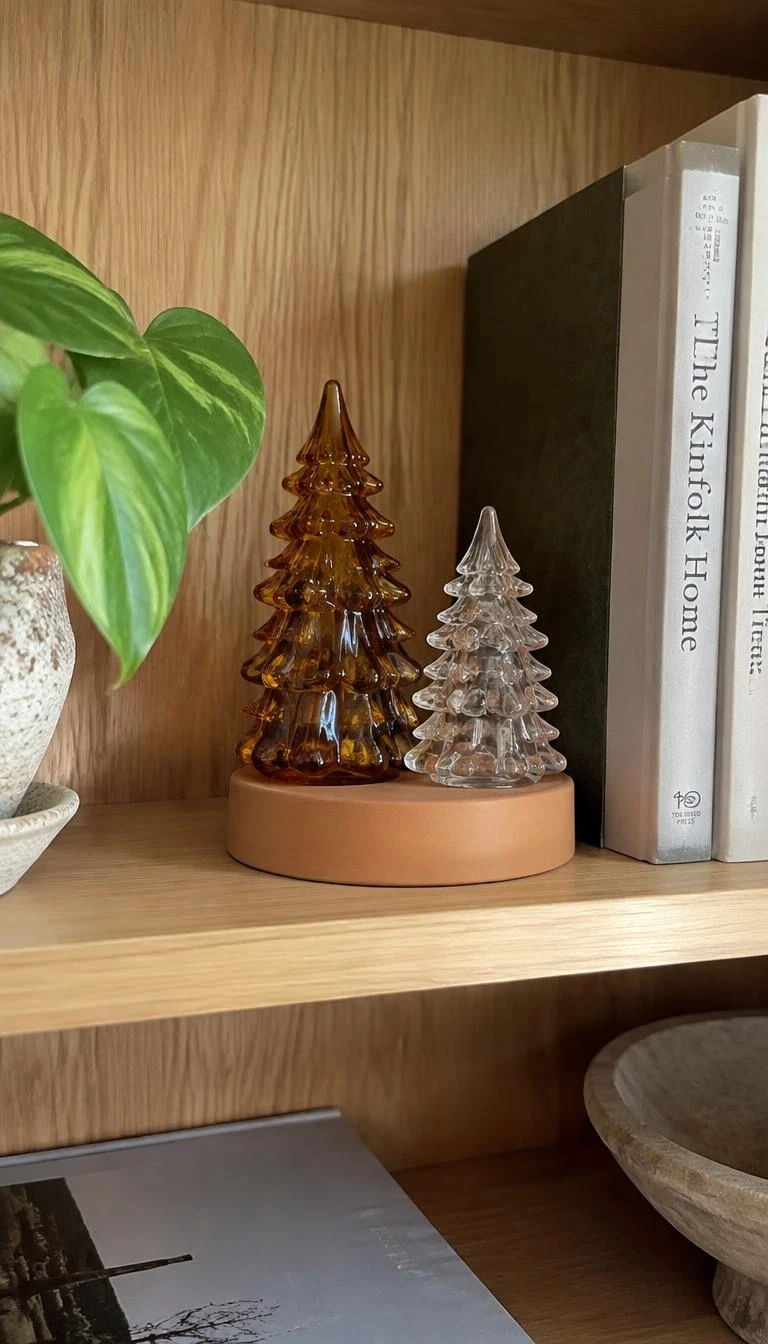
Colored glass reflects window light beautifully during short winter afternoons. Placing small glass figurines directly on shelf boards can leave them lost in shadows.
Invert an unglazed terracotta saucer or use a small wooden coaster to create a low plinth. Place two handblown glass evergreen trees on top, one amber and one clear.
The low rise lifts the glass into the ambient light path. Sunlight striking the tinted glass projects warm, colored shapes across the shelf boards behind them.
Contrast Raw Terracotta Pots With Frosted Pinecones
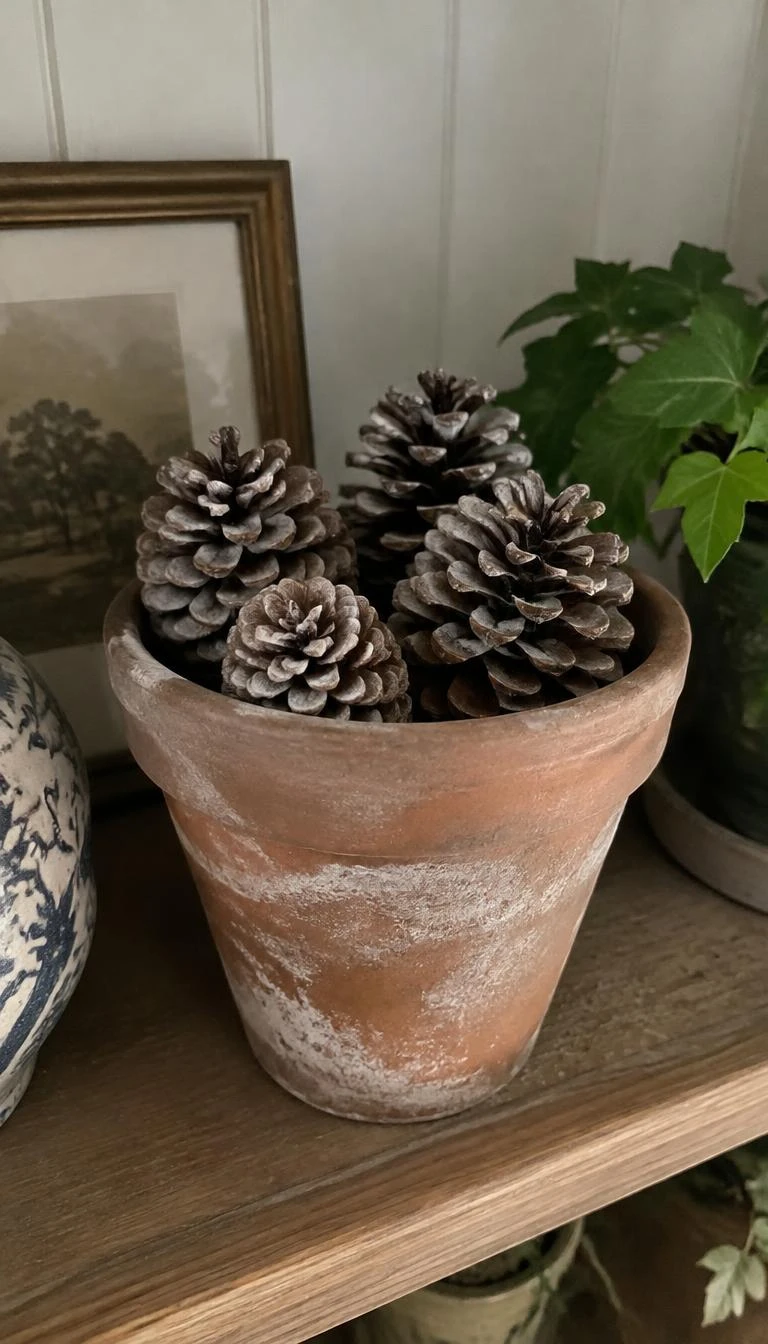
Glitter-coated pinecones tend to look artificial in a calm interior. Natural pinecones with a bare dusting of white baking soda create a genuine frosted look instead.
Fill an aged terracotta pot with three or four medium sugar pinecones. Dust the tops lightly with a flour sifter so the white powder settles only in the natural crevices.
The rusty orange clay warms the pale dusting. This simple combination suits casual family spaces and sunroom shelving where formal holiday accents look out of place.
Prop Heavy Cutting Boards Behind Evergreen Sprigs
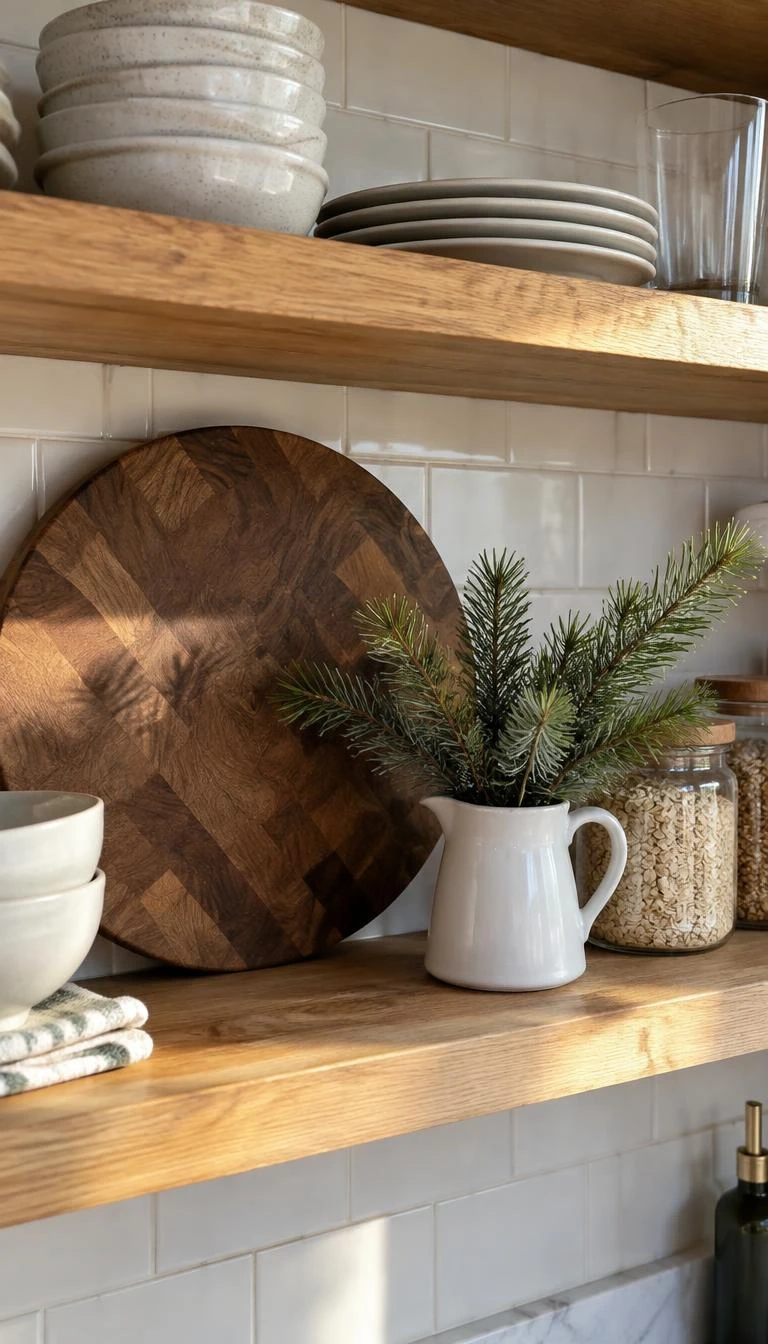
Kitchen open shelving needs holiday touches that make sense near food preparation zones. Wood boards provide an organic, practical backdrop for modest seasonal cuttings.
Lean a round end-grain maple or oak cutting board against the back tile wall. In front of it, place a small cream stoneware pitcher holding three short sprigs of eastern white pine.
The board gives the greenery a warm frame, protecting it from getting visually lost against pale backsplash tiles. The kitchen remains entirely functional while feeling quietly festive.
Tuck Battery Fairy Lights Behind Vintage Ironstone Pitchers
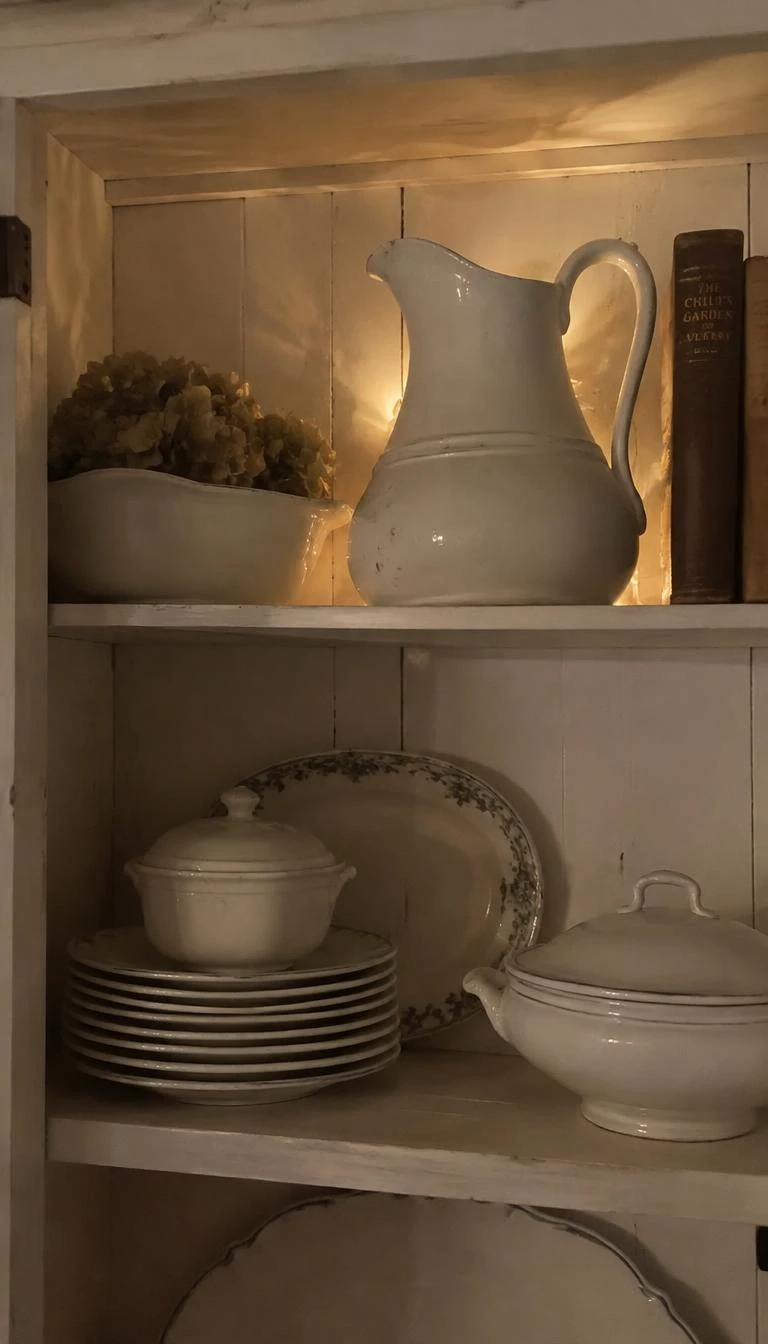
Exposing light strings across shelf fronts creates clutter. Hiding the illumination source behind opaque tableware creates an indirect glow that flatters ceramic textures.
Take a wire strand of warm micro lights powered by a small timer box. Coil the wire gently behind a heavy white ironstone pitcher, tucking the battery compartment beneath the pitcher base.
When evening comes, the hidden lights cast a soft, warm silhouette around the pitcher. The room receives a gentle ambient wash without any exposed cords or obvious bulbs.
Balance Open Shelving With Antique Pewter Cups
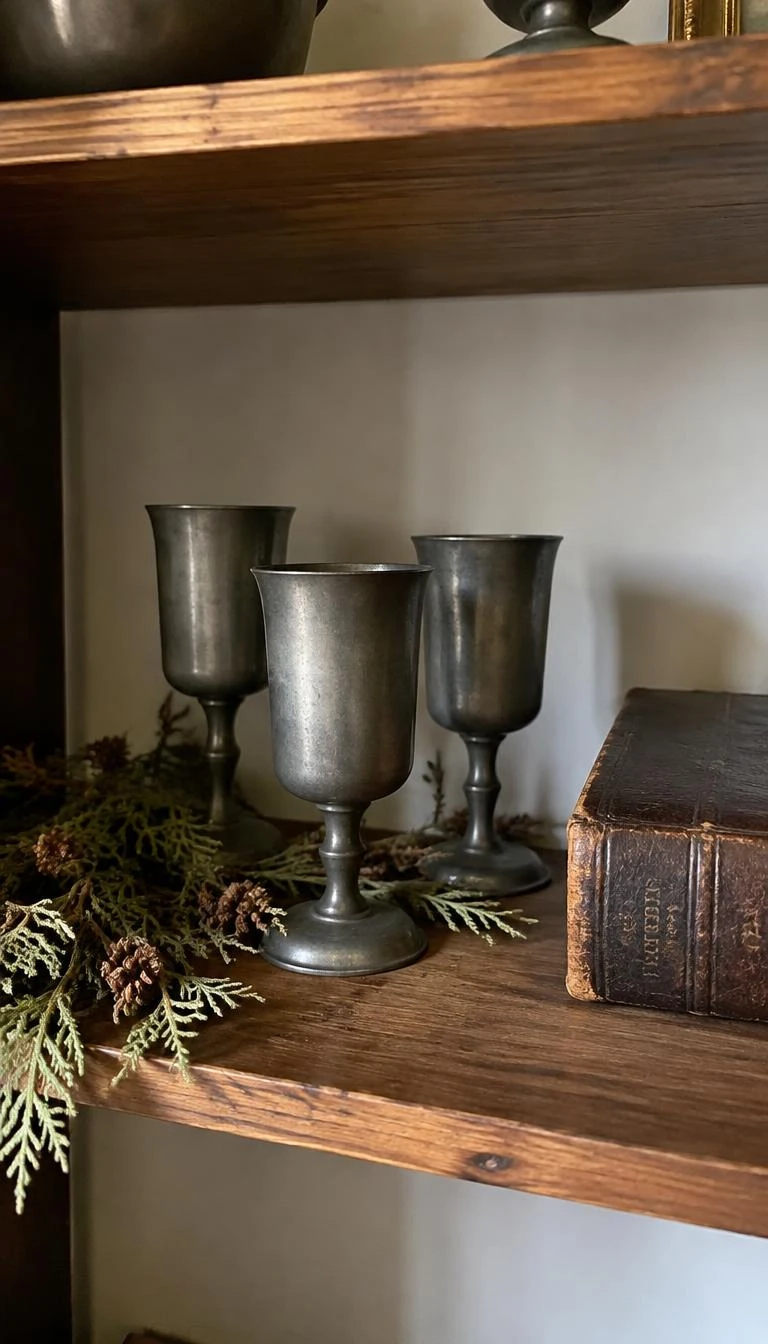
Bright polished silver can appear formal and cold in a modern home. Antique pewter offers a softer, gray luster that pairs naturally with winter greens.
Find two or three vintage pewter tumblers or jiggers with a dull, brushed patina. Fill one cup with a snipped piece of dried cedar and leave the others empty beside an antique leather book.
The muted gray metal grounds the display. It brings an old-world calm that feels appropriate throughout December and January.
Layer Sheet Music Pages Inside Floating Glass Frames
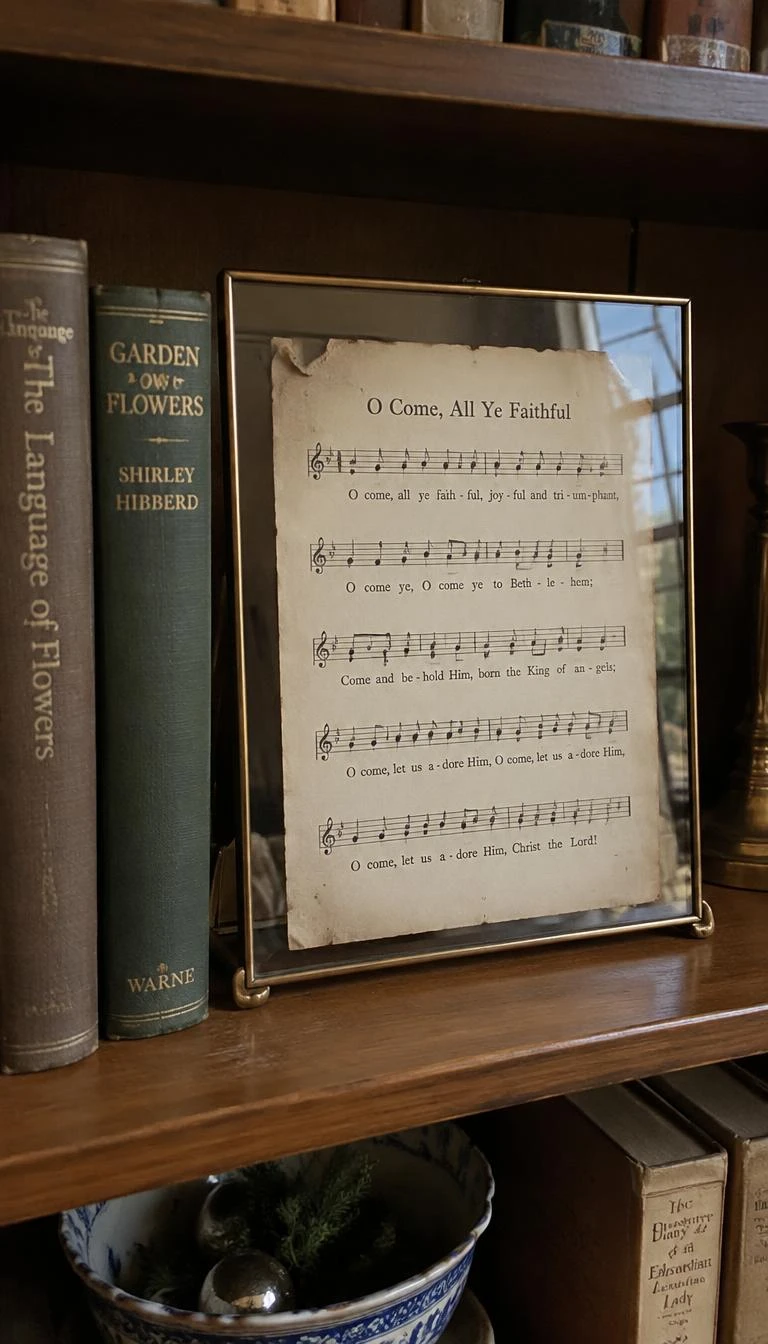
Large holiday signs with bold lettering easily overwhelm book arrangements. Vintage sheet music of winter carols provides subtle holiday charm through its typography and aged paper.
Press a page from an old hymnal inside a frameless double-glass brass floating frame. Stand the frame upright between a row of novels and a small earthenware bowl.
The aged paper warms up black-and-white shelf styling. Its gentle yellow hue echoes candlelight, adding a nostalgic note without shouting for attention.
Arrange Dried Orange Slices In Fluted Marble Dishes
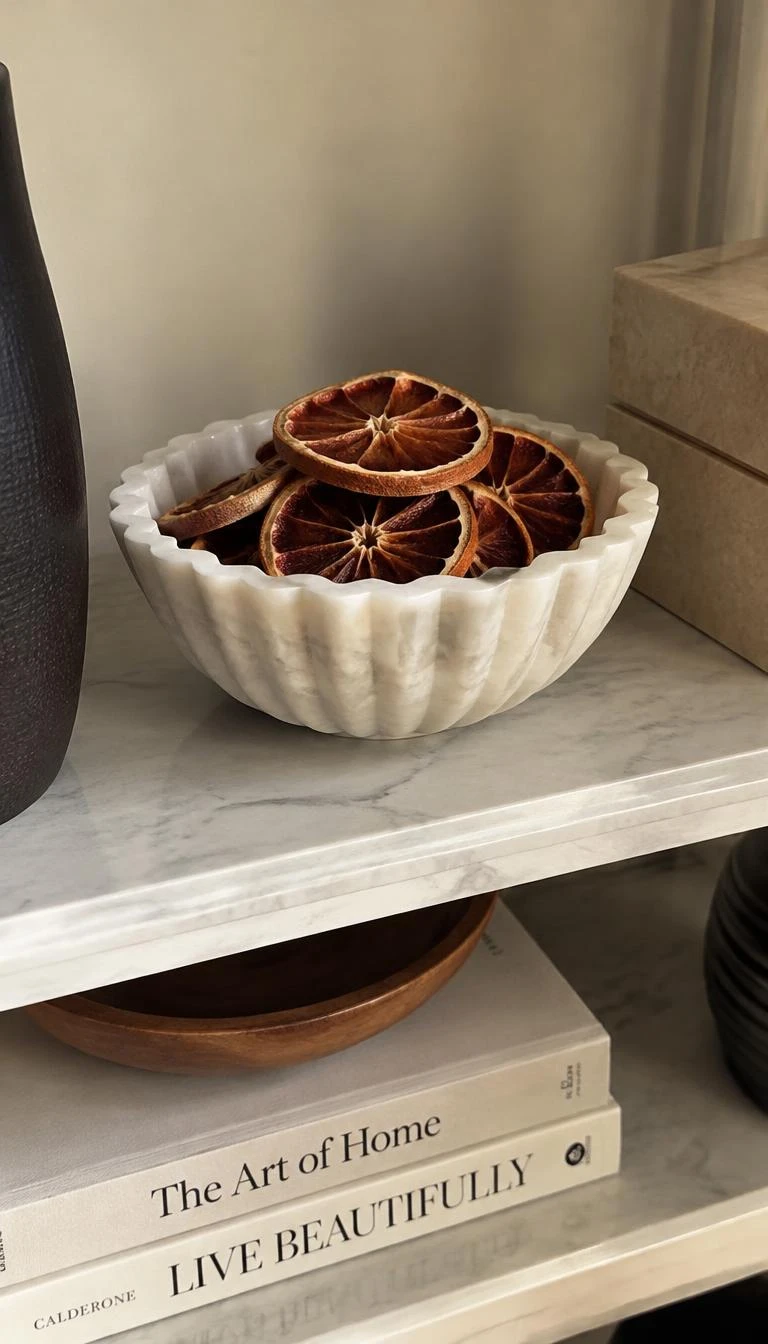
Plastic or painted fruit often lacks weight and authenticity. Real oven-dried blood orange slices display gorgeous translucent reds and ambers when light shines across them.
Select a heavy white marble dish with a scalloped edge. Stack eight dried orange rounds casually inside, allowing a few to overlap the fluted border.
I like this idea on a brightly lit shelf where daylight shines through the fruit pulp. The dense white stone grounds the vibrant citrus, creating an understated balance of textures.
Tie Mistletoe Bundles To Turned Wood Brackets
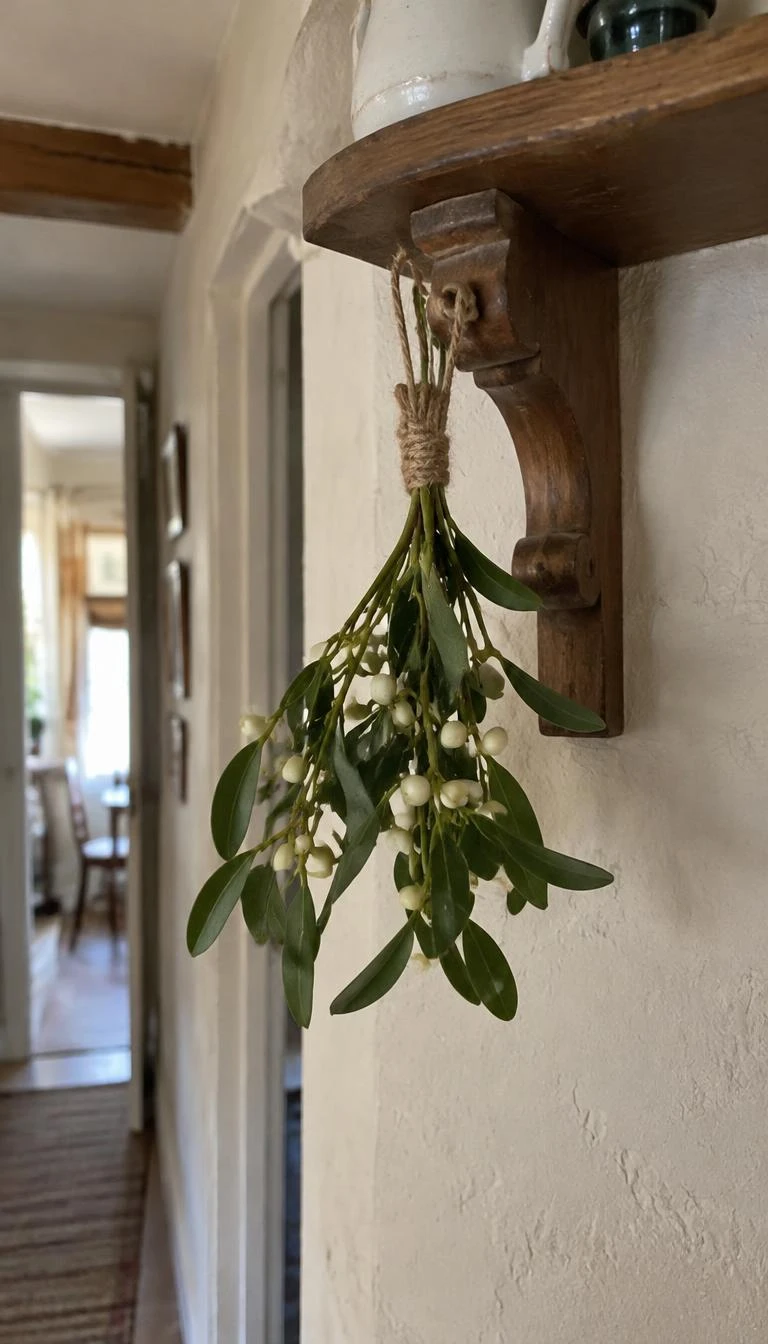
Greenery does not always need to sit on top of the shelf board. Fastening a modest bundle beneath the ledge keeps the shelf surface free for everyday items.
Gather five short sprigs of mistletoe with pearl-white berries. Bind the stems tightly with three wraps of raw hemp twine, then tie the bundle securely around an architectural corbel or turned wood bracket.
Leave the twine tails short and clean. Hanging the foliage underneath preserves your shelf surface while adding green details at eye level.