18 Christmas Tree Topper Ideas That Bring Balance in 2026

Finding good Christmas tree topper ideas in 2026 often comes down to restraint rather than spectacle. A tree does not require a heavy crown to look finished. When the crest of the tree feels light and deliberate, the rest of the greenery breathes.
Success rests on scale, weight, and how firmly the piece anchors to the central branch. Better results come from exploring antiqued metals, matte textiles, turned hardwoods, and gathered botanical clippings that sit comfortably in an everyday room.
Below are 18 practical ideas you can adapt to your own holiday branches, whatever your decorating preference.
Bind Raw Silk Ribbon into Trailing Streamers
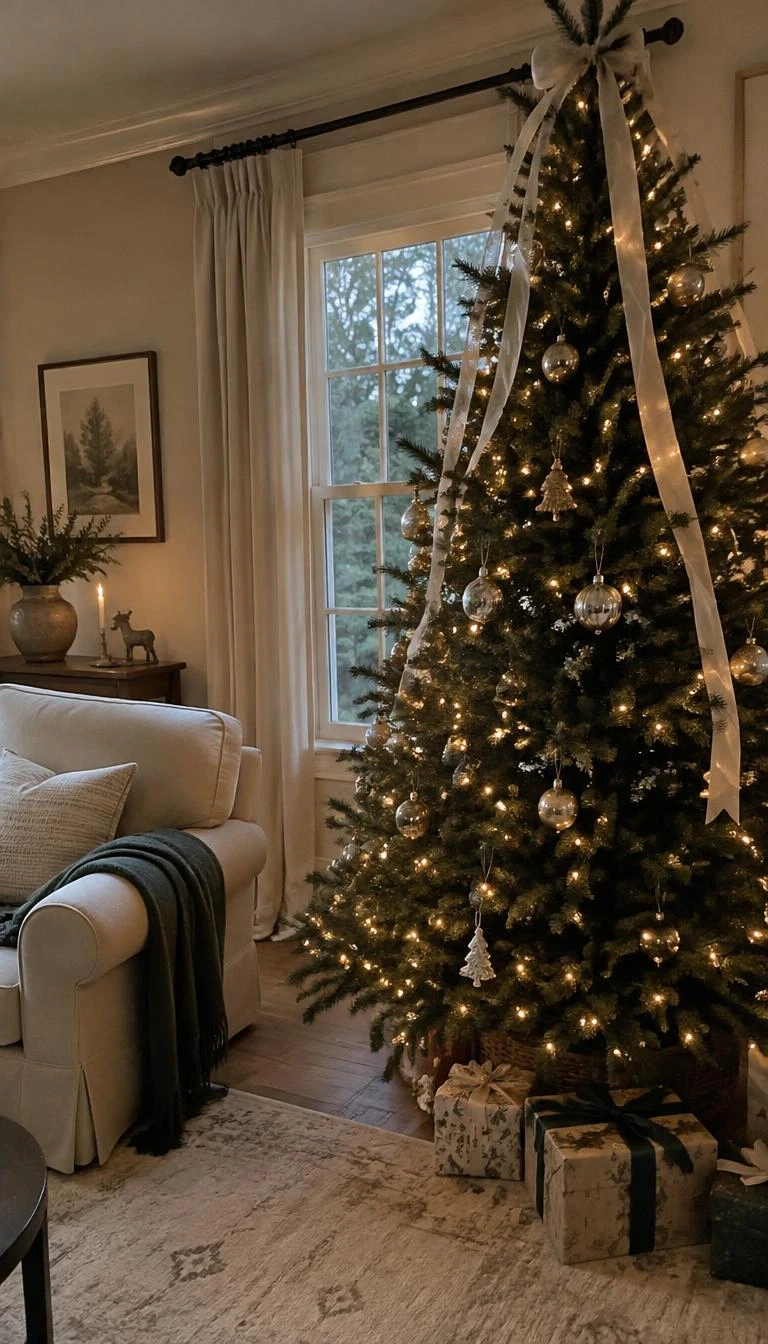
Long ribbons soften a tree profile far better than stiff bows with wire edges. Raw habotai or washed silk in warm cream creates soft movement at the very apex.
Cut four strips measuring three yards each. Gather them together at their midpoint, secure them firmly to the central spruce leader with green floral wire, and allow the tails to cascade naturally through the higher boughs.
I find that letting the streamers drape without curling gives the tree an effortless presence. The main mistake is choosing stiff synthetic satin, which flares outward instead of resting on pine needles.
The fabric gently catches daylight from nearby windows.
Secure a Fluted Brass Finial with Floral Wire
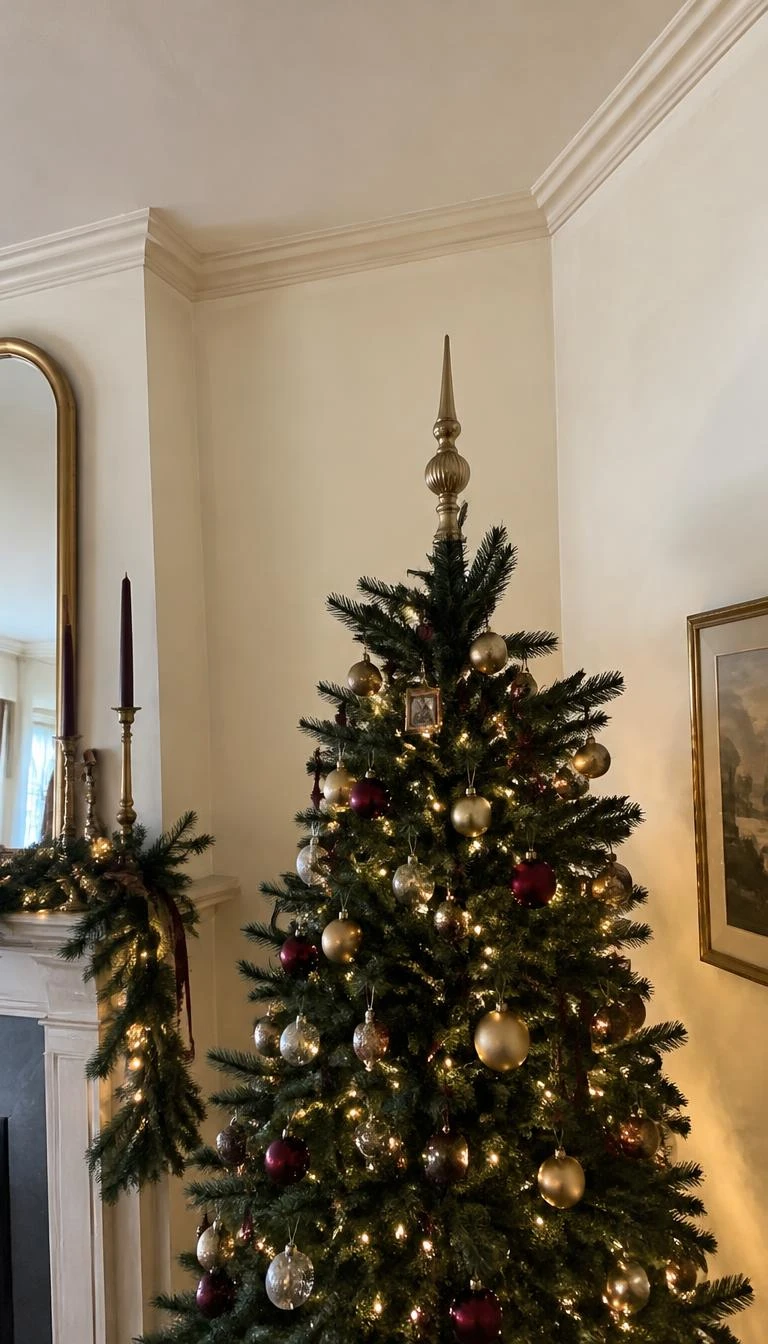
Slender metal spires provide height without the broad visual bulk of oversized stars. An unlacquered brass finial brings warmth that complements both warm white string lights and real pine boughs.
Select a piece between eight and ten inches tall with an aged patina. Slide the hollow sleeve over your strongest central upright branch, then wrap brown paper covered wire around the base to keep it perfectly vertical.
A tilted finial ruins the lines instantly. Make sure you step back five paces while adjusting the wire tension to check straightness.
The polished ridges reflect candlelight across the ceiling.
Weave Dried Bracken Ferns into a Crest
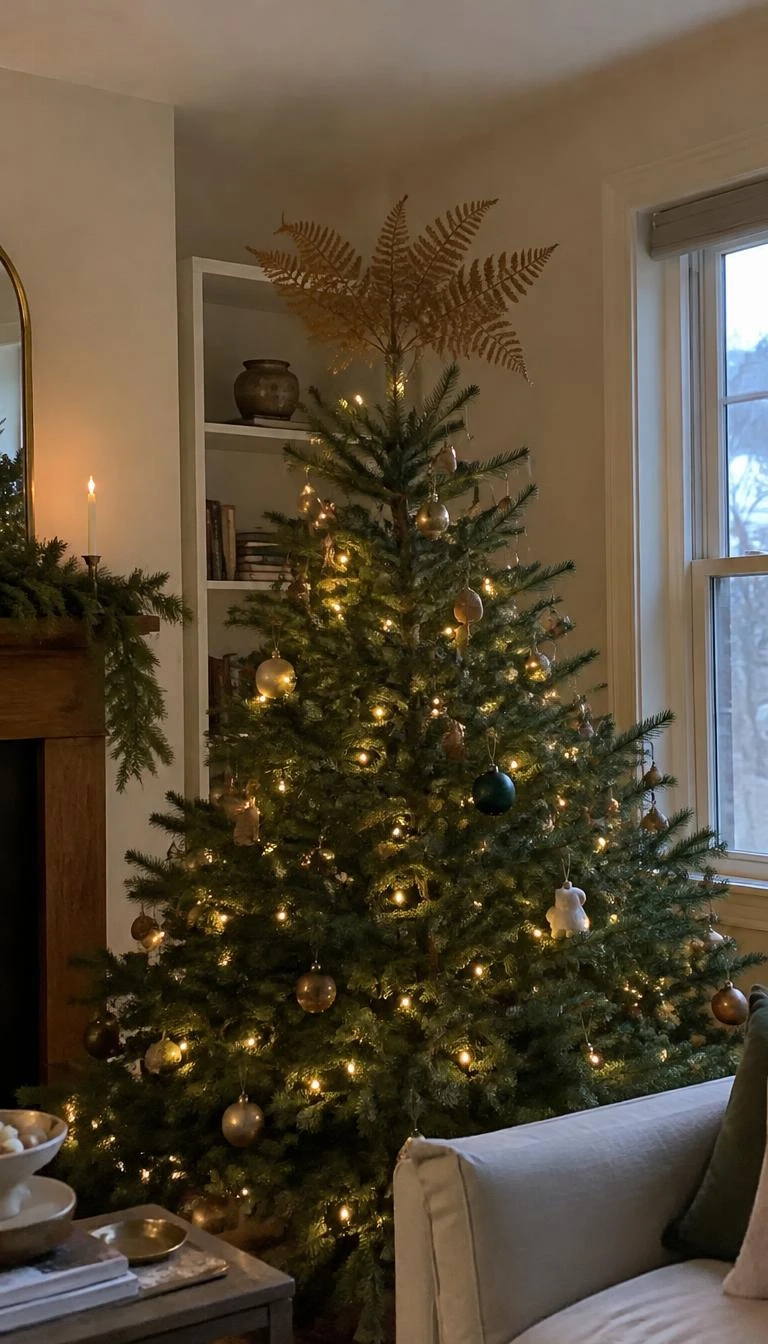
Botanical crests blend into the evergreen silhouette better than manufactured hardware. Dried bracken ferns display a rich parchment tone that contrasts gently against dark balsam fir.
Gather five to seven pressed fern fronds between ten and twelve inches long. Bundle the stems with floral tape, then insert them directly behind the leader shoot so they fan out upward like an airy crown.
Keep the arrangement loose. Packing too many fronds creates a dense fan that blocks the light and looks stiff.
This approach works wonderfully in rooms with natural wood furniture and unbleached wool rugs.
Perch an Antiqued Tin Moravian Star on the Center Stem
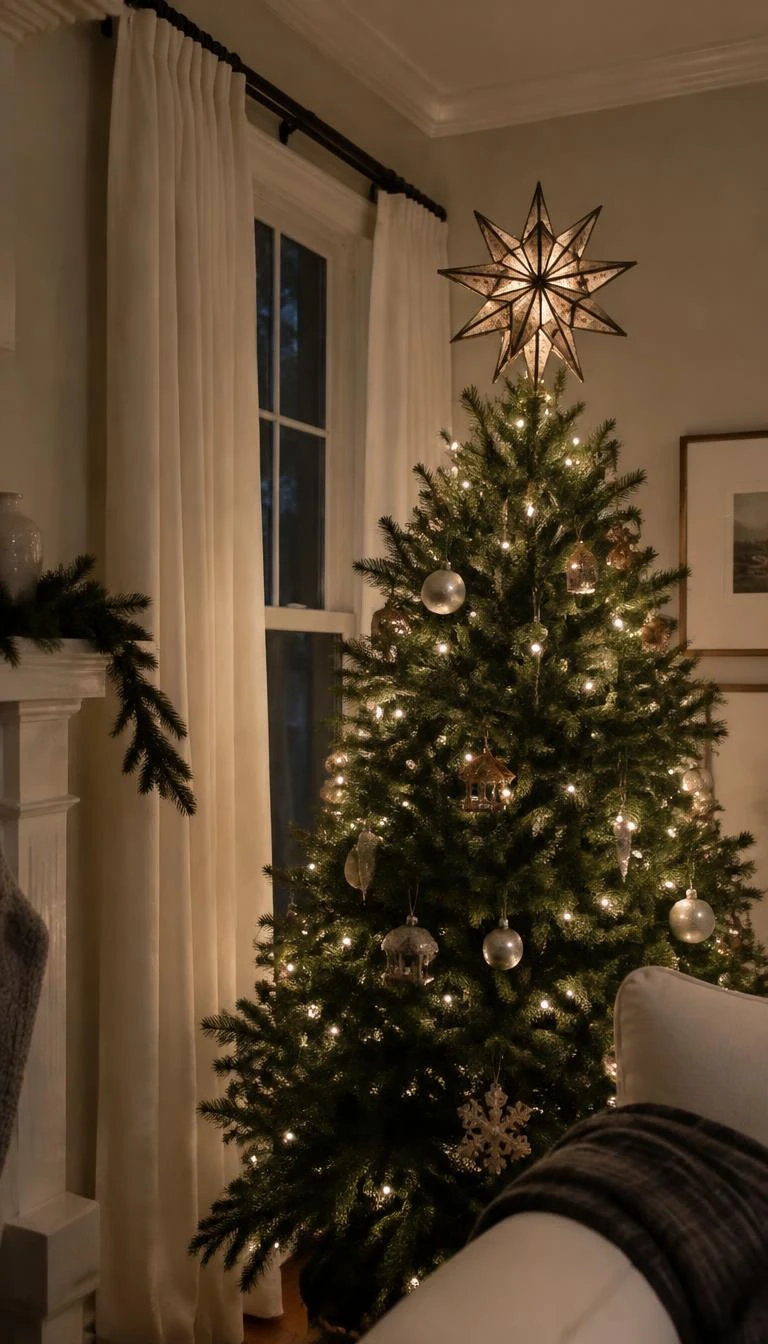
Multi point tin stars bring geometric clarity to the top of an organic pine tree. Weathered gray tin avoids the harsh glare that comes with bright silver paint.
Choose an eight inch Moravian star with pierced perforations. If the tree stem bends under the metal weight, lash a slender bamboo garden stake along the main trunk with green florist tape to reinforce the vertical stem before mounting the base.
Check that the star points clear the ceiling by at least four inches. Crowding the ceiling makes the room feel small.
Shadow patterns softly spill across the ceiling at dusk.
Anchor a Pierced Ceramic Star with Matte Glaze
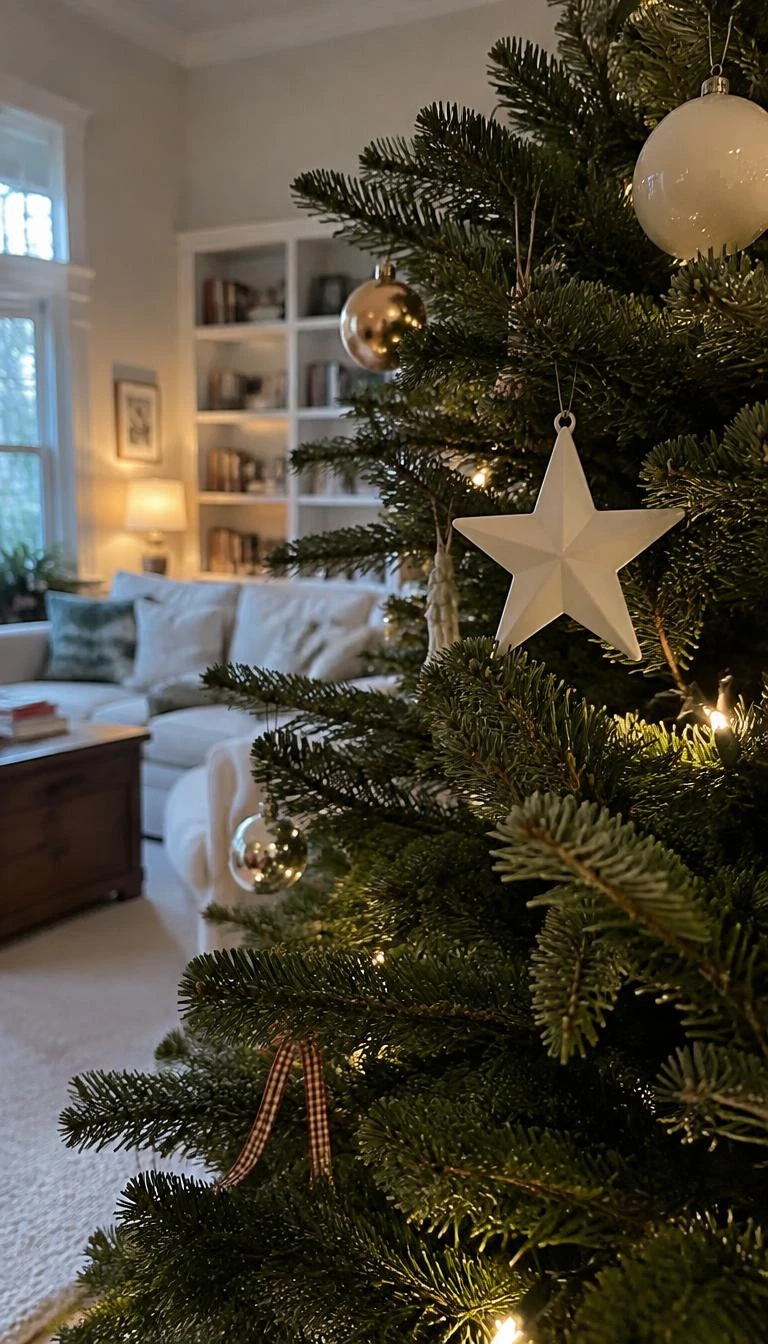
Earthenware provides an honest, tactile finish that glossy plastic can never replicate. An unglazed stoneware star in chalk white or oatmeal grounds an eclectic collection of handmade ornaments.
Source a flat ceramic star around six inches wide with a hollow back sleeve or secure mounting loops. Slip it gently over the main bough, securing it with two twist ties hidden beneath surrounding side needles.
Heavy stoneware can easily pull a soft stem sideways. I suggest pruning the leader branch slightly thicker to carry the pottery securely.
The chalky surface absorbs illumination rather than bouncing it.
Form an Asymmetrical Spray of Preserved Lunaria Pods
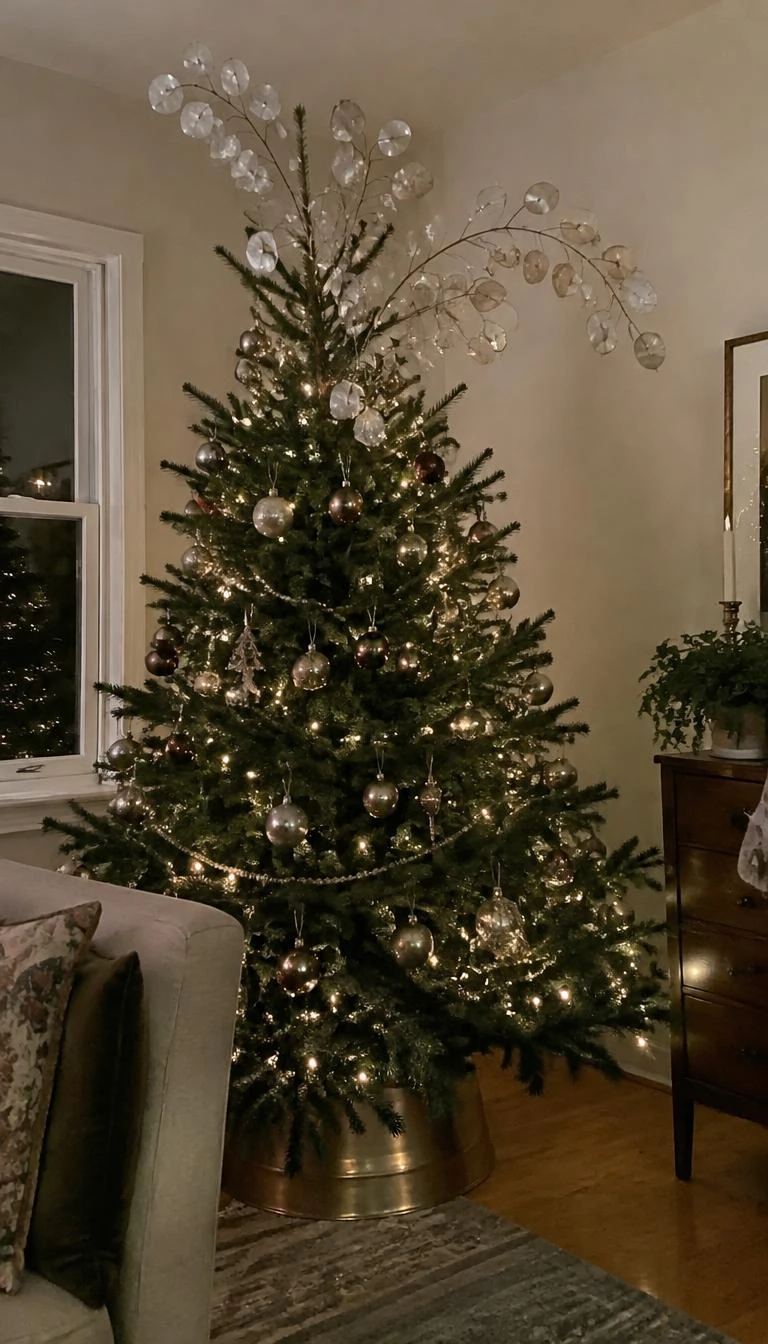
Translucent seed pods offer an ethereal texture without relying on glass or plastic. Lunaria, known as silver dollar plant, has paper thin casings that shimmer softly in ambient lamplight.
Take three branches of varying lengths, between eight and fourteen inches. Anchor the longest branch parallel to the main trunk, then angle the remaining two slightly to the left to establish a calm, sweeping motion.
Do not attempt symmetry here. The beauty comes from the organic, off center drift of the papery discs.
This accent suits historic interiors filled with books and soft textiles.
Balance a Turned Walnut Wood Spike
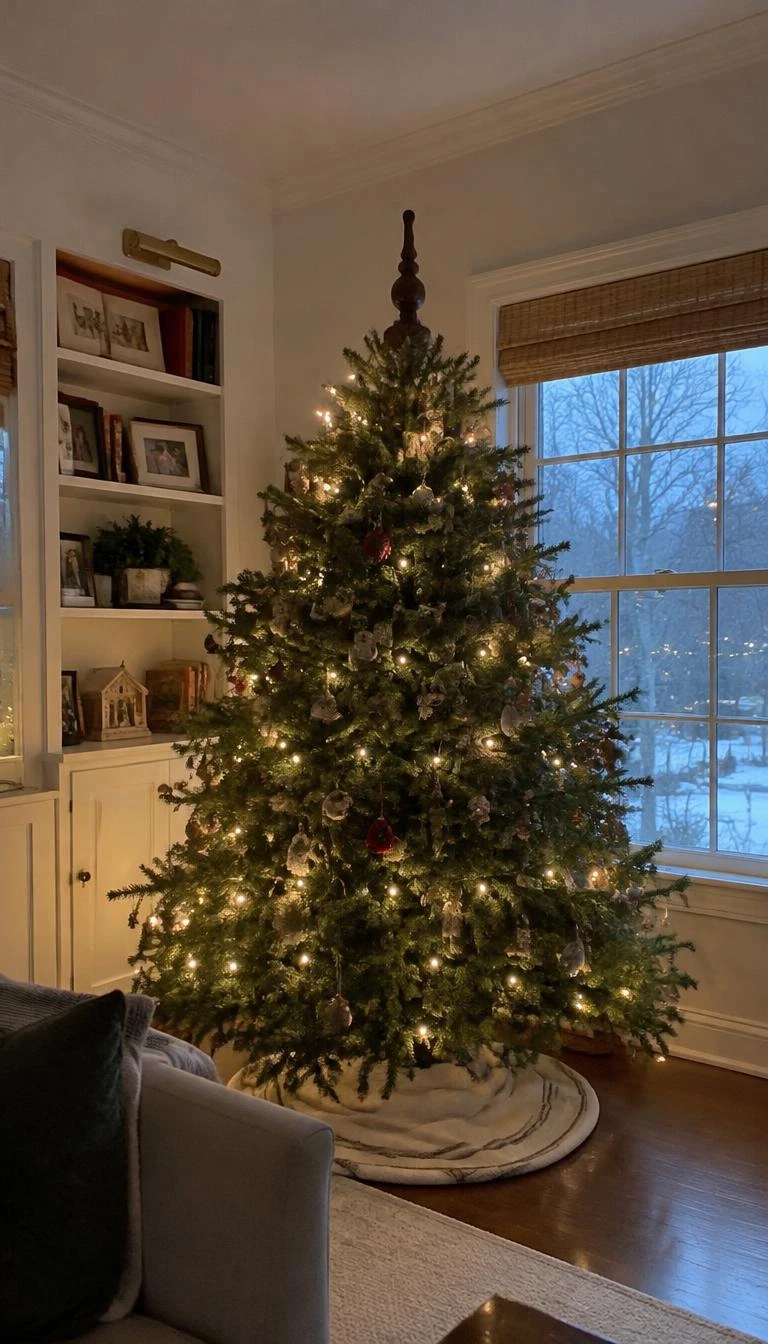
Hardwood toppers add quiet sophistication through clean joinery and rich grain. A turned walnut spike resembles architectural millwork and pairs naturally with evergreen needles.
Look for a hand turned spindle roughly nine inches tall, finished with clear beeswax rather than high gloss polyurethane. Thread the base opening down onto the leader twig until it rests firmly against the top tier of side branches.
Avoid heavily carved patterns that collect dust. Simple Scandinavian profiles with smooth tapers look timeless and remain easy to clean.
The dark timber stands out quietly against warm lamplight.
Tie a Structured Double Bow of Heavy Olive Velvet
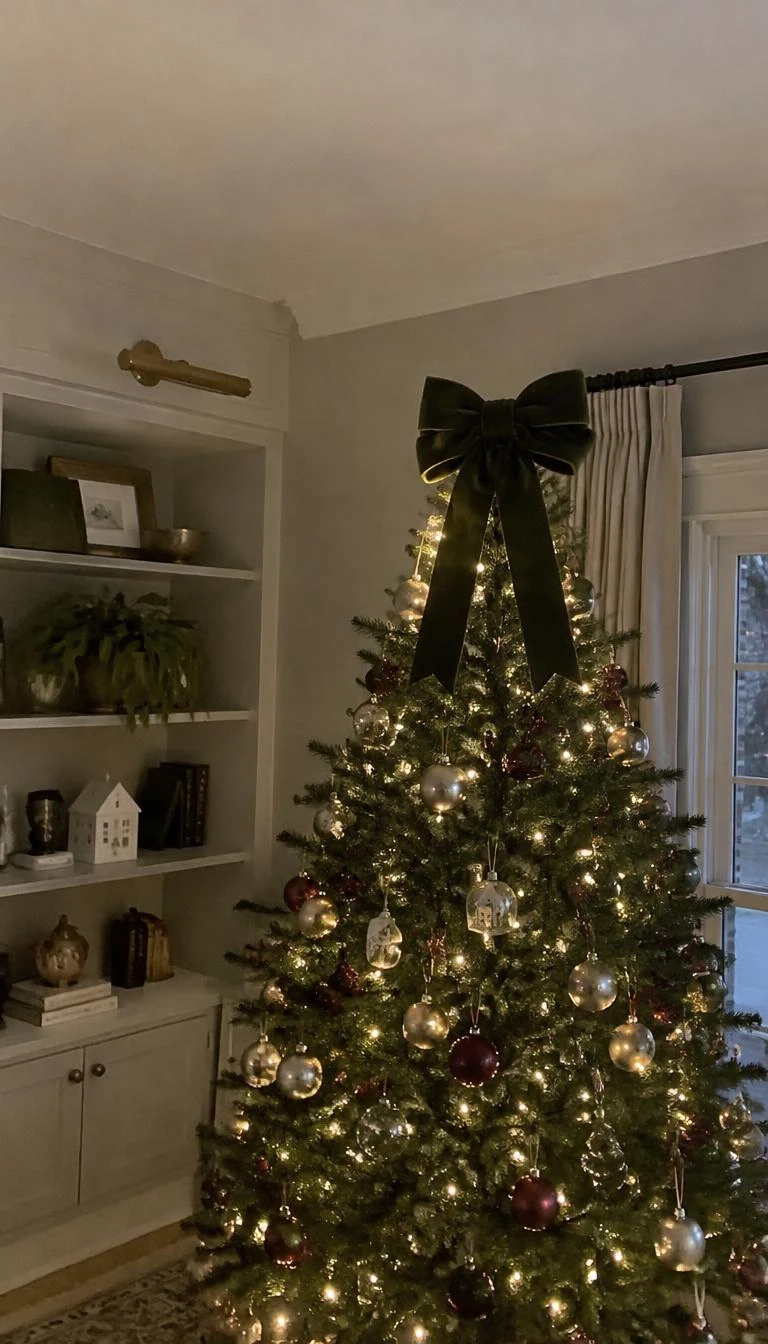
Velvet absorbs light and introduces rich tactile depth to fresh pine needles. Choosing olive green instead of red creates a refined, tonal effect that feels modern yet traditional.
Use two inch wide cotton velvet ribbon with a clean woven edge. Tie a classic tailor bow with four distinct four inch loops, then leave the two tails just long enough to kiss the first row of branches below.
Trim ribbon tails at a neat forty five degree angle with sharp shears. Frayed cuts cheapen the look immediately.
The muted green shade anchors colorful ornaments below.
Shape a Wire Starburst with Petite Mirrored Glass Rounds
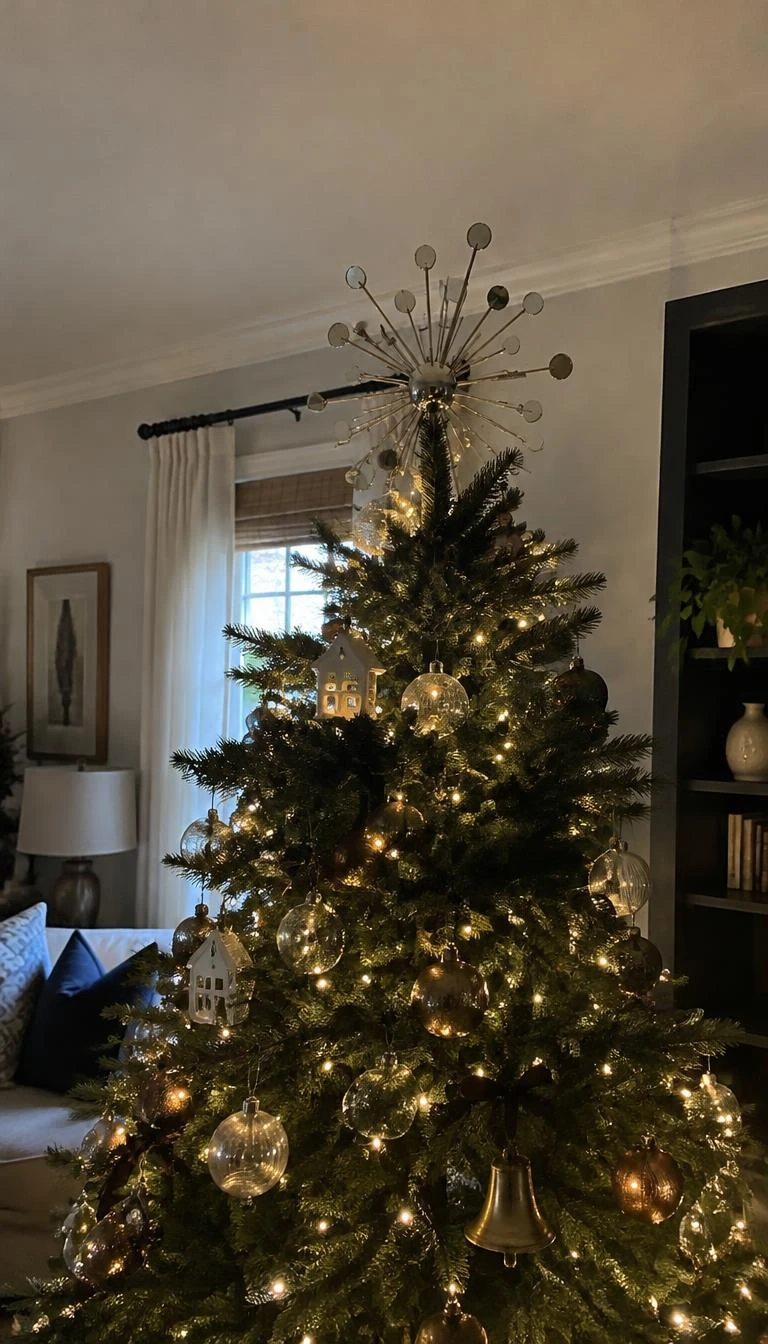
Vintage tree toppers frequently celebrated delicate metalwork. Thin brass wire radiating outward with tiny antiqued mirrors creates sparkle without the glare of heavy modern glitter.
Select a seven inch starburst built on fine gauge wire spokes. Press the central mounting clamp around your tree tip, rotating the piece so the reflective discs face the room sitting area.
Keep the surrounding tree branches free of clutter. A busy top tier fights with the fine wire spokes and hides their delicate silhouette.
Tiny points of lamplight dance across the ceiling plaster.
Cluster Gilded Pressed Paper Medallions
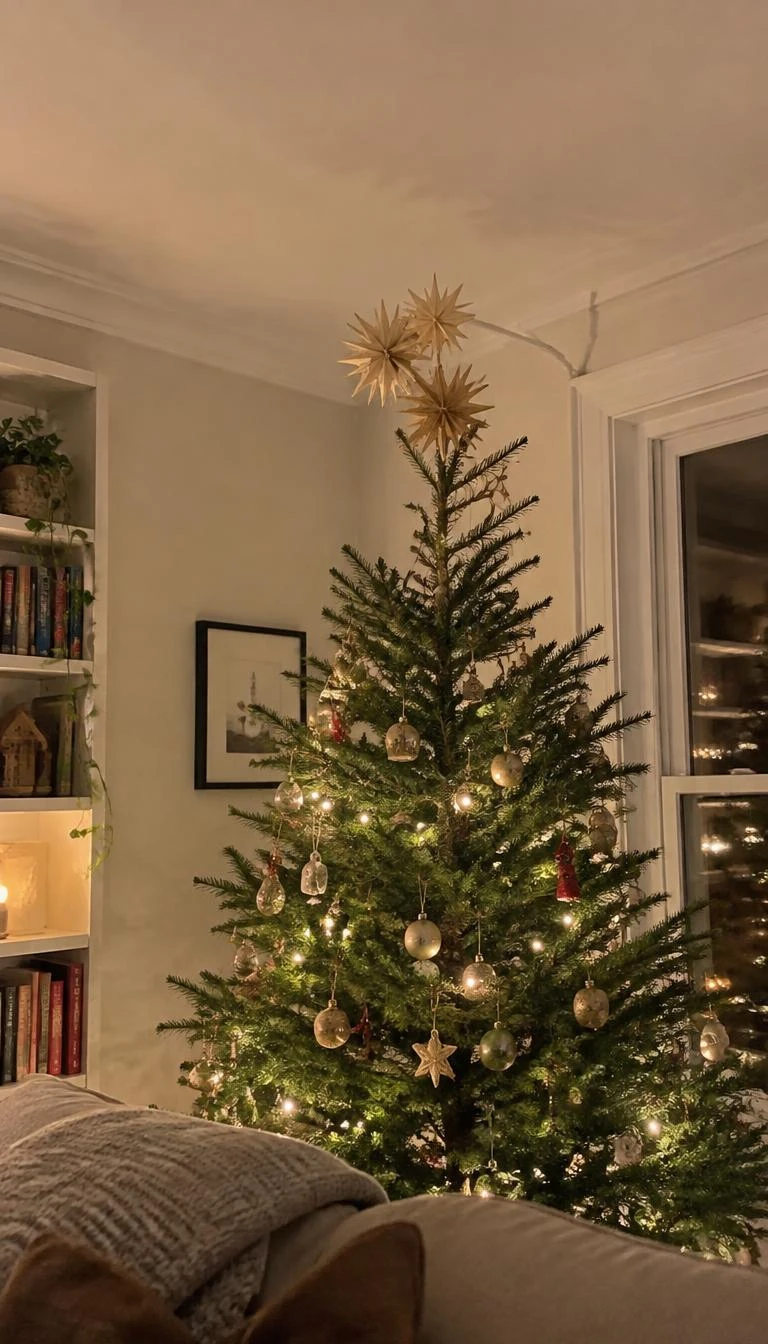
Pressed paper decorations carry a quiet historical charm that mass produced plastic cannot duplicate. Embossed Dresden style foil medallions provide warm golden highlights with almost zero physical weight.
Gather three varied round medallions between three and five inches across. Glue them carefully to slender wooden skewers, then tuck the skewers directly into the summit foliage in a tight, overlapping trio.
The secret is using muted antique gold rather than bright yellow foil. The softer tone blends gently with warm white light strands.
The fragile details reward closer viewing during evening gatherings.
Mount a Cast Iron Compass Star
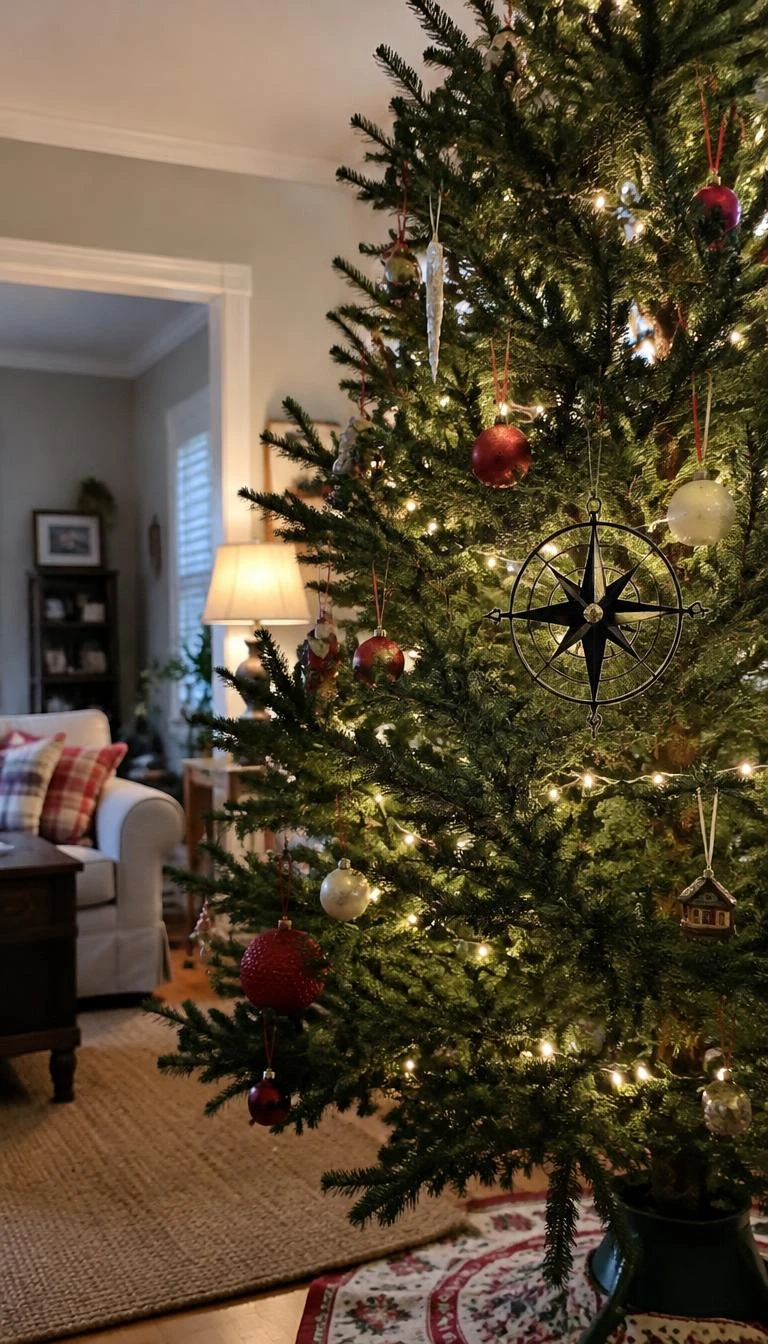
Industrial materials create a compelling dialogue with living greenery. A petite cast iron compass star brings structural presence and deep charcoal contrast to the pinnacle of a spruce.
Select a flat star no wider than six inches to prevent tipping. Because iron is heavy, wrap black floral wire tightly through the rear loop and bind it directly against a thick, pruned section of the main stem.
Never rely on a plastic clip for cast metal. Mechanical stability protects your lower glass ornaments from falling objects.
The matte black silhouette feels bold against soft pine.
Nest a Single Hand Carved Linden Wood Bird
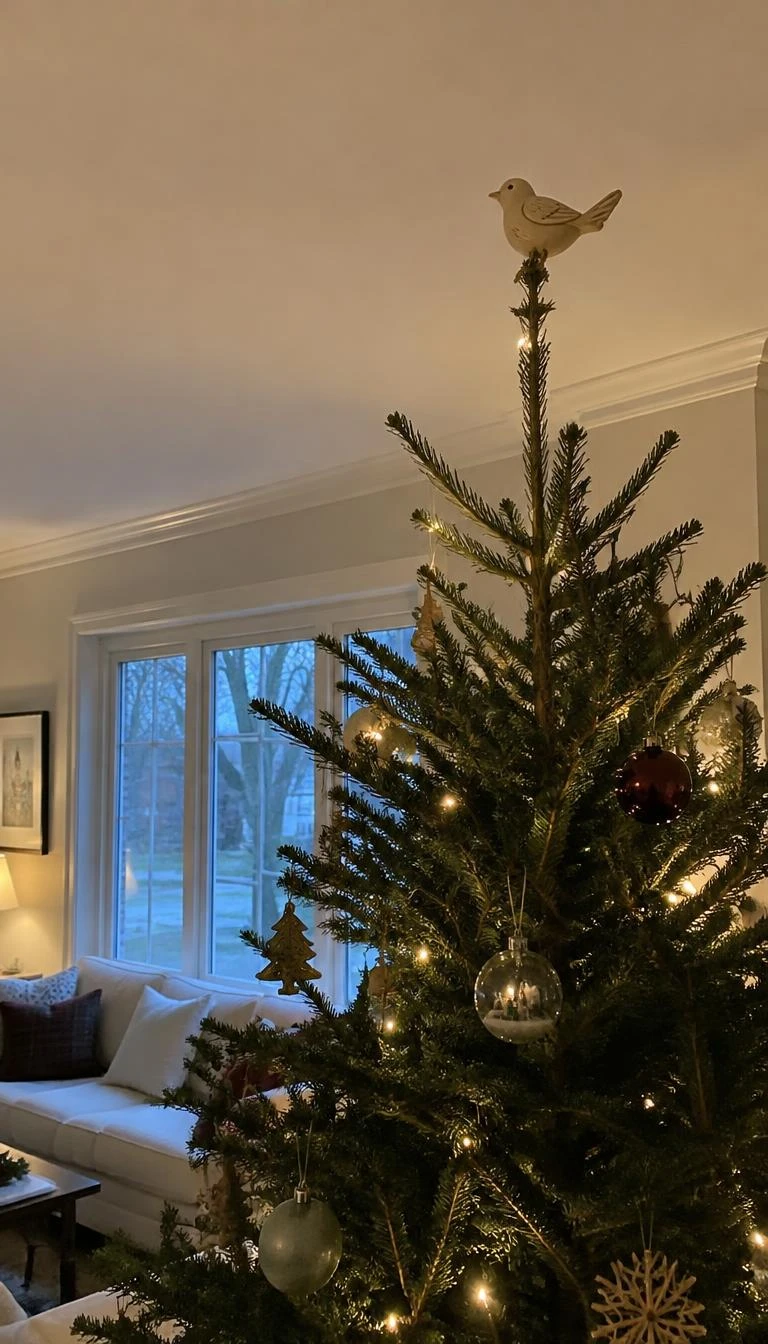
Centering a solitary bird at the peak introduces a folkloric mood that feels peaceful. Pale linden or basswood reveals clean chisel marks that show real human care.
Find a carved songbird roughly five inches long with a small wire leg fixture. Wrap the soft leg wire around the central leader twig so the bird appears to perch naturally above the foliage.
Position the bird facing toward the main entrance of the room. This tiny gesture makes the tree feel warm and welcoming.
The pale timber highlights the natural architecture of the tree.
Crown the Apex with Gathered Pleated Parchment
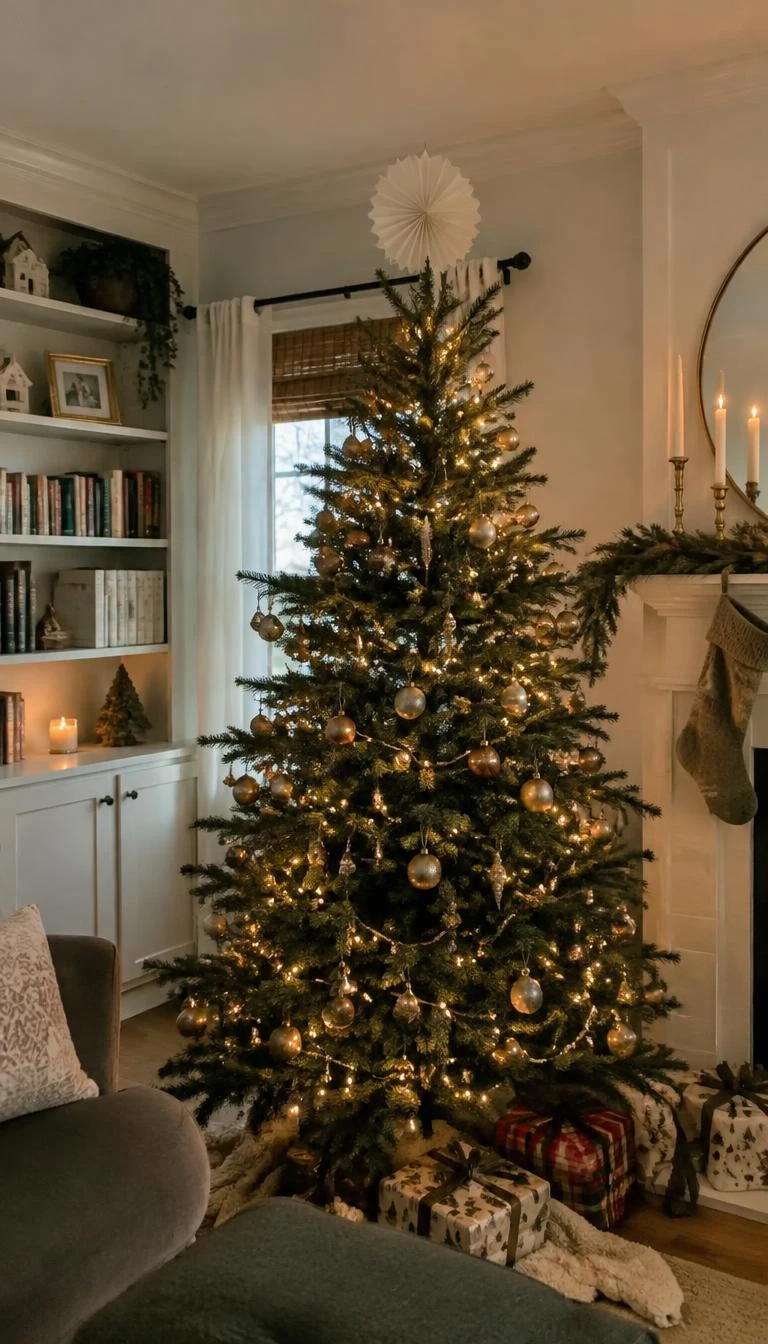
Paper craft brings architectural structure without adding excess weight. A tight fan rosette folded from thick watercolor paper or parchment offers crisp lines that elevate simple evergreen decor.
Fold heavy eighty pound cream paper into crisp half inch accordions, join the outer edges into a nine inch circle, and secure the central core with bookbinding glue. Affix a sturdy wooden clip to the reverse side.
Ensure the paper has a warm ivory tone. Bright bleached copy paper appears harsh next to organic evergreen needles.
The pleated ridges cast sharp, handsome shadows after nightfall.
Wrap a Layered Ring of Dried Magnolia Leaves
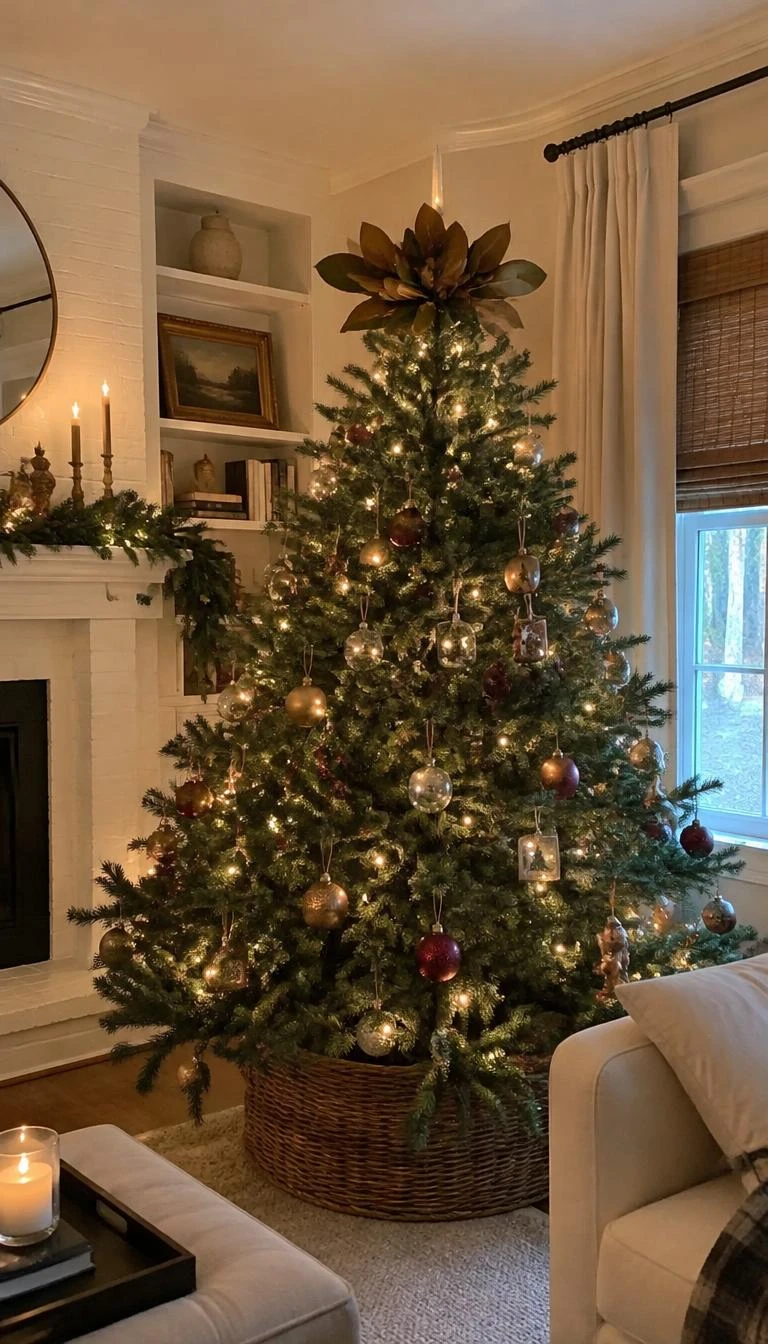
Wreaths are rarely used as toppers, yet they solve the problem of awkward vertical spikes. A compact ring of dried magnolia foliage sits horizontally across the upper tier like a collar.
Bind twelve preserved magnolia leaves onto a six inch wire hoop, alternating glossy green topsides with velvety brown undersides. Slide the hoop down over the leader stem until it rests level on the branch tier below.
Keep the ring flat. A tilted wreath looks accidental rather than deliberate.
The two tone foliage pulls together warm leather furniture and green needles effortlessly.
Position an Oxidized Copper Tree Spike
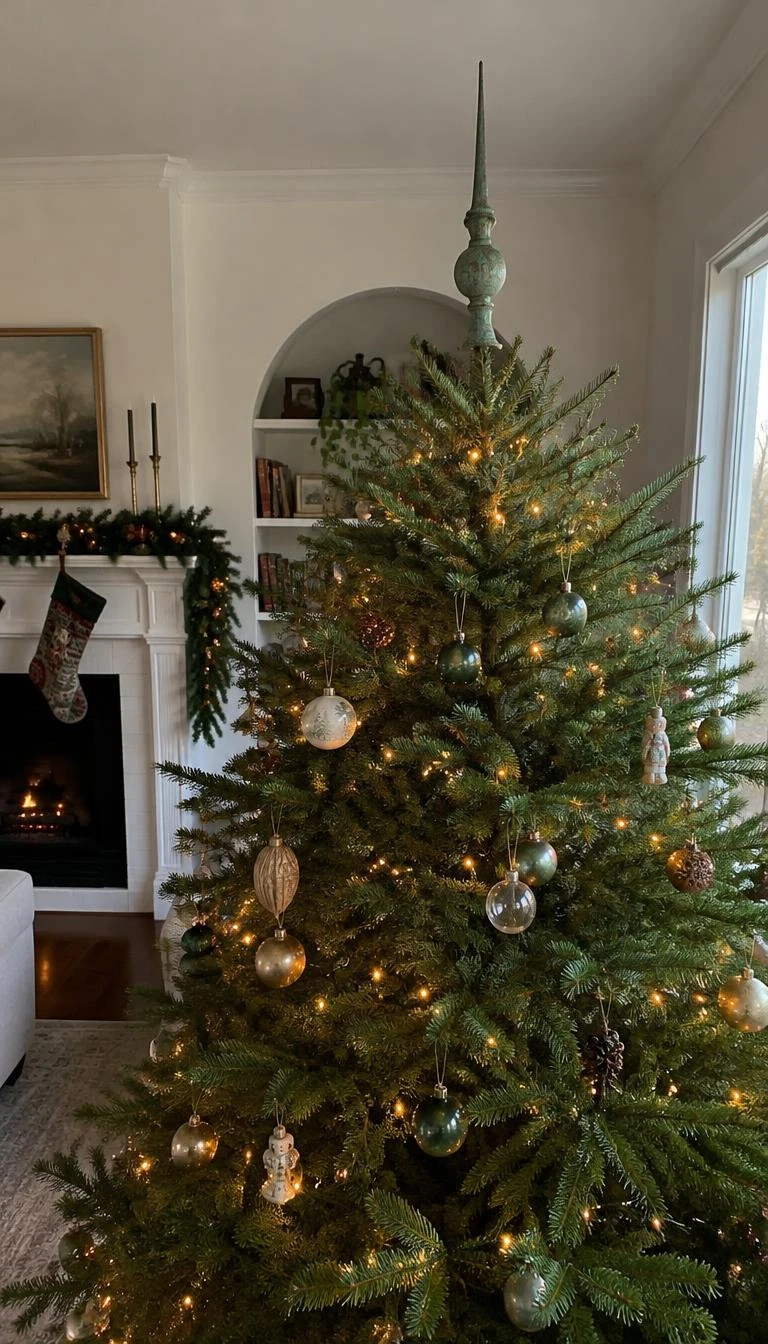
Verdigris brings cool mineral contrast to a room decorated in neutral tones. An oxidized copper spire with soft turquoise patina sits handsomely among blue spruce or dark fir.
Source a conical copper finial seven to nine inches high with an authentic weathered crust. Slide it onto the trimmed center branch, securing the interior base with a tapered cork plug if the opening feels loose.
Avoid imitation painted finishes. Real oxidized metal has powdery, matte variations that reflect room light without artificial gloss.
The green patina deepens the natural palette of your tree.
Arrange a Fountain of White Needle Eucalyptus
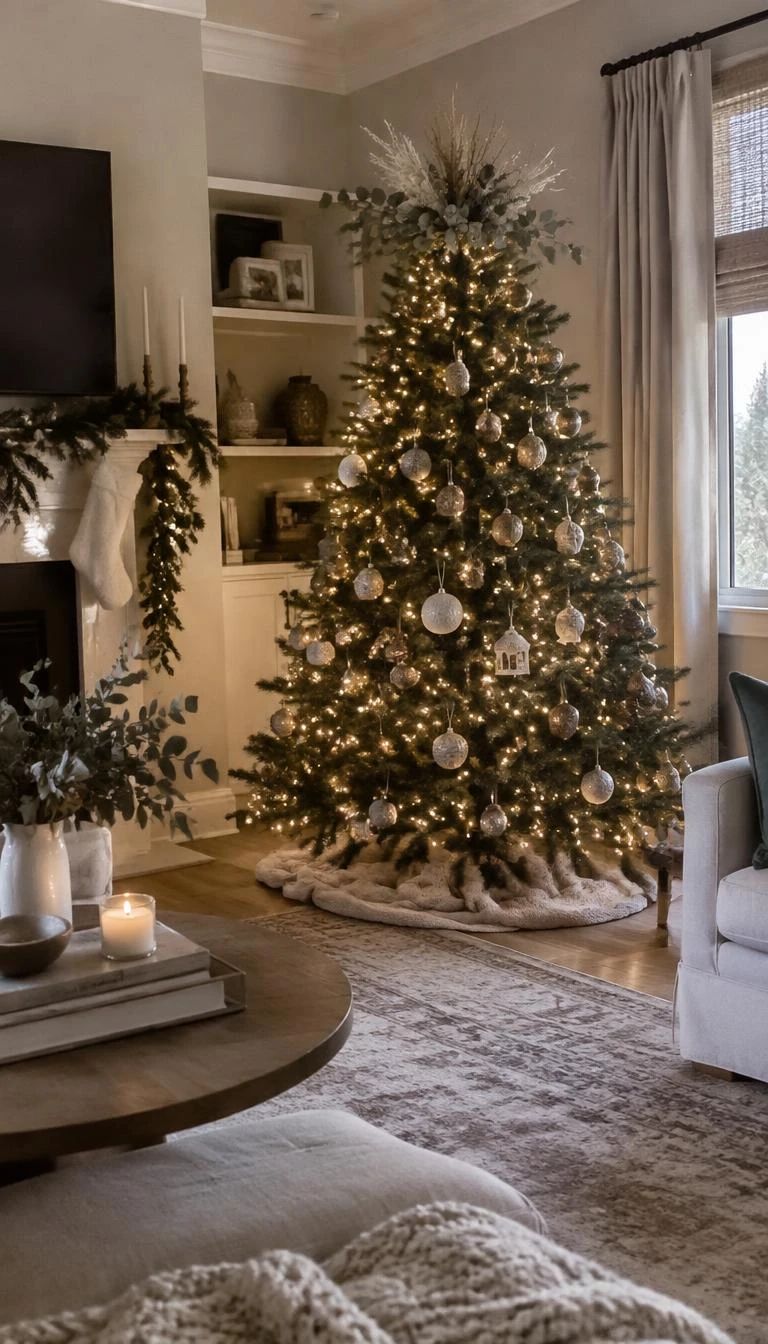
Sprays of preserved foliage create vertical height while maintaining a soft, natural skyline. The silvery undertone of dried white eucalyptus complements both flocked and natural fir branches.
Trim six eucalyptus stems to graduated lengths between six and ten inches. Bind them to the rear of the main trunk using brown raffia cord, allowing the stems to arch naturally outward like a fountain.
Check that the arrangement remains open and breathable. Packing the stems tightly creates a solid clump that breaks the visual rhythm of the tree.
A faint herbal scent drifts softly across the room.
Fasten a Geometric Spun Glass Sunburst
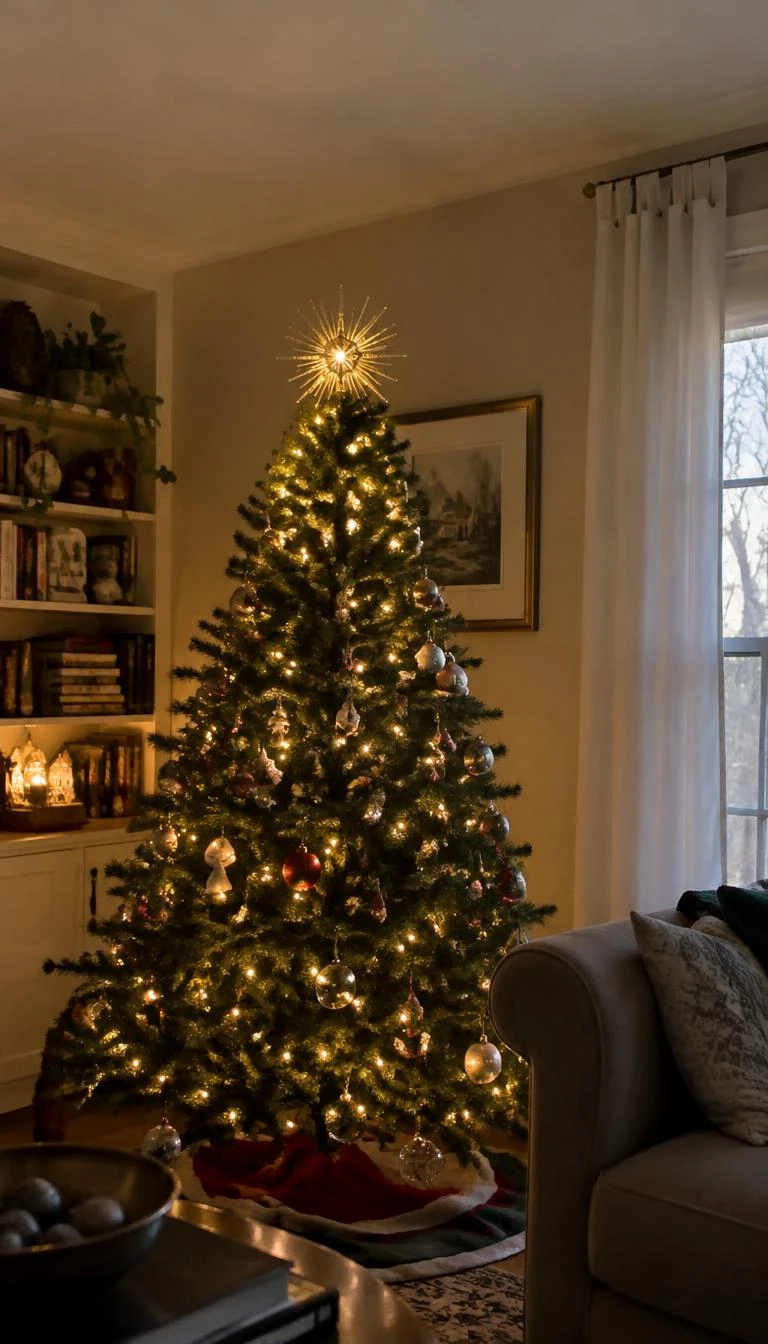
Spun glass captures light in a remarkably delicate way, reminiscent of antique nineteenth century decorations. The fine glass threads create a soft golden halo around the upper branches.
Select a five inch spun glass star mounted on a sturdy metal clamp. Fasten the clamp onto the hardwood stem just behind the fresh needles, making sure the glass fibers remain untouched by lower branches.
Handle the star strictly by its base collar. Spun glass strands are brittle and will crush easily if pressed directly between fingers.
The fine filaments catch string lights with quiet, crystalline warmth.
Thread Slender Wooden Beads into a Minimalist Star
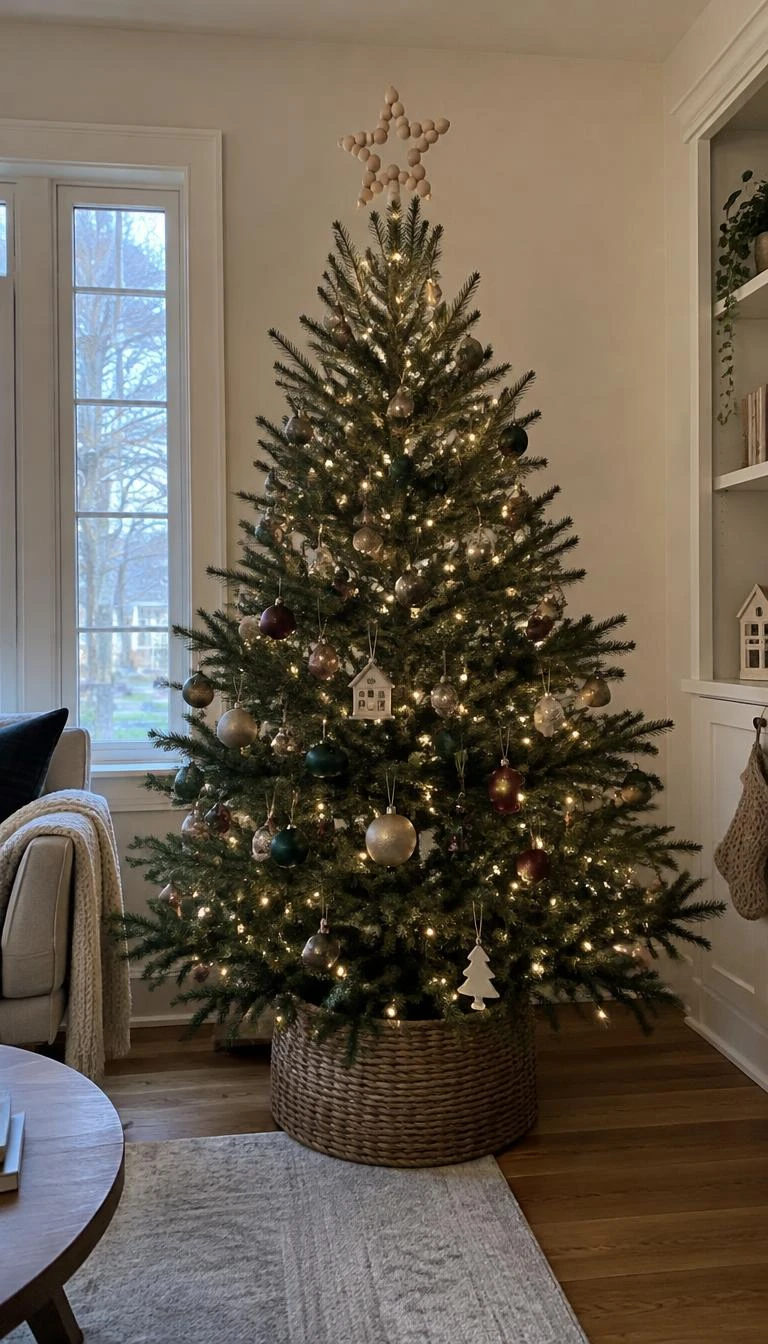
Simple craft methods produce stunning results when kept disciplined. A five point star formed from raw maple beads offers clean Scandinavian clarity that pairs well with paper or linen ornaments.
Thread twenty millimeter unfinished wooden beads onto sixteen gauge craft wire, bending the wire at sharp intervals into an eight inch star. Fasten the rear wire tail down the center stem with twine.
Leave the wood unfinished. Varnishes and stains can turn yellow, whereas raw blonde timber keeps the ornament calm and contemporary.
The round wooden spheres bring gentle geometry to wild evergreen boughs.